The Festival of Auteur Films, Festival Autorskog Filma, or just FAF for short, arrived in Belgrade in 2025 after a year of anti-government protests that emerged since the collapse of the newly-refurbished, publicly-funded train station in Novi Sad, killing 16 people. People’s exhaustion and tiredness of over a decade of increasingly authoritarian, criminal and undemocratic rule by Aleksandar Vučić and the SNS ruling party has spilled over into one of Serbia’s largest protest movements. The government has responded increasingly with both ‘hard’ power – violence and oppression – and ‘soft’ power, such as the pulling of cultural funding, of which the festival was one such victim.
Anecdotally, those I spoke to said they didn’t see much of a difference in terms of the programme’s breadth this year in comparison to last year.1As an aside, the largest music festival in the country, EXIT, was finally killed off this year, with the government not only pulling funding itself but also pressuring corporate sponsors into withdrawing support. EXIT had long become a commercial and corporate behemoth, a far cry from its origins as part of the anti-Milošević protests that took down that particular president in 2000, yet it still speaks to how chilling the effect of government pressure is. Beyond a forthright statement in the programme notes, I didn’t see any political grandstanding here. The festival’s primary hub, the Dom Sindikata (presently mts Dvorana for sponsorship purposes), sits just across from Pionirski Park, which has been taken over by the Ćacilend encampment – essentially a government-funded hooligan camp to ensure that protests don’t pass too close to the National Assembly – and so, to a certain extent, any certain of coherent, literate culture merely existing in the vicinity is a victory of sorts. The festival certainly doesn’t need to make every waking moment a statement on government corruption or incompetence: the programming did that part unspoken.
Think Globally
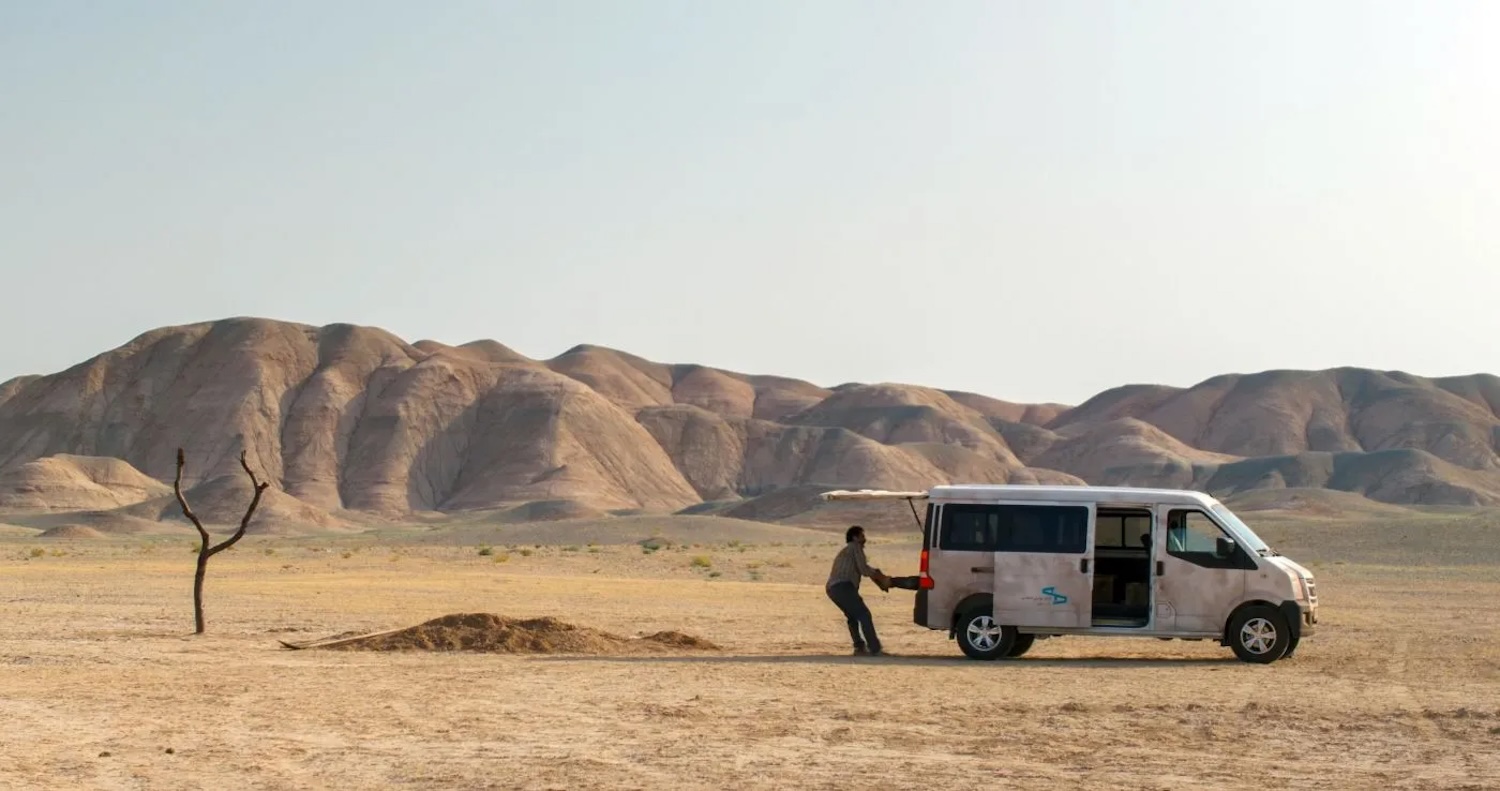
By and large, the major international films at FAF are those Cannes/Venice/Locarno big hitters that have yet to arrive in domestic distribution. But it’s obvious that festival opener, Jafar Panahi’s incredible It Was Just an Accident (above; all films 2025 unless otherwise indicated) speaks directly to a Belgrade audience. The plot hinges on a loose crew of dissidents suddenly happening on their supposed torturer and second-guessing themselves over his identity. Its dissection of the complex catharsis of revenge, and the underlying anger that conjoins this PTSD-inflected group, speaks to the local context, of decades of mismanagement combined with endemic criminality in government producing a stressed-out, pessimistic worldview amongst the populace. Iran’s context, of course, is more explicitly totalitarian than the casual authoritarianism present in Serbia, yet it carries across.
Even more pertinent to the local environment is Kleber Mendonça Filho’s The Secret Agent. Sure, Belgrade in November is a lot more miserable and greyer than Recife during Carnival, but the film’s woozy mixture of thriller, 1970s period piece and cultural excavation makes it one of the most fascinating filmic constructions of recent years, and certainly Mendonça’s best film since his feature debut Neighbouring Sounds in 2012. One minor plot point had the energy within the room shift: it relates to Wagner Moura’s protagonist conducting research on lithium batteries. With EU bureaucrats, national public investment funds, and corporate conglomerates eyeing up Serbia’s lithium-rich Jadar region with the aim of turning it into one of the largest open-air mines in the world – another sticking point of protests against the Vučić government – it is again very pointed and direct programming.
Much of The Secret Agent’s narrative drive emerges from the political conflict between Brazil’s historically poorer, more mixed-race Northeastern region (which includes Mendonça’s hometown of Recife), and its larger, richer and whiter Southeastern cities such as Rio de Janeiro and São Paulo. Throughout the 20th century, the Southeast has drawn resources from the Northeast, with periods of drought and the semi-feudal living conditions of agricultural areas forcing families south in search of work, where they often faced demeaning and xenophobic attitudes from their countryfolk. The neo-colonial attitude of Paulistas and Cariocas2 Colloquial term for folks from Rio. towards Nordestinos is reflected in the way that European, Russian and world capital now encroaches on the Balkans’ natural and human resources, stories from one continent decades ago finding echo elsewhere.

Act Locally
But whilst the international programming certainly attempts to reflect what a modern local audience might respond to, it’s the domestic programming that’s really interesting, providing a snapshot of modern trends in post-Yugoslav and Balkan filmmaking, whilst also being a bit further removed from the more industry-focused Sarajevo Film Festival.
The wealth of archival material produced during the socialist Yugoslav period – thanks to a state that was willing to invest in camera and cultural production come what may – means that there’s no shortage of fascinating documentaries here. The archival holdings themselves may be in various states of political deadlock or disrepair, but for enterprising filmmakers willing to get stuck in the mud, there’s always something interesting out there. Damjan Kozole’s OHO Film is a fascinating retelling of the Slovenian OHO movement of the 1960s, who pioneered conceptual and performance art, inspiring a young Marina Abramović on a trip to Belgrade. The group’s habit of documenting most of their projects on camera ensures that a record of their work survives, and the remaining members provide lucid, exacting witnesses to a time when it felt like Yugoslav art really was at the cutting edge of the world.
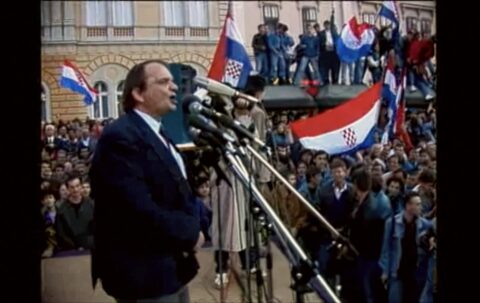
Altogether less rosy-eyed is Ivan Ramljak’s Peacemaker (feature). Set in Osijek, the capital of Croatia’s ethnically mixed Slavonia region, which saw fighting break out in the ‘90s as tensions escalated, it tells the story of Josip Reihl-Kir, the chief of Osijek’s police department, who saw his efforts at maintaining peace between increasingly rabid Croatian and Serbian paramilitaries constantly blocked. That he was murdered by a Croatian nationalist (i.e. “by his own side” in ethno-speak) speaks directly to the nature of nationalism as an ideology not at all interested in freedom or economic prosperity, but purely in political power and the material benefits that it can bring. Indeed, as the documentary’s excoriating sequence of archival footage makes clear – much of it from local news media of the time – Reihl-Kir’s biggest enemies were not those in the villages he would go to speak to, who were living in fear of what ‘the other side’ promised to do them, but those who selfishly stood to gain from control of those villages: the interlopers who would visit the villages to encourage fear and hatred, be they Croatian nationalist politicians from the ruling HDZ, Yugoslav army spies or Serbian paramilitaries.
Amongst the shorts programme is another interesting use of archival footage in Marta Popivoda’s Slet 1988, which draws on an annual mass performance in Yugoslavia that once combined youth from all over the country’s republics and autonomous provinces. By 1988, youth from Slovenia, Montenegro and Kosovo had refused to participate, and that year’s performance was the final one. The archival footage draws on that year’s performance, led by dancer Sonja Vukićević, intercut with Vukićević now, her body frailer but still lost in movement. The film reflects on the link between the body, archival memory and the gendered nature of violence in the ensuing Yugoslav Wars of the 1990s, where rape was used as a weapon of ethnic cleansing, particularly by Serbian forces.
Her feature film, Landscapes of Resistance (2021), also explored Yugoslav history through a woman’s testimony (in that case, partisan fighter Sonja Vujanović), yet there’s something overly academic about Slet 1988. Its explanatory text at the end being in English rankles me: who is this for? Why create a story about ‘our’ collective history as Yugoslavs and then input the explanatory text in English, which was not the dominant spoken language of Yugoslavia?
Globalised Balkans
It is not the only film with this issue at FAF. What felt like a significant proportion of films in Bosnian/Croatian/Montenegrin/Serbian3It’s all the same language, now magically separated for political reasons, often shortened to BCMS. at FAF used exclusively English explanatory text at the start and end of their films, with the local audience reliant on subtitles. Subs can be easily swapped in and out as far as workflows go. Explanatory text is hard-coded into the film text. Why?
Is this simply the result of an increasingly internationalised funding structure for films, where even low-budget short documentaries have to pull in parcels of funding across multiple borders, with English falling in between as the language of least resistance? Or does it also speak to a wider issue at play, where local specificities are sanded away in favour of a generic ‘festival-speak’ cinema, where filmmakers have lost the ability – the financial and structural freedom – to make films for the audience they want, but are being shepherded into filmmaking for imagined festival audiences, because this is what is seen as desirable by funding bodies?
In such a landscape, the notion of ‘auteur’ filmmaking, as per the festival name, disappears. It’s an especially troubling issue for independent filmmakers who might want to create politically ‘undesirable’ films in their home country (this year, the Serbian Ministry of Culture announced funding for all of zero films, in spite of laws specifically stating that the Ministry of Culture must provide some funds each year). This means approaching richer funders in say, Germany or France for parcels of funding, but equally those funders may, unwittingly or no, only invest in projects which may already play into a preconceived version of the Balkans they already have, foreign powers again dictating what domestic culture is supposed to look like (and it looks like this: depressing, grey, poverty-stricken and dealing with PTSD).
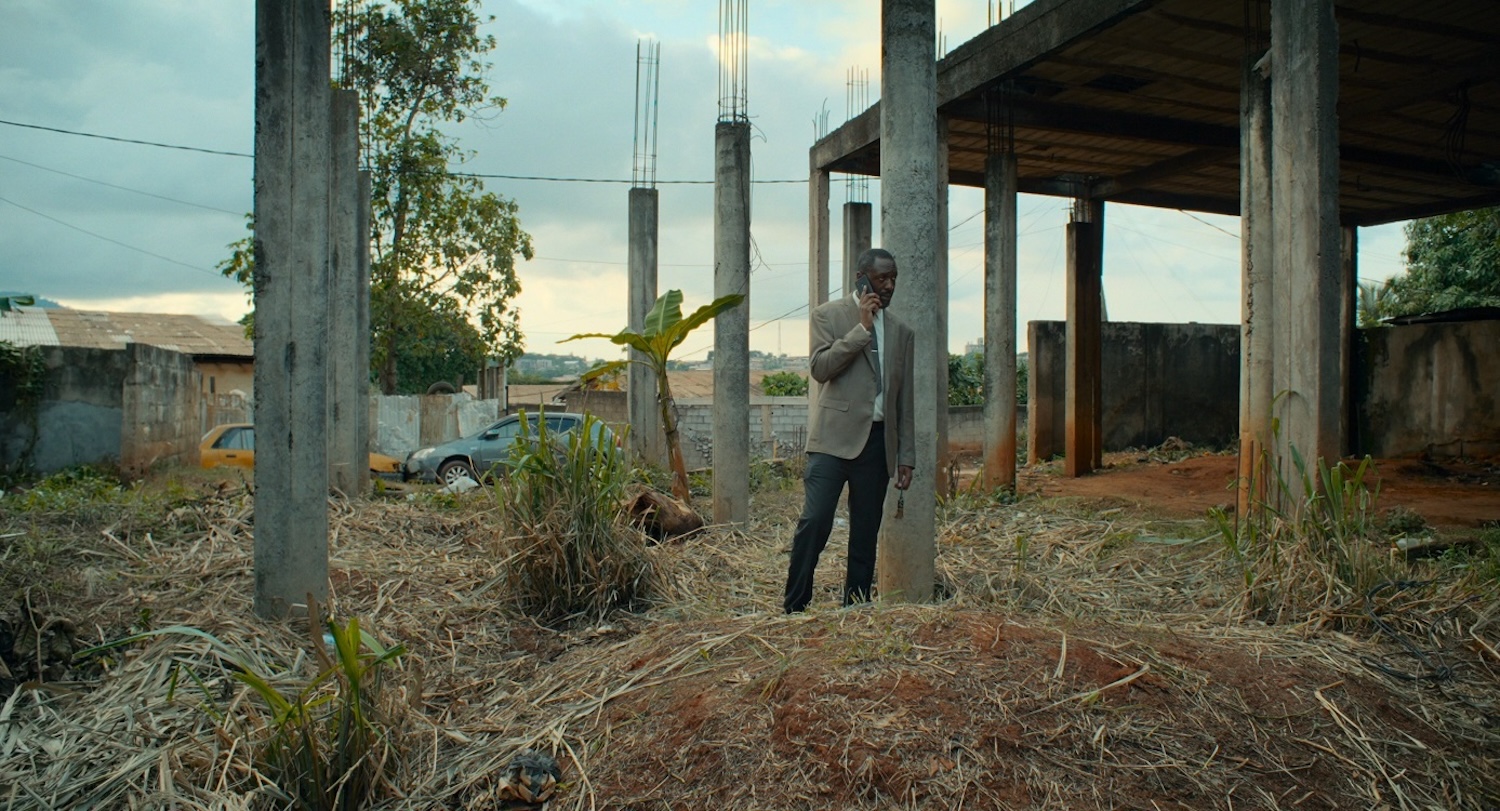
You can see this play out throughout the world, too: the superb Cameroonian-French policier Untamable (above), directed by and starring Thomas N’Gijol, is a wonderful look into the grimy Cameroonian criminal underworld, and a total surprise at FAF. But is the film’s pessimistic nature a true reflection of the state of play, or an act of confirmation bias with StudioCanal playing its part as a production partner in the film?
There’s no obvious answer to this, particularly if the home countries – be they Balkan, African or elsewhere – have no institutional or commercial infrastructure for producing films. The best solution I can think of is a filmmaking model that’s as artisanal, individual and minuscule as it’s likely to get. Thankfully, there’s evidence in the Balkans that this is increasingly the case, particularly in the shorts programme.
Green Shoots
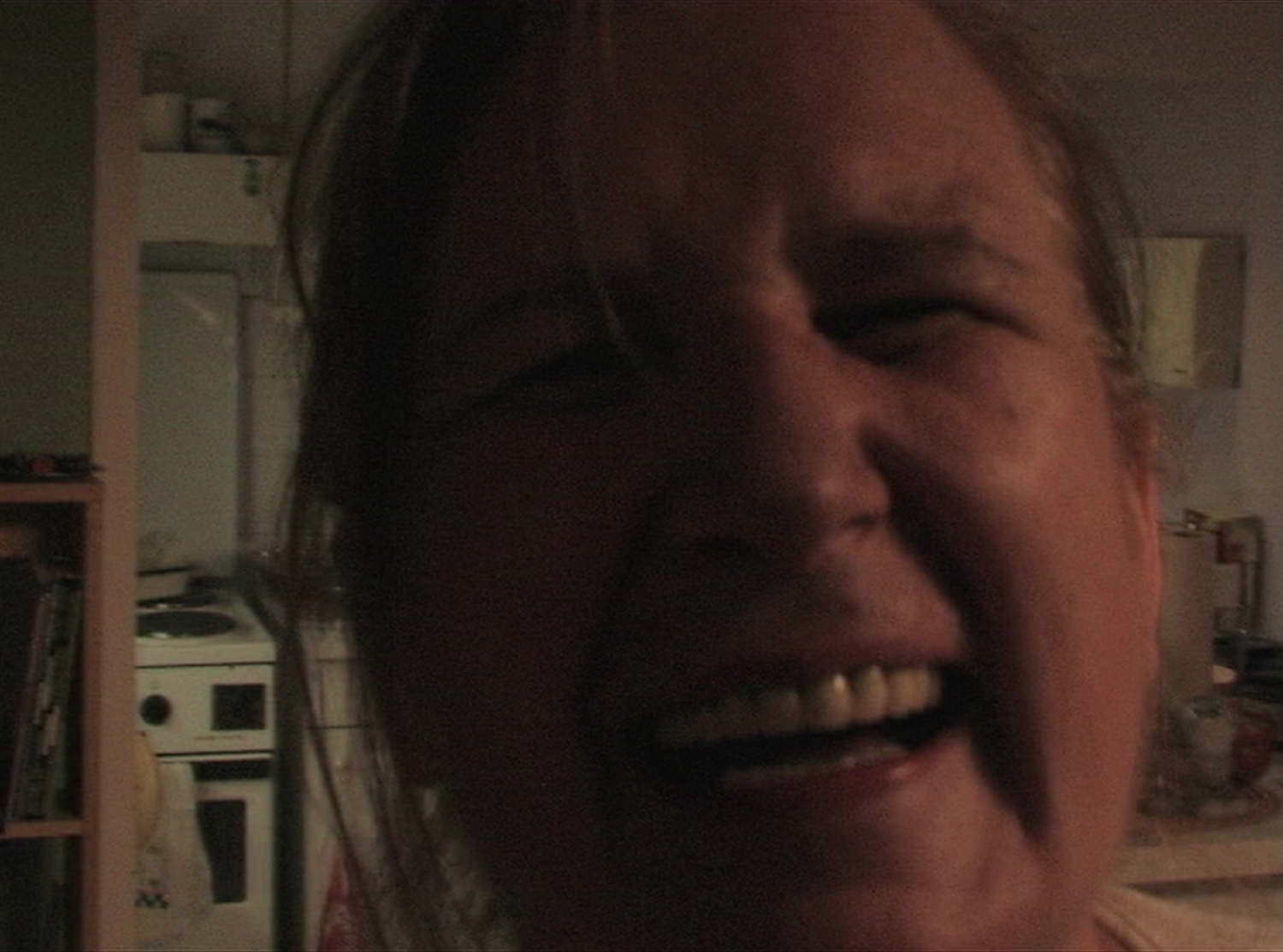
Hysterical Fit of Laughter by Dušan Zorić and Matija Gluščević (above) takes a look at a middle-aged woman’s interest in domineering BDSM roleplay and the way it both seems to liberate her and seeps in awkwardly at other elements of her life. With grungy, low-grade camerawork and a superb lead performance from Snježana Sinovčić, it finds something wonderfully truthful about modern-day Balkan personal identity, fragmented and strung-out to the point of, well, a hysterical fit of laughter. The duo’s 2022 debut feature, Have You Seen This Woman? struck a similarly berserk, distorted lens (and remains one of the best Balkan films of recent years), and this short solidifies them as serious talents. Existence is a Coincidence by Veljko Petrović functions as a sister film, striking the same surreal tone, albeit with a more deadpan Roy Andersson-esque tone.
Tarik by Adem Tutić is another confident work, looking at the troubled adolescence of the titular teen (great performance by Dimitrije Tarinković), a Muslim-Serbian boy who is bullied at school in majority-Orthodox Lazarevac, and comes back to live with his dad in majority-Muslim Novi Pazar in southern Serbia. There, he finds that in spite of his dad’s ethnically ‘Othered’ status, there remains just the same toxic Balkan machismo. Tarik is finely acted and crafted for sure, though it is rooted firmly in the realist tradition, and that is part of my problem with it: it presents ethnicity and/or religious identity in the Balkans as something that is fixed and struggles, as a text, to move beyond this. Of course, many in the Balkans, particularly nationalists and traditional liberals, do treat ethnic and religious identity as a fixed point, but I’m of the opinion that art should be pushing beyond this.
To that end, I’d single out The Divided City of Mitrovica by Marko Grba Singh as one of the highlights of FAF. An experimental documentary set in Mitrovica, Kosovo, currently divided between Serbs north of the river and Albanians south, it focuses largely on a sequence of images of trees, often with nearby houses abandoned or destroyed in the war. Two poems appear in silent text at the bottom (in English because, in this instance, to pick Serbian or Albanian over the other is to play the ethno-linguistic game, which we do not want). The poems talk of conflict with mothers. Later, the camera focuses on slices of life, before zooming in on a young man. The image continues to zoom until it becomes simply distorted pixels, invisible, before zooming out again to situate us once again in the Kosovan landscape.
In its quiet and focused way, The Divided City is an attempt to disintegrate ethnic divisions and look to the future. The poems, and their descriptions of painful, maternal arguments, combine with the silent emptiness of the landscape to produce a void of grief, but the shift to a zoom – a simple, instantly noticeable aesthetic choice – feels like a way of calling attention to the future, to the need to move forward in a way that shifts beyond identity. Here, the pixels, the very texture of modern image-making which defines so much of our visual identity these days, are blurred, distorted and fragmented to the point where they cease to have any meaning. It is at this point, of course, that new meanings can be created – meanings that might provide a better future for all.
I leave Belgrade not fully convinced – not that I ever was in the first place – that the modern film festival is the best place to engage in our political and cultural futures. But I can see the sprouts continue to shoot up through the broken concrete of modern film, producing new meanings and new images, ones which might contribute to something more meaningful in the years to come. Better days are coming.
Fedor Tot is a Yugoslav-born Wales-raised Brazil-based film critic and curator specialising in Balkan cinema, with bylines at WeLoveCinema, Mubi Notebook and Photogenie.
- Fedor Tot

- Fedor Tot
- Fedor Tot
- Fedor Tot