When I moved from the Midwest to New York at seventeen, I quickly realised that gay porn actors weren’t some distant, untouchable species. In my first couple of years in the city, I met more than a few — everyone from fresh-faced Treasure Island cumdumps to chiselled Falcon bros to older men who had already left the industry. Guys I’d previously known only from videos, magazines, or the early web were suddenly part of my social world. They went to the same parties, ran in the same circles, and yes, sometimes wanted to hook up.
I had a vague sense that it might be better not to know them too well, and definitely not to sleep with them (a rule I broke more than once). Intimacy threatened to collapse the fantasy. To know them as people meant acknowledging their full subjectivity, rather than letting them remain screens for projection and desire. This is often compared to the letdown of meeting a celebrity in real life, but porn works differently. The fantasy is more private, more internal — and because of that, easier to disrupt.
More than twenty years later, that feeling has shifted. I’m now far more interested in who these people are beyond the images they made: their personal histories, inner lives, and the long arc of their identities before, during, and after their time on camera. I love hearing stories of how they collaborated with others, which actors and directors were the right fit, and so on. This interest isn’t about sensationalism, or the familiar stories of addiction, illness, crime, or burnout that so often get attached to the industry. What draws me instead are the psychological and existential questions the work raises: how performing a sexual persona reshapes a sense of self; how years of objectification settle into the body; what it feels like to move from being a concentrated object of desire to an ordinary, ageing person.
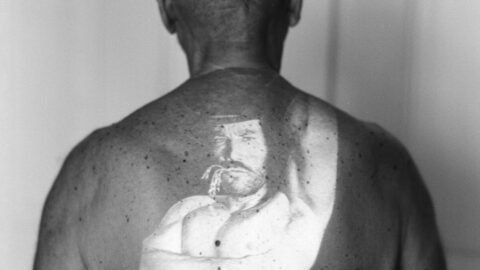
Mickey & Richard (2026), Ryan A. White and A.P. Pickle’s new film about 1980s porn actor and COLT model Mickey Squires (born Richard Bernstein) takes these questions seriously. It offers a rare, reflective portrait of pornography not as spectacle, but as lived experience. The film is grounded in the idea that Squires has always existed somewhere between his private self and his performer persona, and that tension gives the documentary its momentum. Aside from a few brief audio clips from anonymous fans, the story unfolds entirely in Squires’ own words, creating an intimacy that feels direct and unguarded. This split identity goes far beyond the invention of a screen name or an on-camera alter ego. The film explores both sides of Squires as he leaves the industry, returns to it in a changed form, loses his one true love, moves back home, works normie hotel jobs, battles drug dependency, struggles socially, ages with HIV, and reckons with a body that no longer behaves the way it once did. The level of honesty on display is striking; it’s hard to think of another documentary about the gay adult film world where a performer opens himself up this fully.
The film is just as thoughtful visually. Much of it is shot on grainy 16mm black-and-white, a format we’ve never really seen Squires in until now. At key moments, it shifts into digital colour, becoming reflexive as we watch Pickle filming someone who has always enjoyed being filmed. These scenes — shot in Palm Springs by his pool, around his apartment complex, or posing in cowboy gear in the desert — highlight Squires’ relationship with the camera as an older, changed man and his evolved awareness of performance. Archival footage from his career is woven throughout, often acting as a visual counterpoint to his narration. The result is a film that balances memory and storytelling with elegance and insight — and plenty of playfulness.
The documentary unfolds chronologically, growing richer as Squires ages and eventually returns to performing. At one point, he comes back to modelling with Palm Drive Video. The DIY studio, run by Jack Fritscher and Mark Hemry, was the subject of the filmmakers’ previous feature, Raw! Uncut! Video! (2021). It emerged in response to the AIDS crisis and focused largely on solo performances with big gooner energy. Early in Mickey & Richard, Squires recalls that when he was younger and out at gay clubs, it didn’t really matter whether he went home with someone or not — he could always get off to himself in the mirror. It goes without saying that Palm Drive Video was a perfect match for someone with such a pronounced autoerotic streak.
The film’s structure mirrors the rhythms of Squires’ life, making clear that a porn performer’s story is anything but static. It ends on a moving, powerful note, offering a full sense of both the performer and the person — how they may never fully align with one another, yet both are fearless enough to let us in and explore.
Earl lives in Baltimore, Maryland
- Earl Peterson

- Earl Peterson

- Earl Peterson

- Earl Peterson