There’s always a lot going on at the Berlinale. This is why it’s sometimes not possible to do an entire 500-600-word review on everything that we see. Instead, think of this article as a movie writing buffet, offering a wide selection of takes on a wide selection of films. A previous version of this article said that it wasn’t a great year, but after a couple more days, I think Tricia can be proud of the wide variety of visions here, right from a fantastic opening movie to one of the best depictions of dementia you will ever see.
Every film is 2026 unless otherwise mentioned.
Opening Movie

No Good Men by Shahrbanoo Sadat
Finally! A good opening movie. It does what any festival opener should do: raise the mood, stir the soul and get us excited about what is to come. No Good Men (Shahrbanoo Sadat, 2026) may not be a perfect movie — parts are downright clumsy — but it has a winning heart, melding romantic comedy, newsroom drama, a spiky woman’s picture, a battle-of-the-sexes and ripped-from-the-headlines political reportage to oddly heartwarming effect.
It’s kind of like Broadcast News (1987), if James L. Brooks newsroom classic was set during the American withdrawal from Afghanistan. Naru (Shahrbanoo Sadat herself) is a camerawoman working boring call-in therapist shows when she gets the opportunity to shadow a prestigious journalist, Qodrat (Anwar Hashimi), on a trip to interview a leader of the Taliban. Naturally, he doesn’t appreciate a woman working with him, especially when her veil slips off, cutting the interview short. But of course, she probes him, and he, slowly but surely, shows that there is at least one good man left in the deeply patriarchal society.
With plenty of discursive dialogue, a freewheeling comic tone, and some downright cheesy choices — veering us into firm melodrama territory – Sadat’s film manages to corral its blend of tones into a powerful exploration of love, sacrifice and a potential future for male-female relations. Subtle it ain’t, but it’s sincere and real, culminating in a show-stopping Lost In Translation (Sofia Coppola, 2003) riff that feels deeply earned.
Competition
Nina Roza by Geneviève Dulude-de Celles
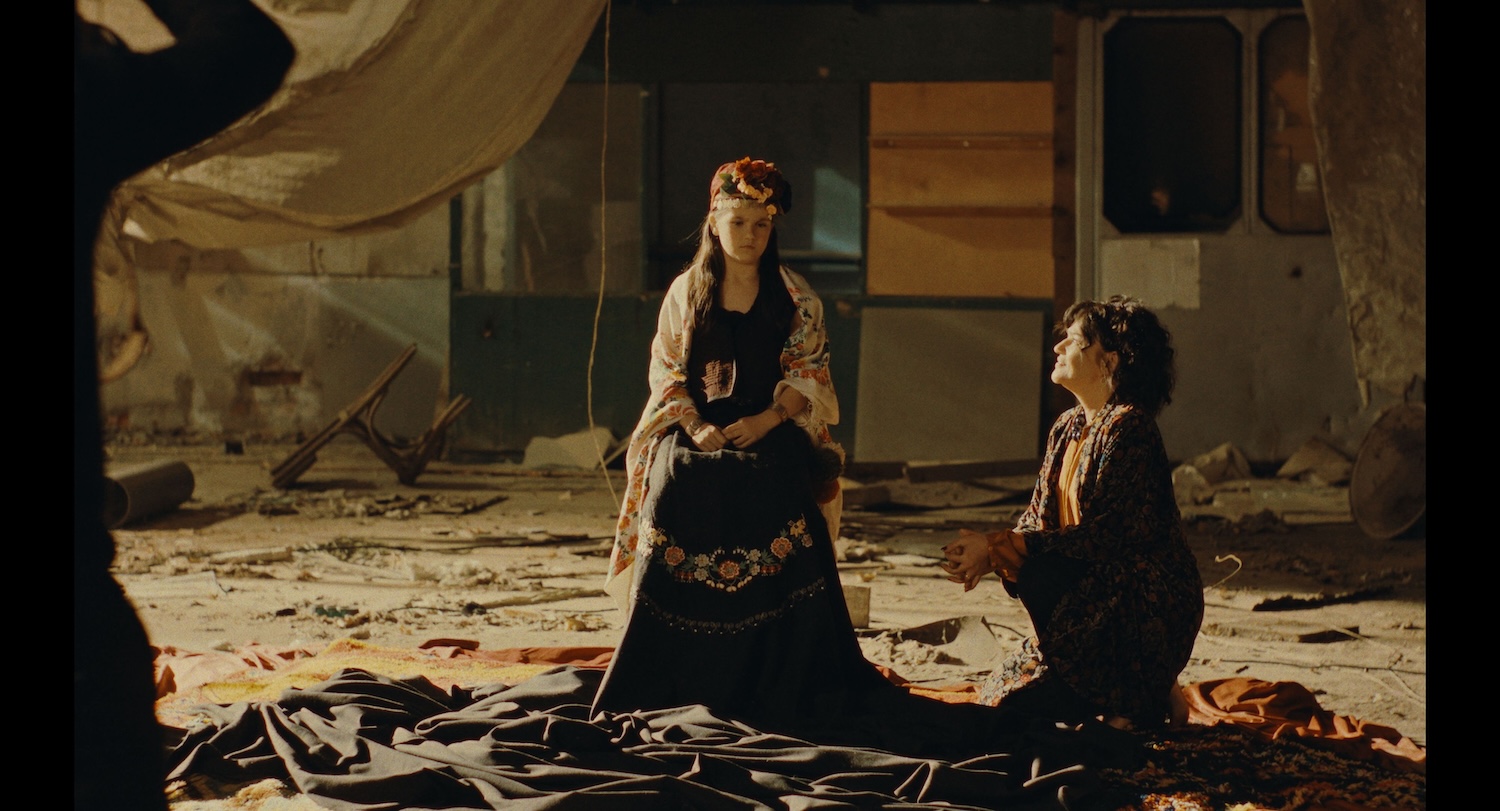
This one is handsomely made and sensitively acted, but it can’t shake a persistent feeling of simply okayness. Here, a middle-aged Bulgarian art curator (Galin Stoev) living in Montreal returns to the mother country to check out an eight-year-old painting prodigy, in the process uncovering his own complicated feelings towards leaving, losing his wife and the exploitation of rural talent.
Rich territory, but the filmmaking is pedestrian. Every time someone smokes, we cut to a side profile; every ride in a car requires an aerial shot; every important scene requires a close-up. And those flashbacks to his life with his young daughter and dead wife? They feel like filmmaking 101: the bare minimum achieved, but nothing vital reached. For a much better tale of a Bulgarian returning home from North America1(weird there are two movies on this theme at Berlinale) check out the far superior Lust (Ralitza Petrova).
Yellow Letters by İlker Çatak
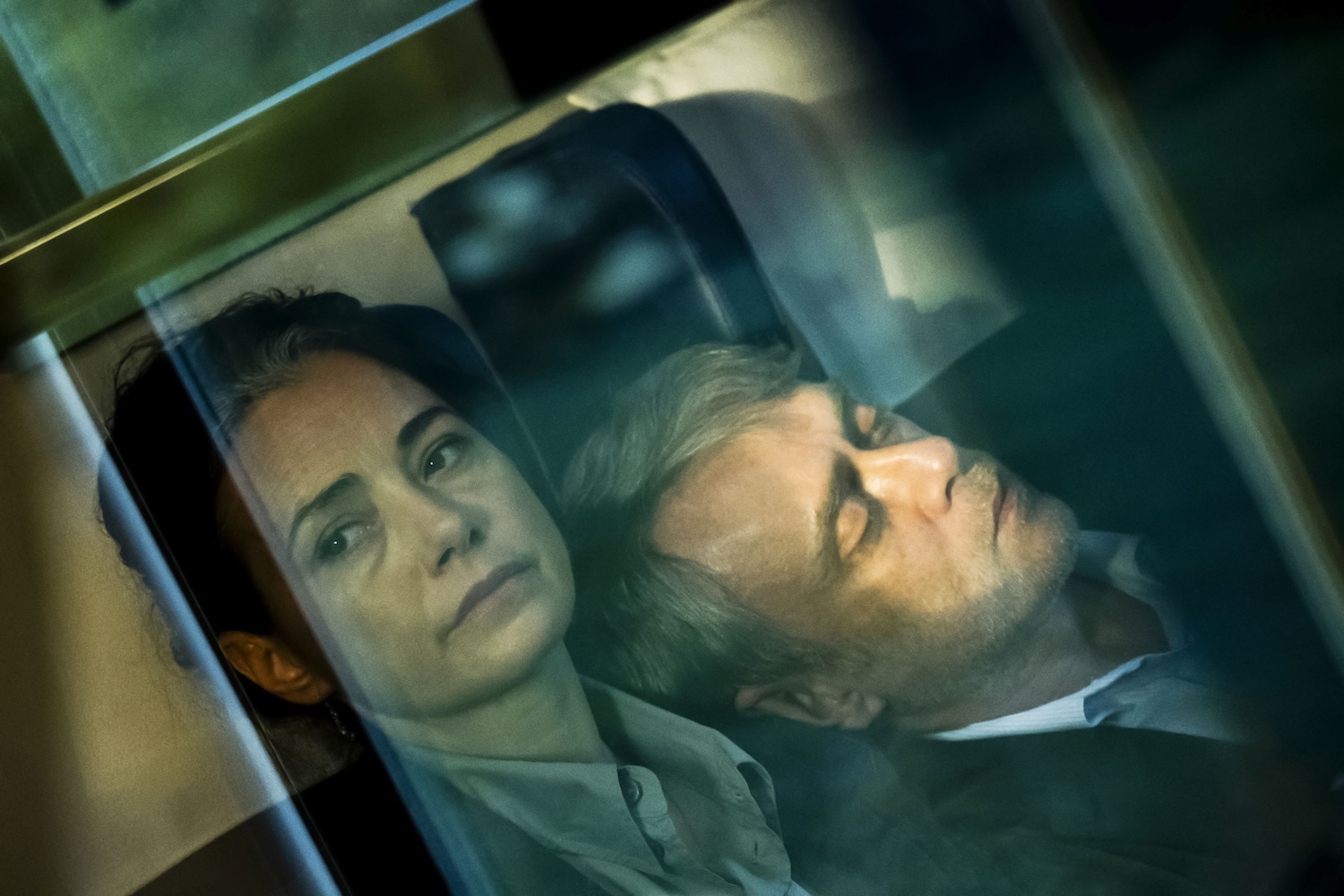
Berlin as Ankara. Hamburg as Istanbul.
Transposing these cities on top of each other isn’t that strange considering how many Turks live in both cities, but it still creates both an alienation and layering effect, forcing one to take a step back and consider the bigger political and dramaturgical picture.
Yet this tale of marital woe compounded by top-down censorship is exhaustive in all the wrong ways, with dialogue so protracted, spelling out every theme with blunt, tired didacticism, that I longed for a more imaginative conceit beyond the German-Turkish mirror image. A major disappointment from the director of breakout success The Teacher’s Lounge (2023).
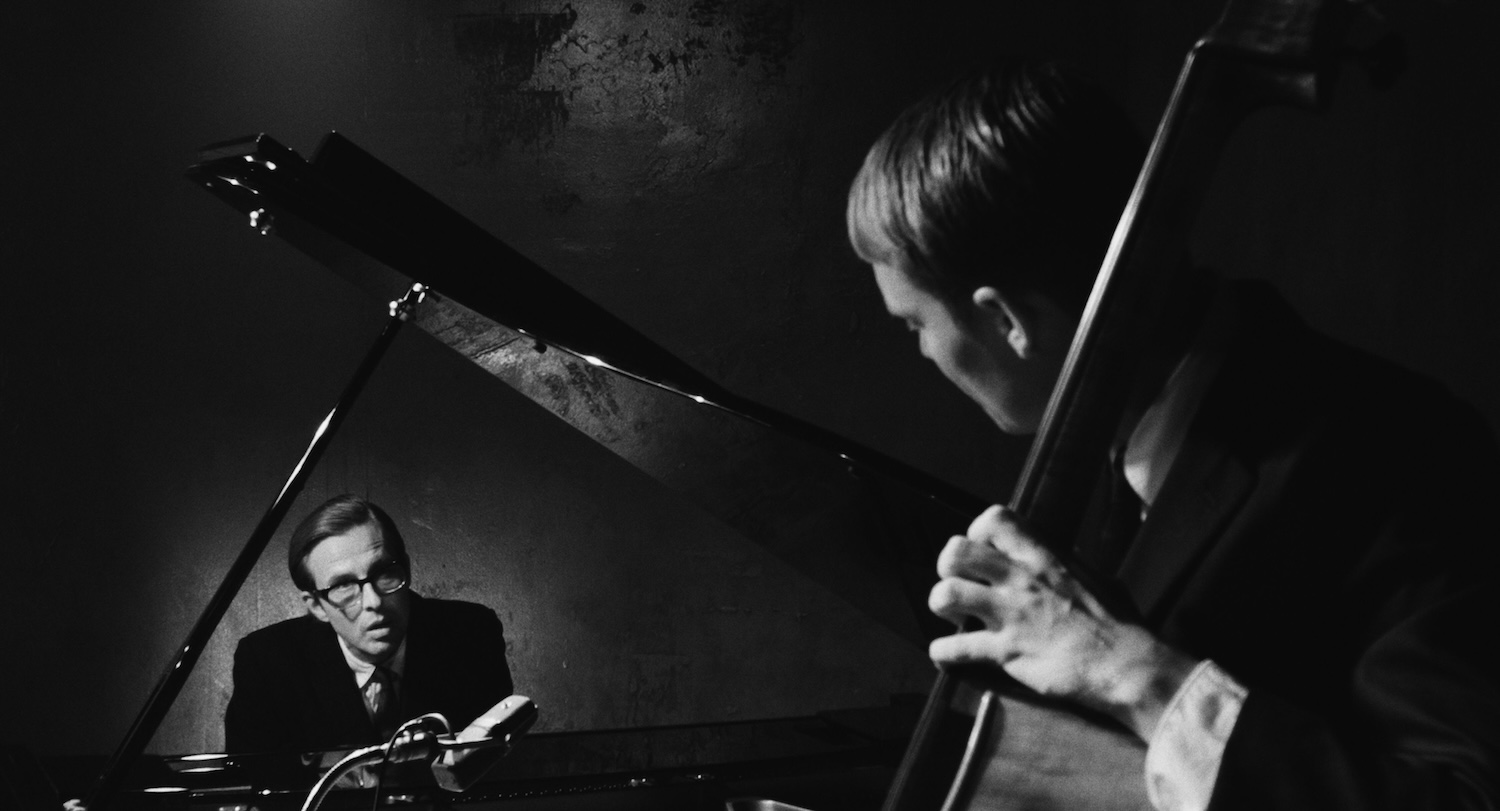
Everybody Digs Bill Evans by Grant Gee
Sometimes an intermission is part of the music, says Bill Evans’ (Anders Danielsen Lie) mother (Laurie Metcalf) in this mithering biopic. Yes, I guess, but it’s not the reason you buy a ticket to the show. Why are so many artist biopics about mental health struggles between albums? Everybody Digs Bill Evans is more technically accomplished than the dreary Bruce Springsteen doc, but it suffers from the same sullenness in tone and central characterisation, with Lie’s study in passiveness quickly growing tiring. This film reminded why I liked that Bob Dylan movie a lot: here was an inscrutable, talented asshole, playing a lot of great music, during a fascinating scene. This is just one big lull between more interesting events in Mr Evans’ life. Bill Pullman and Laurie Metcalf are great as his arguing parents, though. I wished it were their movie.
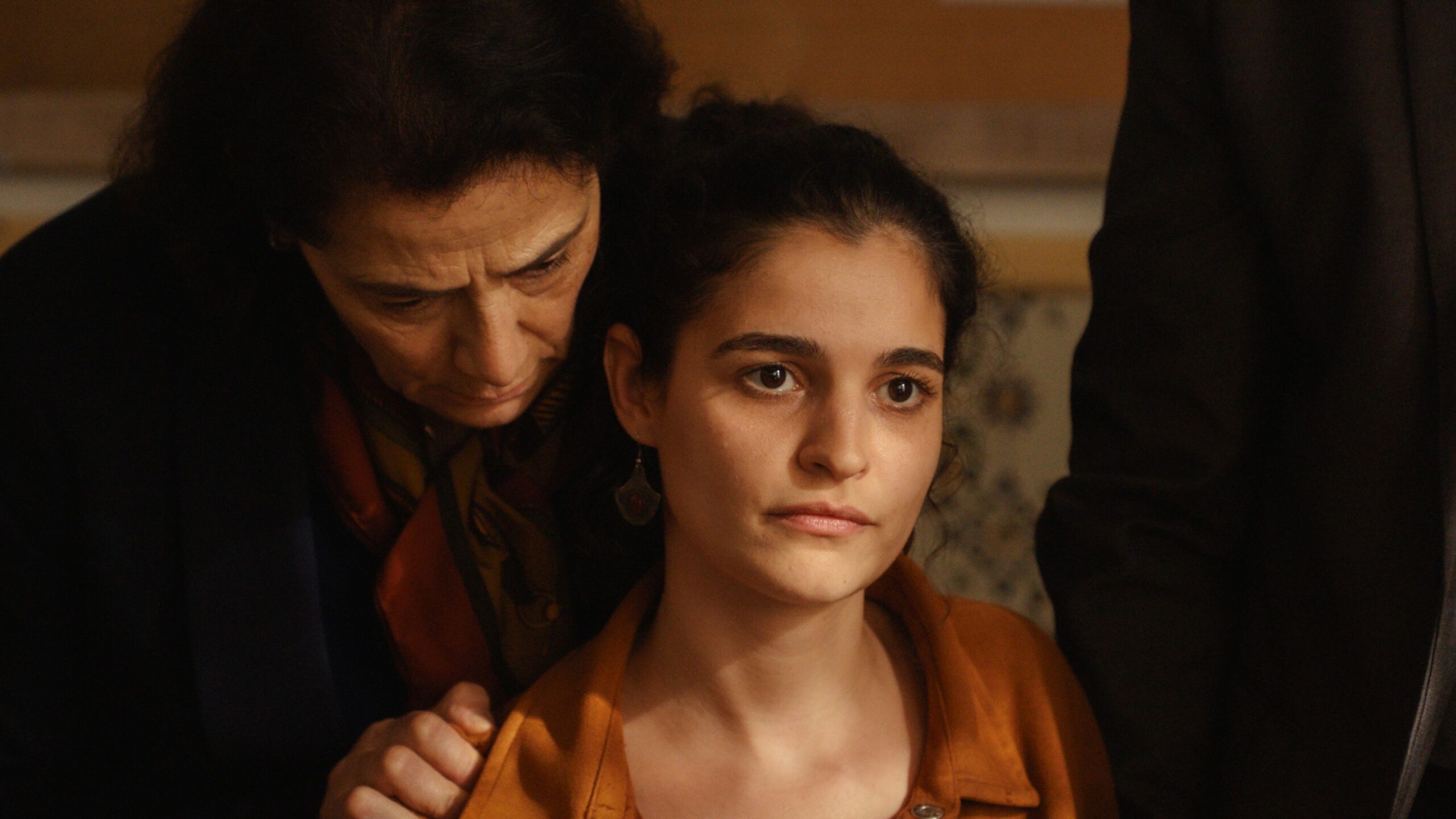
In A Whisper by Leyla Bouzid
A perfectly respectable and extremely earnest drama examining social mores in Tunisia when a young lesbian (Eya Bouteraa) returns for her uncle’s death. When it’s discovered that he was a homosexual, it prompts her own journey of self-discovery. The emotionally chaotic white girlfriend (Marion Barbeau) is amusing (perhaps in the wrong way), but the fine Hiam Abbas (redeeming herself already for Only Rebels Win [Danielle Arbid, 2026]) steals the show as her mother, imbuing routine dialogue with a life filled with compromise. It’s a shame the movie is so timid; the brilliant ending suggests a far braver, thought-provoking and provocative drama. It’s got nothing on the incredible Tunisian film Streams (Mehdi Hmili, 2021) — which generated no buzz whatsoever despite its whip-smart, confident filmmaking and right-on polemical tone. I like to think that, one day, its time will come.

Rosebush Pruning by Karim Aïnouz
🥴
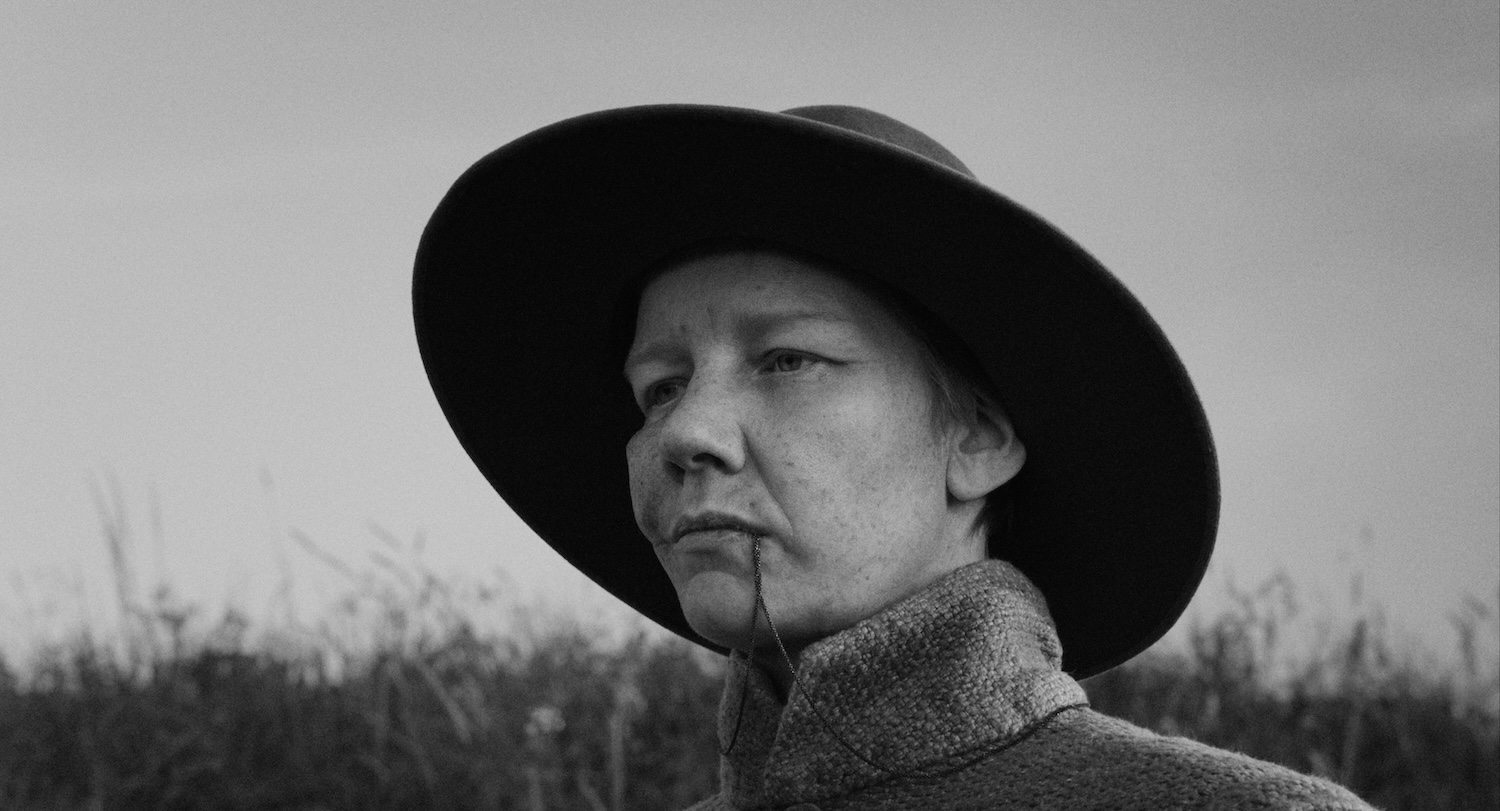
Rose by Markus Schleinzer
Her tale is presented in 18th and 19th-century text, declaring her a rogue and a schemer along the lines of Redmond Barry. But the more you learn about Rose (Sandra Hüller), assuming the identity of a man to acquire an inheritance and the benefits of the patriarchy after the 30-years-war, it becomes abudantly clear that she is a dreamer, striving for a better life in a world that lacks imagination. Schleinzer’s story, shot in austere black-and-white, is a miserablist exploration of misogyny and transphobia, all the more powerful for the lightness that somehow seeps through the forbidding frames. Shame on the idiots in the audience who found all the genitalia stuff funny. A person’s manhood (or supposed lack of it) is no laughing matter, especially in a world that still places an unhealthy obsession on a person’s body instead of the contents of their character. A deeply sad tale, awash in sensitivity.
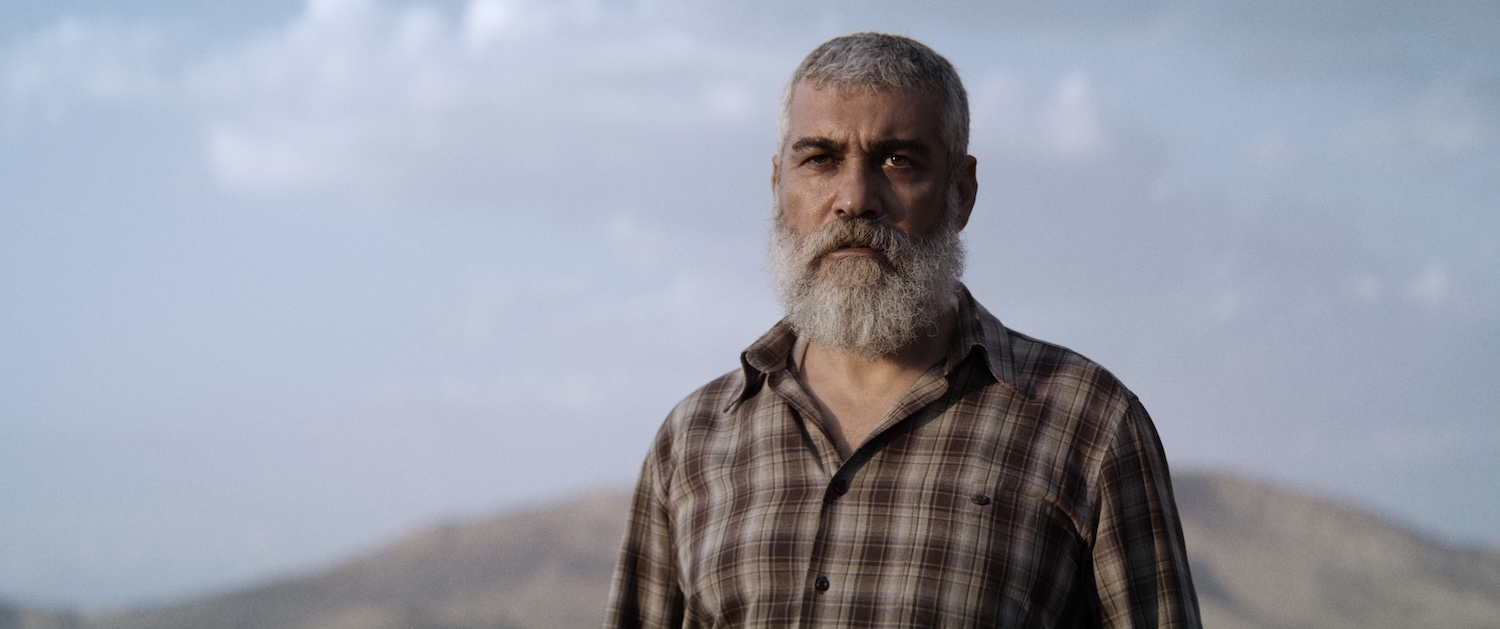
Salvation by Emin Alper
Dreams, visions, ghosts and demons feature throughout Alper’s slow-burning village drama, anchored by a blistering lead performance by Caner Cindoruk as tribe leader Mesut. At times, the visions of fire and apocalypse can frustrate (a bit too many instances of it was all a dream here), yet they imbue Alper’s dark vision of fundamentalism with a feeling of inescapable dread. There’s also a subtle thread of emasculation here, showing how behind every tyrant is an insecure little cuck.
It all builds to a thunderous conclusion, like something out of the darkest revisionist Western. But god, it takes a while to get going. Like Yellow Letters, the other Turkish movie in competition, this is chatty chatty chatty. Adilkhan Yerzhanov could’ve made a far more blistering movie with about ten per cent of the dialogue.

At The Sea by Kornél Mundruczó
It all rests on Amy Adams’ face. Everything is there: bad decisions, uncertainty, resolve. It’s how the film begins; it’s how it ends. The exceptional actress imbues At The Sea with a real sense of hard-won feeling, tiding over the more cringy aspects — dance as a metaphor, undercooked flashbacks, one-step-at-a-time platitudes — of Mundroczo’s sentimental vision.
Many people may find this tale of a newly sober mother overwrought and melodramatic, but I found its sincerity remarkably moving. Yes, she desperately wants an Oscar, and no, it won’t be this time, but the deft mixture of tones here certainly reaffirms the six-time-nominated actress as one of the best in the business today.

Queen At Sea by Lance Hammer
I said in my preview that big movies don’t premiere at Berlinale anymore. God, am I glad to be wrong. Lance Hammer’s exquisitely rendered tale of a family torn apart by dementia is the reason we have film festivals: to be remade anew by great thought-provoking art.
To basically describe how the film begins is to give away its capacity to shock, with scenes of extraordinary brutality — and provocation. What Hammer must be lauded for here is his ability to situate us within the murk of incapacitation, with no right way to treat someone whose mind is slowly ebbing away. And it’s exceptionally shot, utilising fascinating high static angles that put our players in barely a third of the screen. Yet the film is not slavish to its own aesthetic, knowing when to pull to a close-up or a side profile to accentuate its points. This is a cinematography — and acting — masterclass, and easily the best film in the competition.

Josephine by Beth de Araújo
Bit too much hat-on-a-hat-stuff with the elaborate camerawork and certain reverse engineered character decisions like in Adolescence (Stephen Graham, Jack Thorne, 2025), as well as about three-to-four unecessary additional endings, but there’s no denying it: this tale of an eight-year-old girl witnessing a rape and its bitter aftermath is some of the most powerful cinema you’re likely to see all year. Channing Tatum as the dad is a revelation, revealing new, brilliant nuances with every line reading. And yeah, that new kid (Mason Reeves) is not bad either. The rare Sundance hype movie that really doesn’t disappoint.

The Loneliest Man In Town by Tizza Covi & Rainer Frimmel
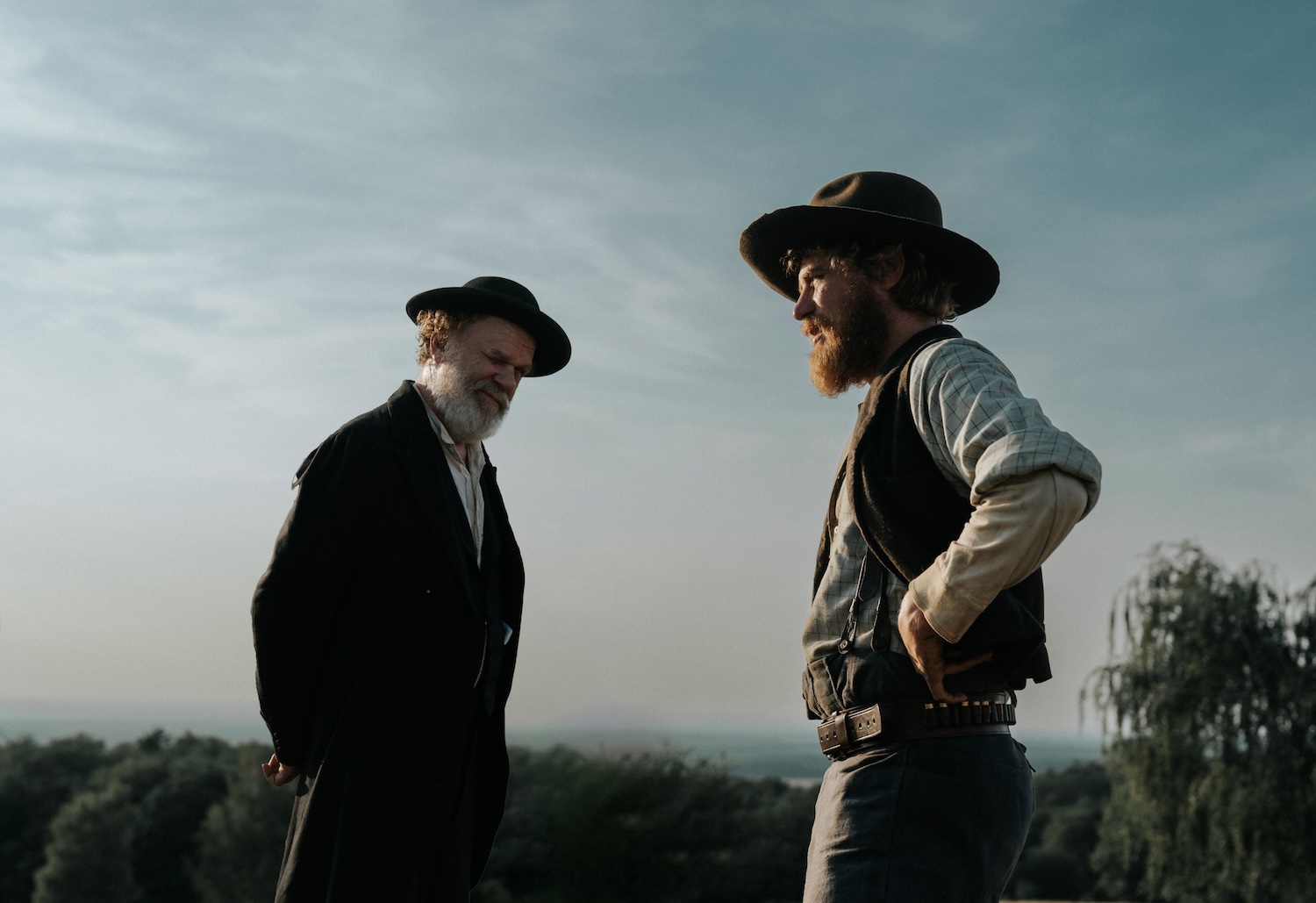
It’s said that Jim Jarmusch made foreign films about America. The idea is that with a certain deadpan tone and a naive approach to all things Americana, it feels like only an outsider (and Jim Jarmusch) can truly capture the uniqueness of the vast strangeness of USA-life. It’s a point well borne out here.
With this Austrian hybrid film, which is very Jarmuschian in tone, with a bit of Aki Kaurismäki thrown in, you can see how this wry spirit and love of classic rock and roll can locate itself in all kinds of places: namely, the great Viennese Blues musician Al Cook, who despite never making it to America, built up an incredible repertoire of classic Delta tunes.
This gentle, lovely movie, mixing fiction with real people and places, pays tribute to the joys of analogue life: the sound of crackle on a vinyl, the hiss of a projector, the fuzziness of a VHS player. In one archive clip, he rails against the disposability and artificiality of modern music, pointing out that great music needs heart, soul and true feeling. In a world increasingly contaminated by digitalisation and ghoulish AI, this decidedly-human film — deliberately slow pace, gentle humour, shot on film stock — is a deeply refreshing throwback. I certainly know which bars to frequent on my next trip to Vienna!
Perspectives
A Prayer for the Dying by Dara Van Dusen
Johnny Flynn strives for emotions like a small dog strives for food on the table. He’s an affable enough fella, but true feeling is always out of reach. Playing a Norwegian priest/sheriff in this quarantine drama, his limited range confines what should be an affecting tale of societal breakdown to the bathetic realm.
The deliberately artsy crash zooms and 360-degree camera shots don’t help proceedings, making us always aware we are watching a tale of make-believe rather than genuinely experiencing anything meaningful. A real trip into hell, but certainly not the one the director intended. This is somehow worse than Goodbye June (Kate Winslet, 2025).

Where To? by Assaf Machnes
I went into this film worried it would both-sides Israel’s occupation/genocide to death, but this is more of a personal story of fleeting connection and common humanity. Consigned mostly to Palestinian Hassan’s (Ehab Salami) taxi as he drives around Berlin at night while listening to schlager, it finds touching moments as he keeps bumping into queer Israeli party animal Amir (Ido Taki). The conflict is left mostly unspoken, yet a powerful mutual tale of lost love remains. I thought it was well-made, and quite hilarious in parts; but also rather tame, representing a lost opportunity to dig deeper into one of mankind’s greatest atrocities.
Forum
AnyMart by Iwasaki Yusuke
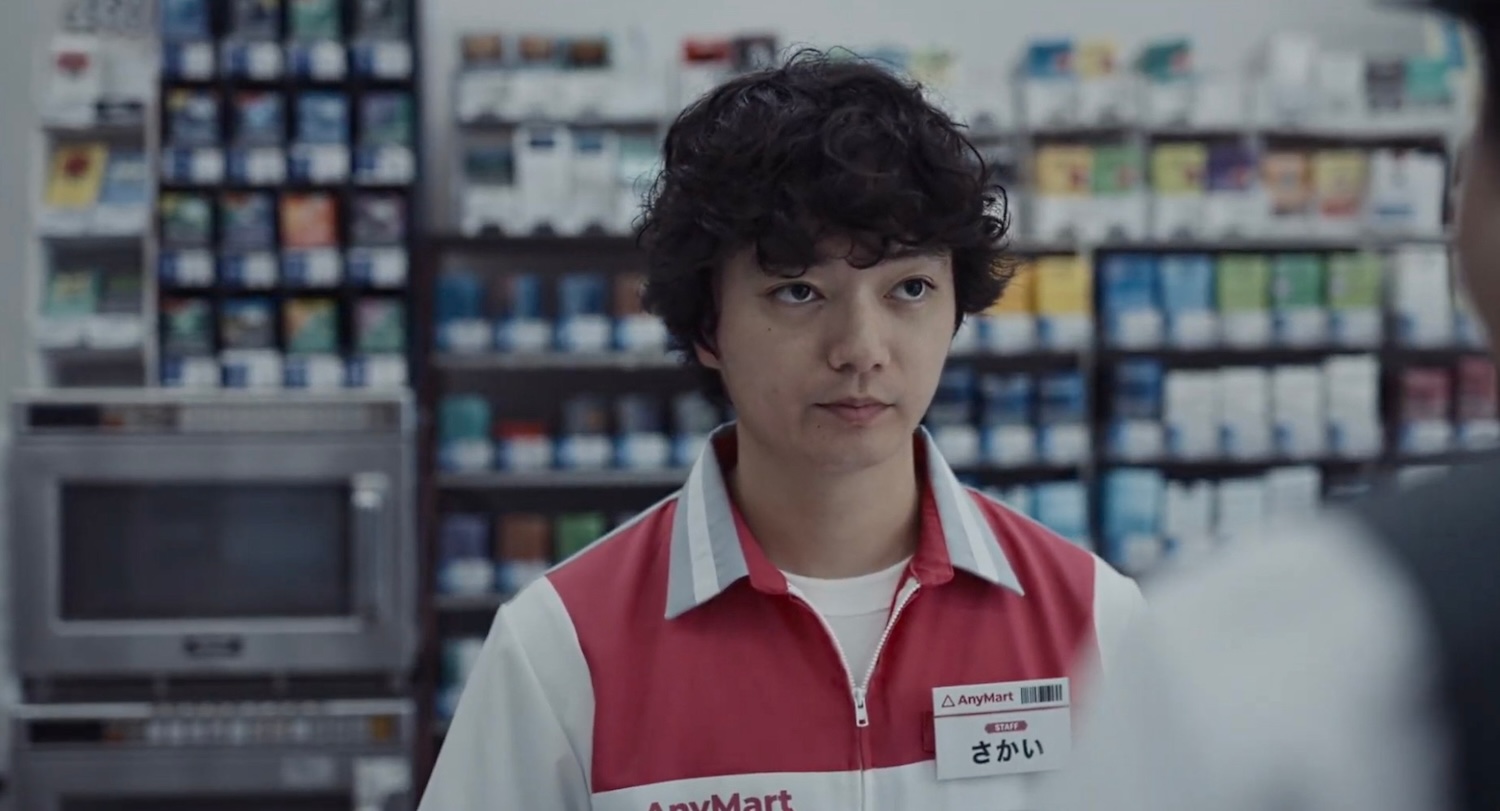
You can get just about anything done at a Konbini. Buy chilled sushi or a pack of instant ramen, make a bank payment, get train tickets, top up your phone, etc. Often running 24/7, convenience store chains like 7/11, Lawson and FamilyMart are the lifeblood of Japanese society. They also make a neat metaphor for the stagnating country at large, particularly how the old guard refuses to innovate, condemning their young to a life of sadness and drudgery. Yusuke’s thoughtful horror-comedy blends a kind of “Day ‘n’ Nite” (Crookers Remix) (Kid Cudi, 2008) music video surrealism with early Edgar Wright mise-en-scène, capturing the absurdity of a non-place, and its wider significance, with wit and humanity. The kills are deeply entertaining; the implications are horrifying.
Masayume by Nao Yoshigai
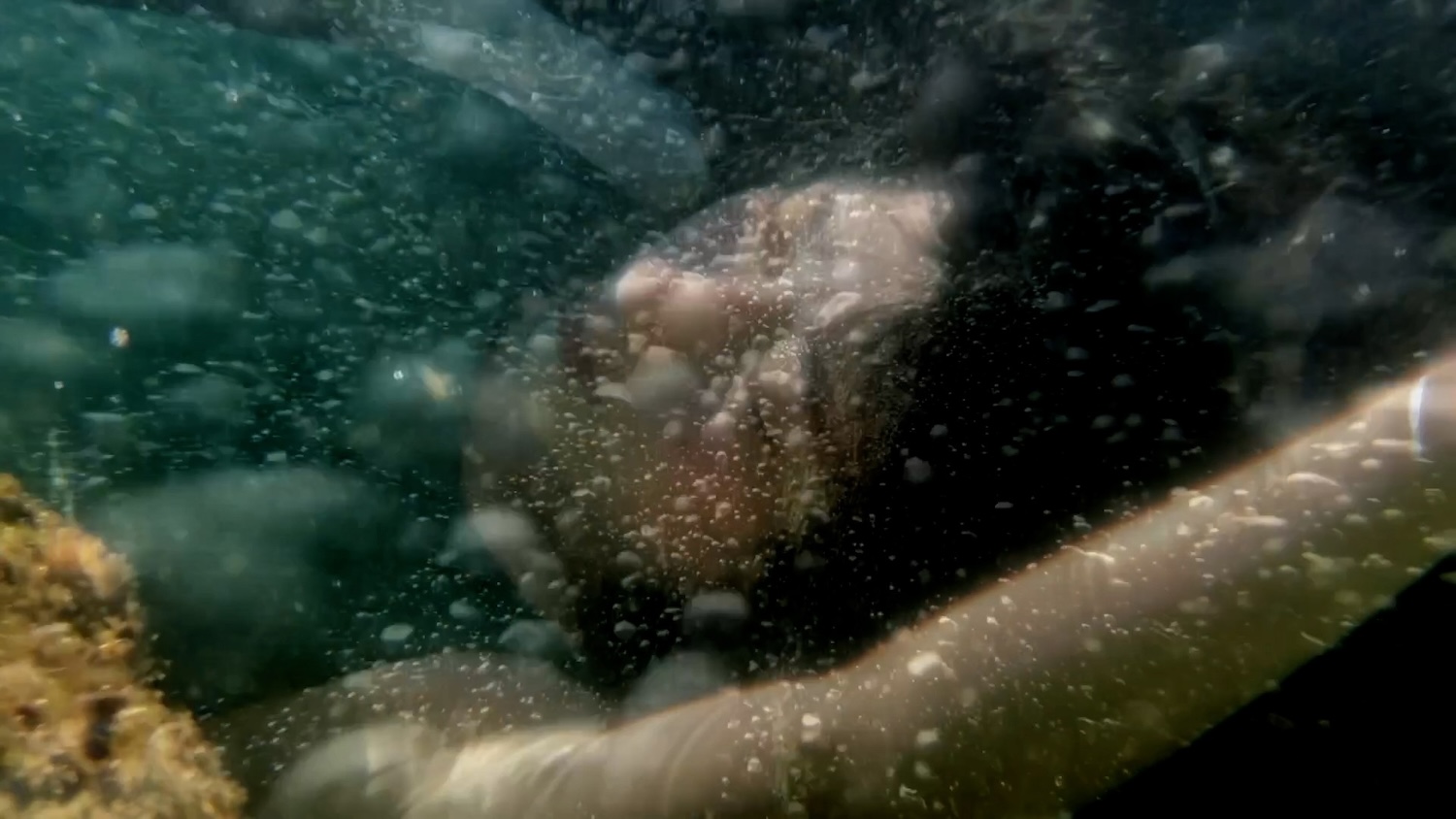
Masayume starts with some of the most exciting and electric images in recent memory; a machine-gun spurt of static film images, some in colour, some in black-and-white, creating a fantastic collage of the hustle and bustle of modern-day Japan in all its neon, jam-packed confusion, accompanied by a wall of sound and silent intertitles explaining our director’s recent troubles with sickness and the death of her mother. But this is then deliberately contrasted with a painstaking exploration of the rehabilitative nature of Zen Buddhism, with this whole idea of nothing really mattering helping Nao get over her grieving pains. Unfortunately, the latter half descends into the most extreme navel-gazing in recent memory, too. For a film about destroying the self, it feels awfully myopic.
Doggerland by Kim Ekberg
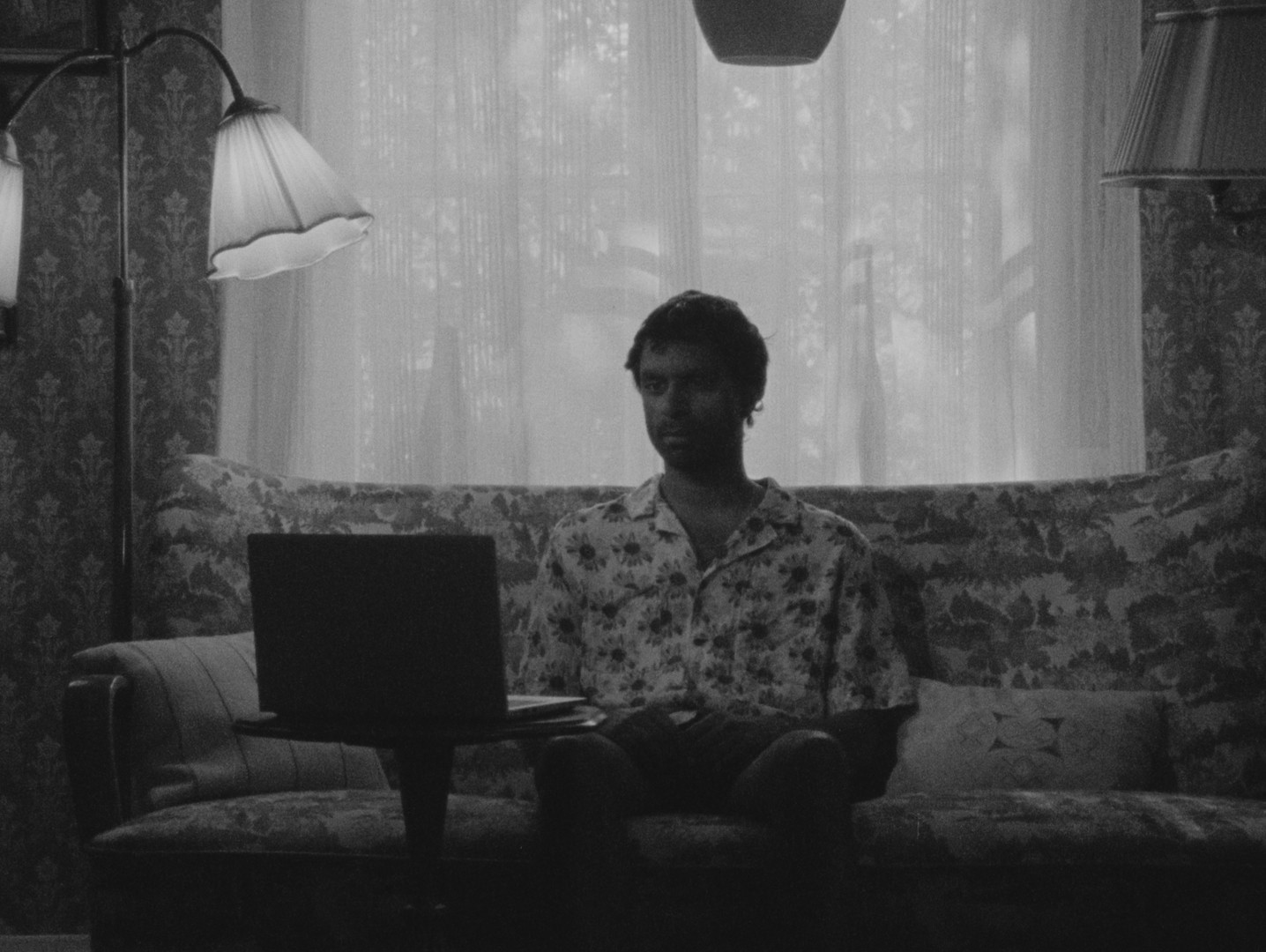
Alf (John Holm) is a throwback in a world where the need to strive supersedes lofty ideals: a slacker obsessed with making it by playing with his diabolo (a kind of string toy used in circuses). His world is a throwback too, a 90s-inspired, black-and-white vision caught in atmospheric and moody 16mm film. Ekberg is less concerned with the machinations of the plot than with creating a homage to the quiet city streets of Norrköping and its unique inhabitants. At first, it felt rather refreshing in its meandering storylines and carefully-hewn images. But this tale quickly tore at my patience, with Holm simply not charismatic enough to carry such a threadbare narrative.
Special
Good Luck, Have Fun, Don’t Die by Gore Verbinski (2025)
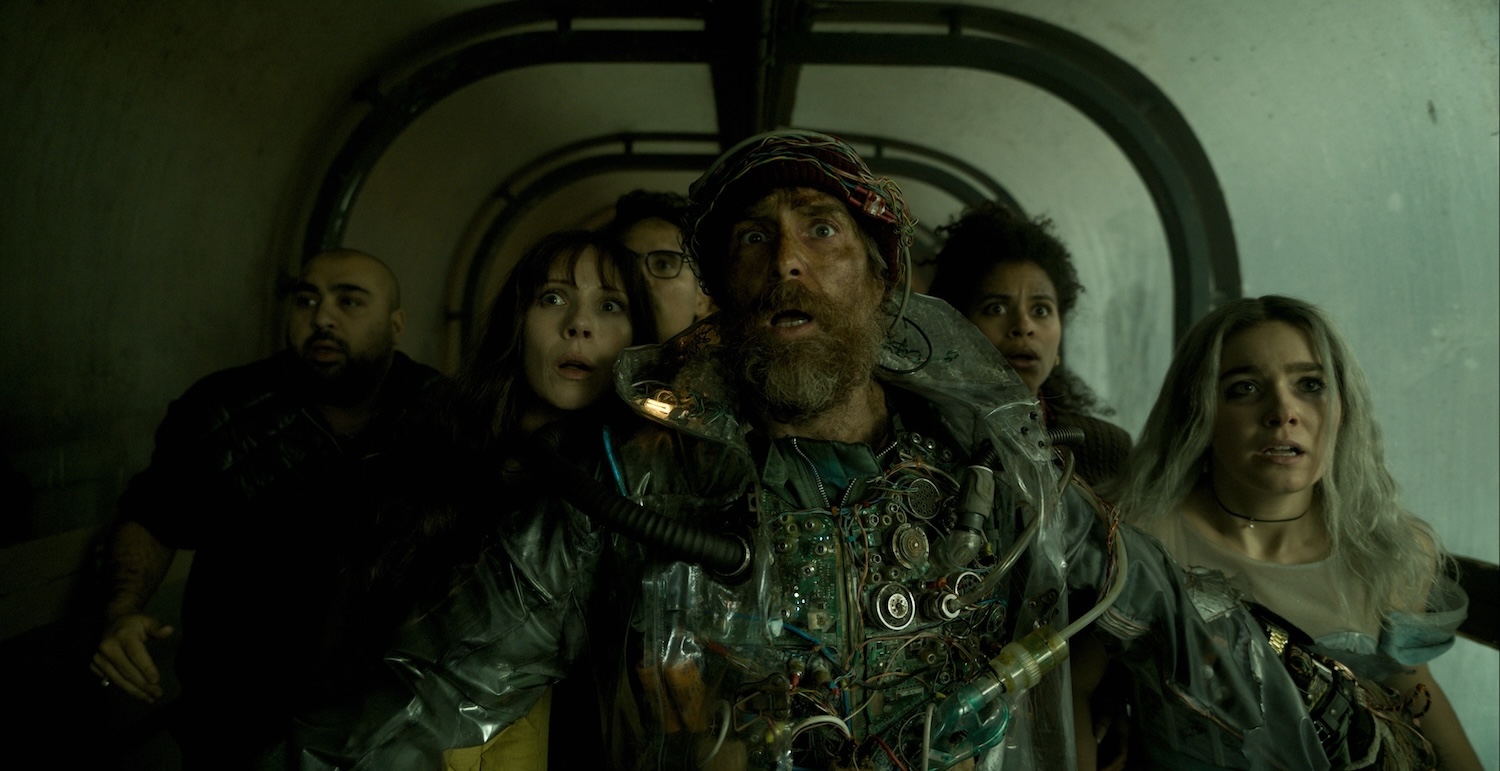
Sam Rockwell does the whole sorta drunk Johnny Depp schtick pretty well in Gore Verbinski’s deliriously entertaining anti-ai/anti-phone movie. He is the real animating force behind this propulsive boomer screed, which takes from our horrific present (everyone scrolling shitty reels, using AI in lieu of their own brain) to warn against an even more horrifying present (AI destroying the world, sheeeeit). Fuzzy on the world-building and blurry on the time travel paradoxes (they basically ignore it), but so exceptionally fun it’s really hard to nitpick. And maybe we still have a chance to change our future, if only we get off these soul-destroying machines.
But don’t take it from me. I wrote this on my phone.

A Child of My Own by Maite Alberdi
A chatty taxi driver the other day asked what I was up to, and when I explained the Berlinale to him, he said, “Netflix?” Well, here’s one from the streamer, a salacious, occasionally-entertaining, morally queasy true crime doc from Mexico about a woman who fakes a pregnancy then steals a baby. Suffers from the platform’s condescending tendency to over-explain everything, as well as all those characteristic head-on close-ups. It’s fine. The audience loved it. Maybe my one-time driver will too.
Panorama
Opening Film: Only Rebels Win by Danielle Arbid
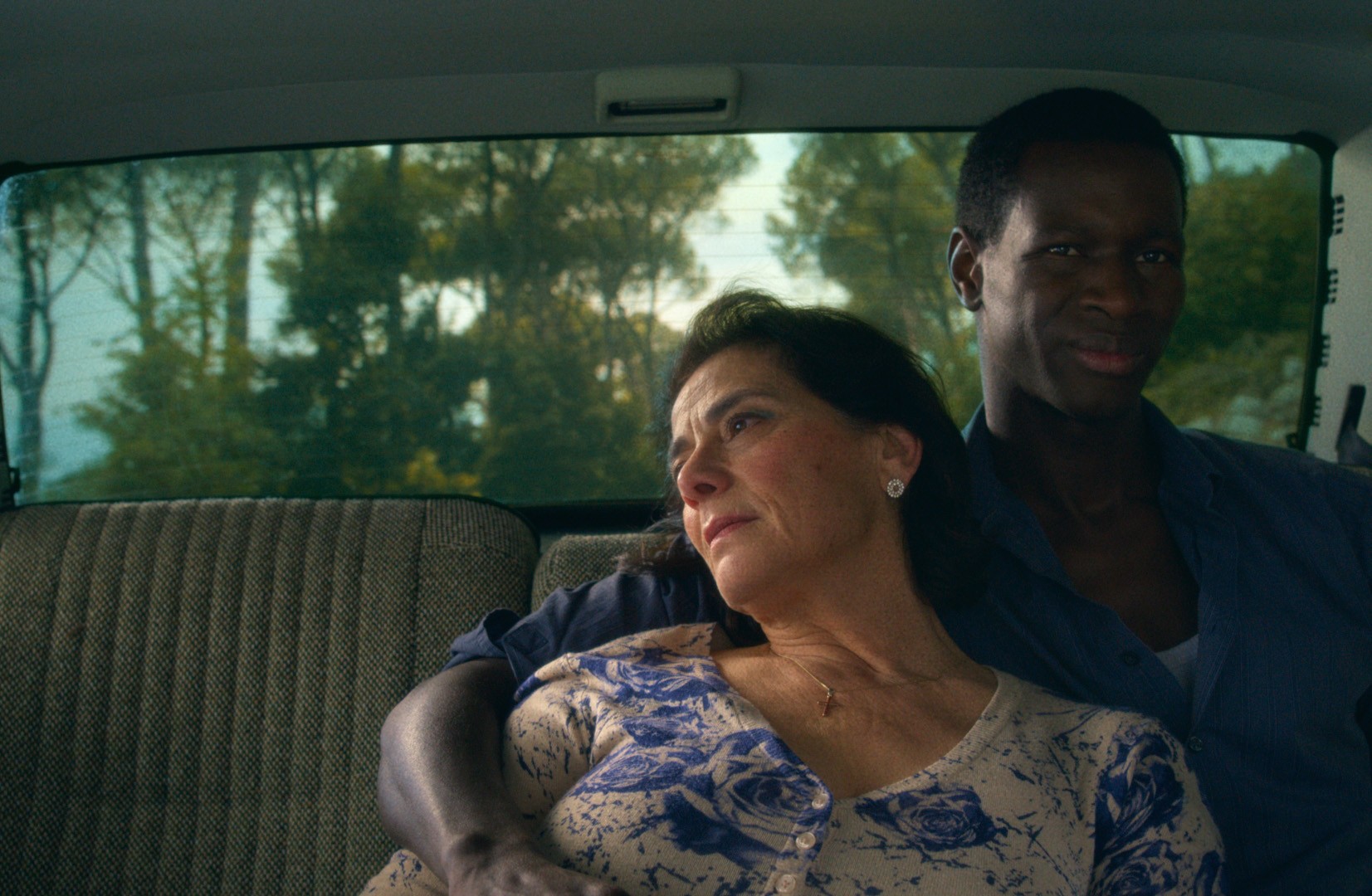
Ali: Fear Eats The Soul (Rainer Werner Fassbinder, 1974) for the refugee era, this tale of a Palestinian Christian and her relationship with a South Sudanese migrant in Beirut is certainly well-intentioned, but it suffers from a terrible flatness, horrific plot choices and one-note characters. There might have been a subtle film about racism somewhere here, but the film is as didactic and lame as it comes: less state-of-the-nation address, and more look at the state of this!
Mouse by Kelly O’Sullivan and Alex Thompson
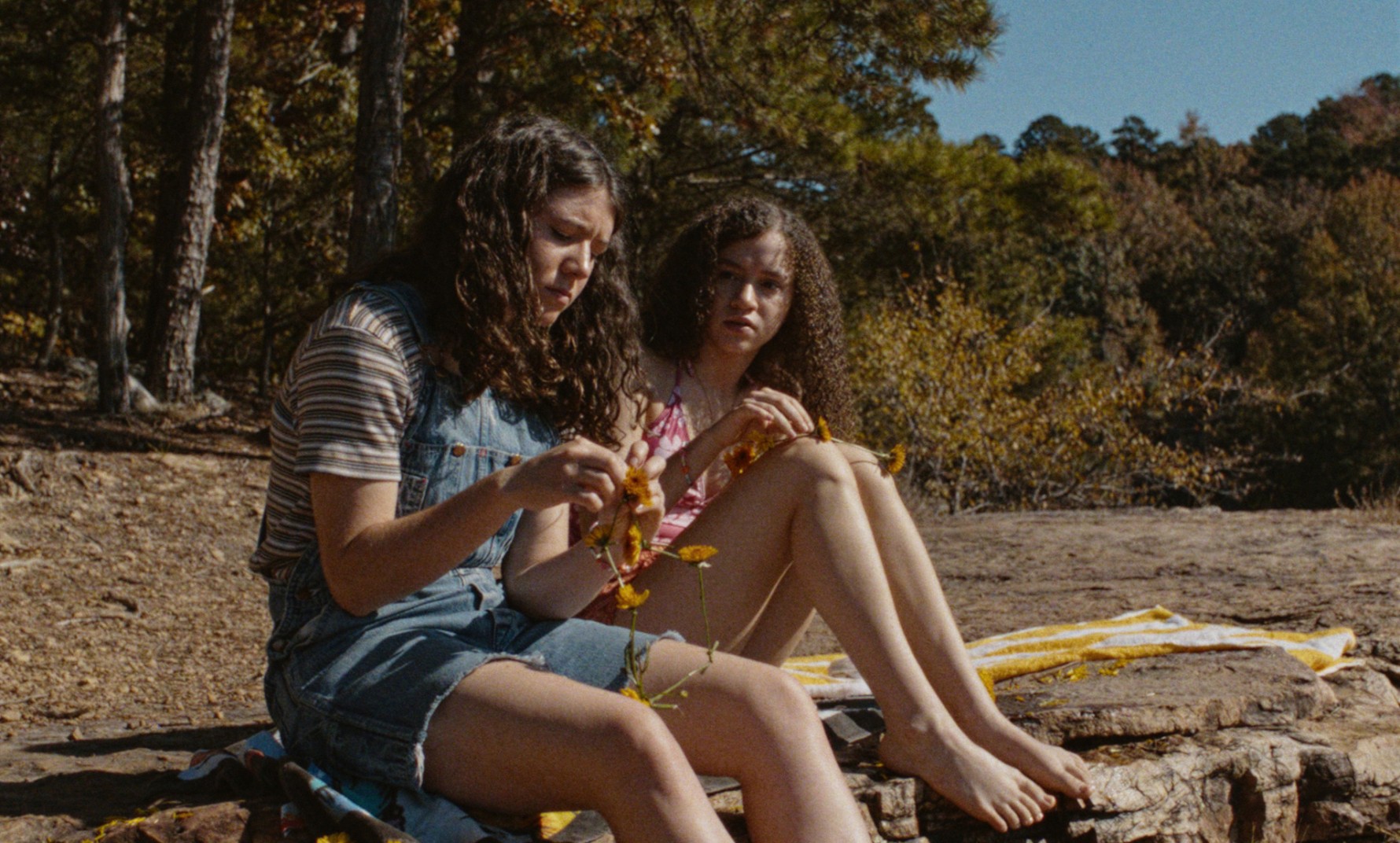
There’s much subtlety in characterwork here, so many big, yet unshowy moments, so much empathy and wisdom, and a lot of humour. I could see this being a hit; it just needs, like the titular character herself, a little push. I don’t want to spoil anything else here. Like literally anything. Just go in blind. You’ll laugh, cry, and want to call an old buddy.
The Moment by Aidan Zamiri
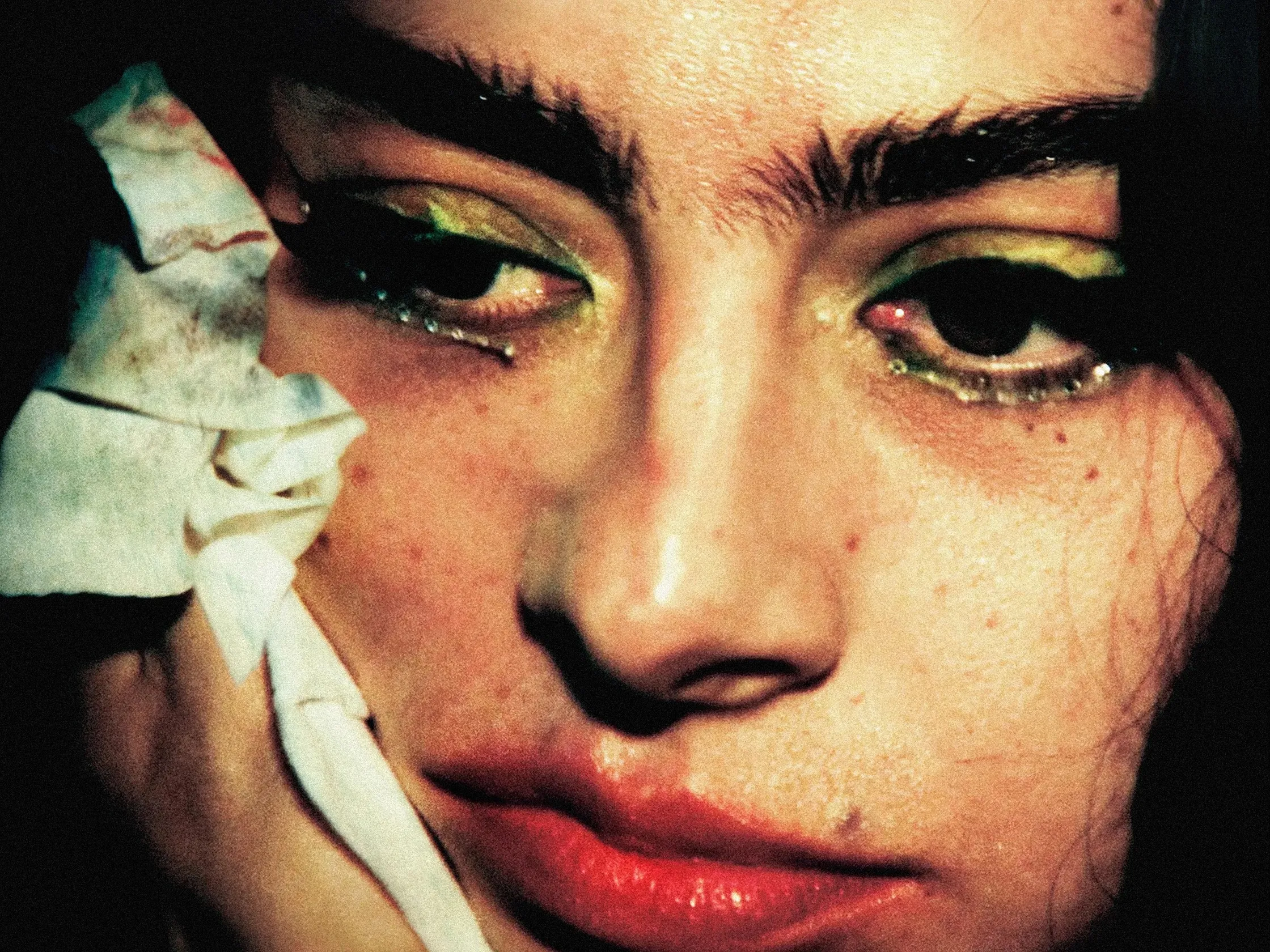
How do you follow up Brat Summer (2024)? By killing it with fire, of course. Charli XCX’s blisteringly funny mockumentary The Moment, shot The Office-style (Ricky Gervais, Stephen Merchant, 2001-03) — all shakycams and random close-ups — is a riotous Dylanesque reinvention that works exceedingly well thanks to the British pop star’s absolute willingness to both poke fun at herself and be achingly vulnerable. The whole thing is a great laugh, but with some real things on its mind about the commodification of artists, the constant need to stay relevant and how integrity can so quickly be compromised by corporate interests.
And Alexander Skarsgard, roped in to pay a hack director tasked with making the bracingly in-your-face cool girl PG-palatable, is the MVP. Between this and Pillion (Harry Lighton, 2025), is the Swede becoming one of British comedy’s biggest stars? We need to keep him around.
Shorts
Flim Flam by Siegfried A. Fruhauf
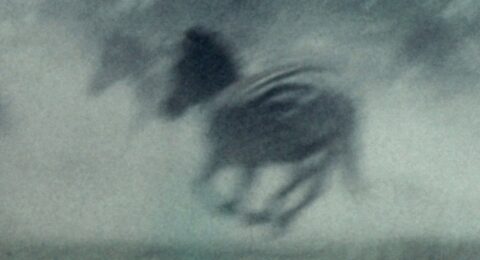
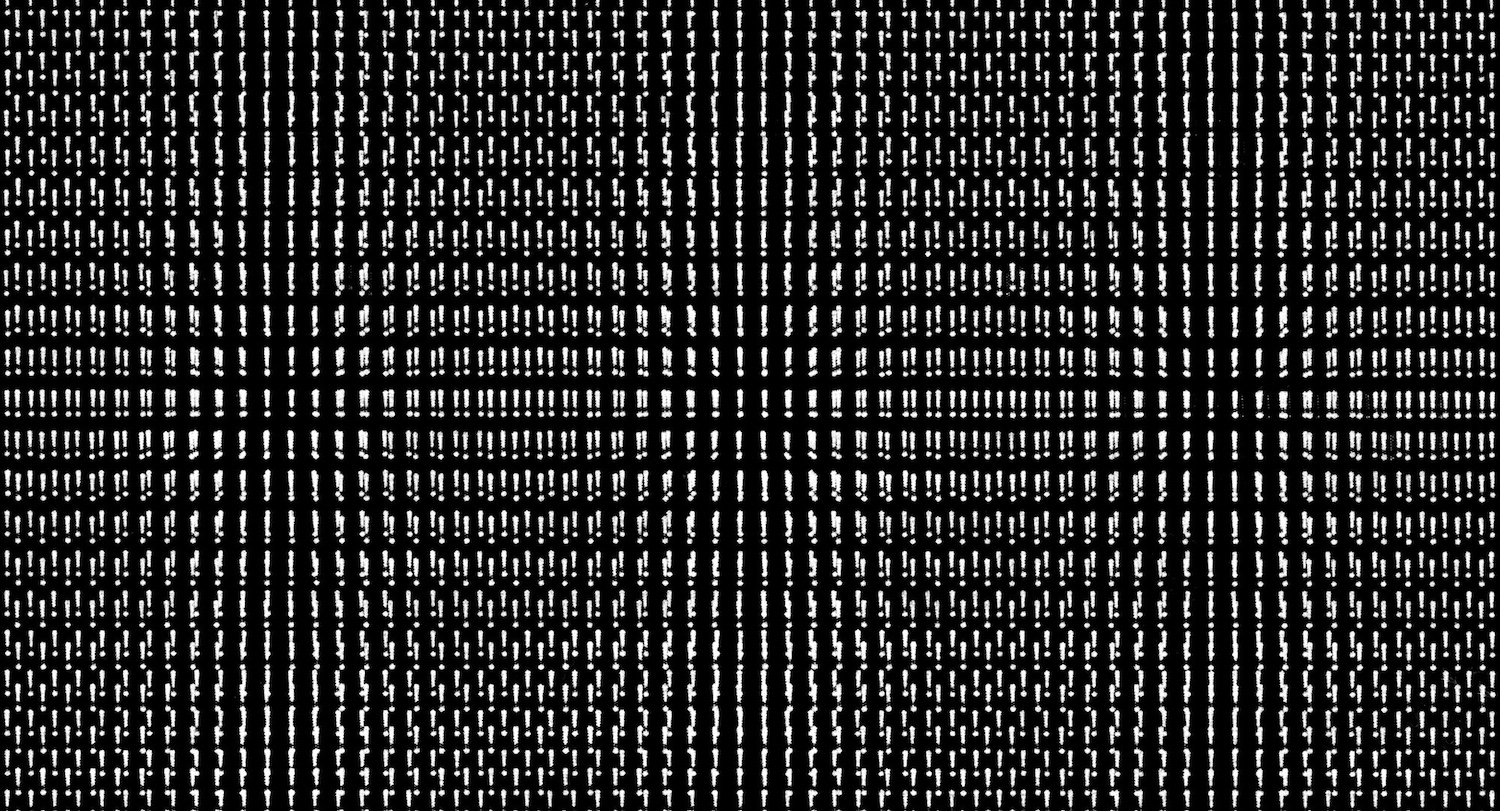
The shape, dimension and patterns of a zebra power the chaotic, ever-changing animations of Siegfried A. Fruhauf’s experimental work (feature image), which plays with hallucinogenic imagery in a visceral, instant fashion. It starts with a calibration, as we are told to look into the centre of the camera as circular shapes move in their own circles, accompanied by sounds that make them feel like birds, circling their prey. The prey might be the zebra, caught here with archive footage from Collection Jungman in Austria, whose black-and-white stripes turn into starting video animations that resemble film strips — yet also dazzling arrays of colour. What’s particularly striking with the more strobey effects is how, in their overwhelming nature, they seem to superimpose a 3-dimensional image over the 2D plane. A neat illusion, making for a powerful cinematic experience. And, no, I have no idea what this gorgeous experimental short is about. Do I need to?
An Accident by Angelika Spangel
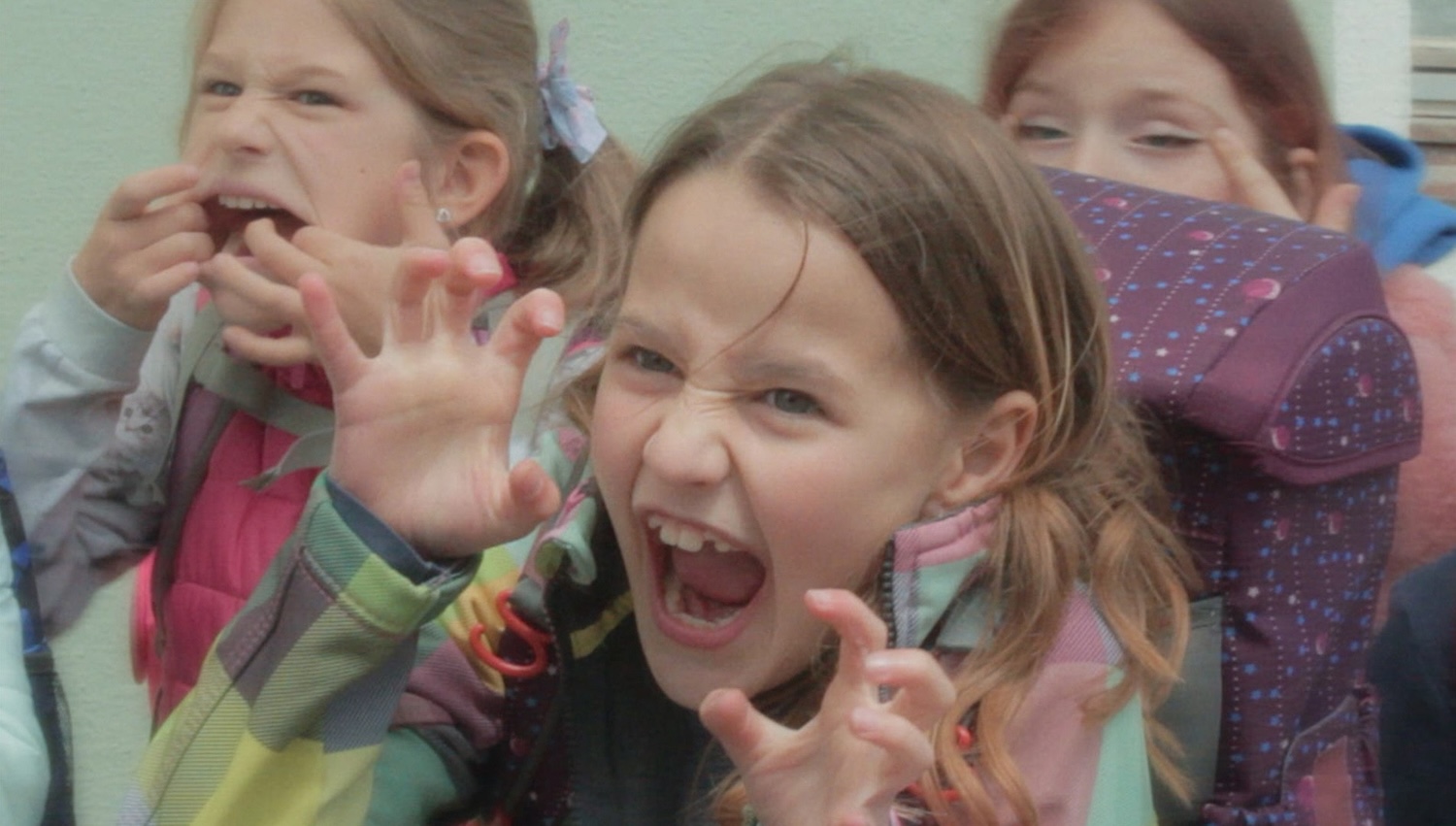
The Austrian countryside is imbued with a mischievous playfulness in Spangel’s 30-minute short, but all this fun-and-games starts to result in real consequences: dead pigs, field fires, a man lying prostrate on a park bench. Heavy on the sound design (shallow breathing, silly noises) and shot in sun-dappled hues, this is a mostly frustrating work; I understood most of what it was trying to do, but I felt very little worth connecting to.
Henry Is a Girl Who Likes To Sleep by Marthe Peters
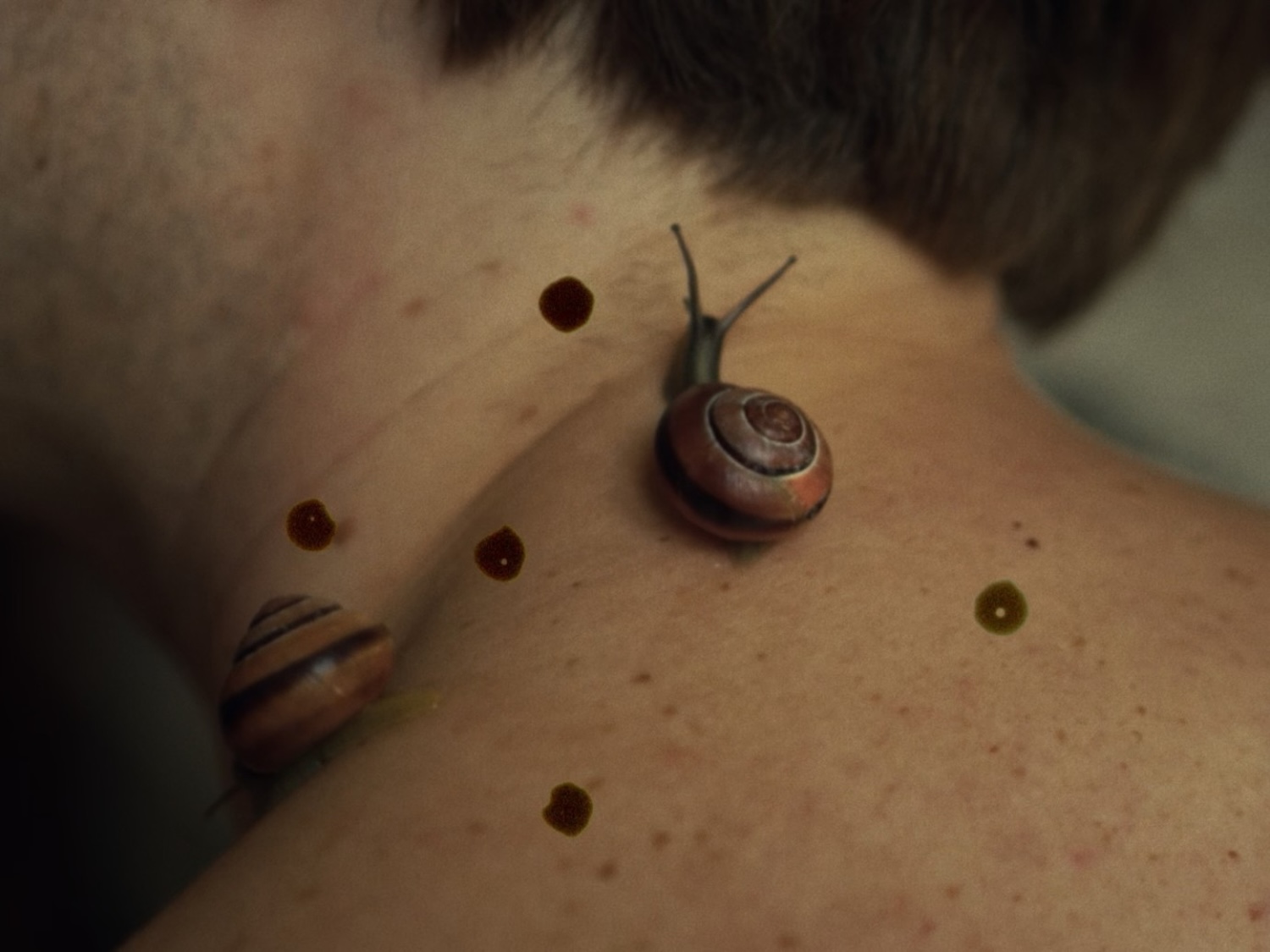
Baldilocks (2024) was one of the standout shorts of the Berlinale two years ago, making it a pleasure to see Belgian artist Marthe Peters return with the less unflinching, yet equally tender Henry Is A Girl Who Likes To Sleep, which, in essence, is a jealous ode to the lazy cat; able to stay soft within multiple layers of blankets all day without a care for the stresses of the modern world. It feels a natural sequel to her previous work about disease, finding a way to talk about self-care through cinematic means — including hand-drawn animations, close-ups of snails, many cute cat images — that dispel the conventional and move towards the deeply personal. Peters already has a recognisable, unadorned style; not bad for someone with just two shorts under her belt.
Berlinale Classics
Dead Mountaineer’s Hotel by Grigori Kromanov (1979)
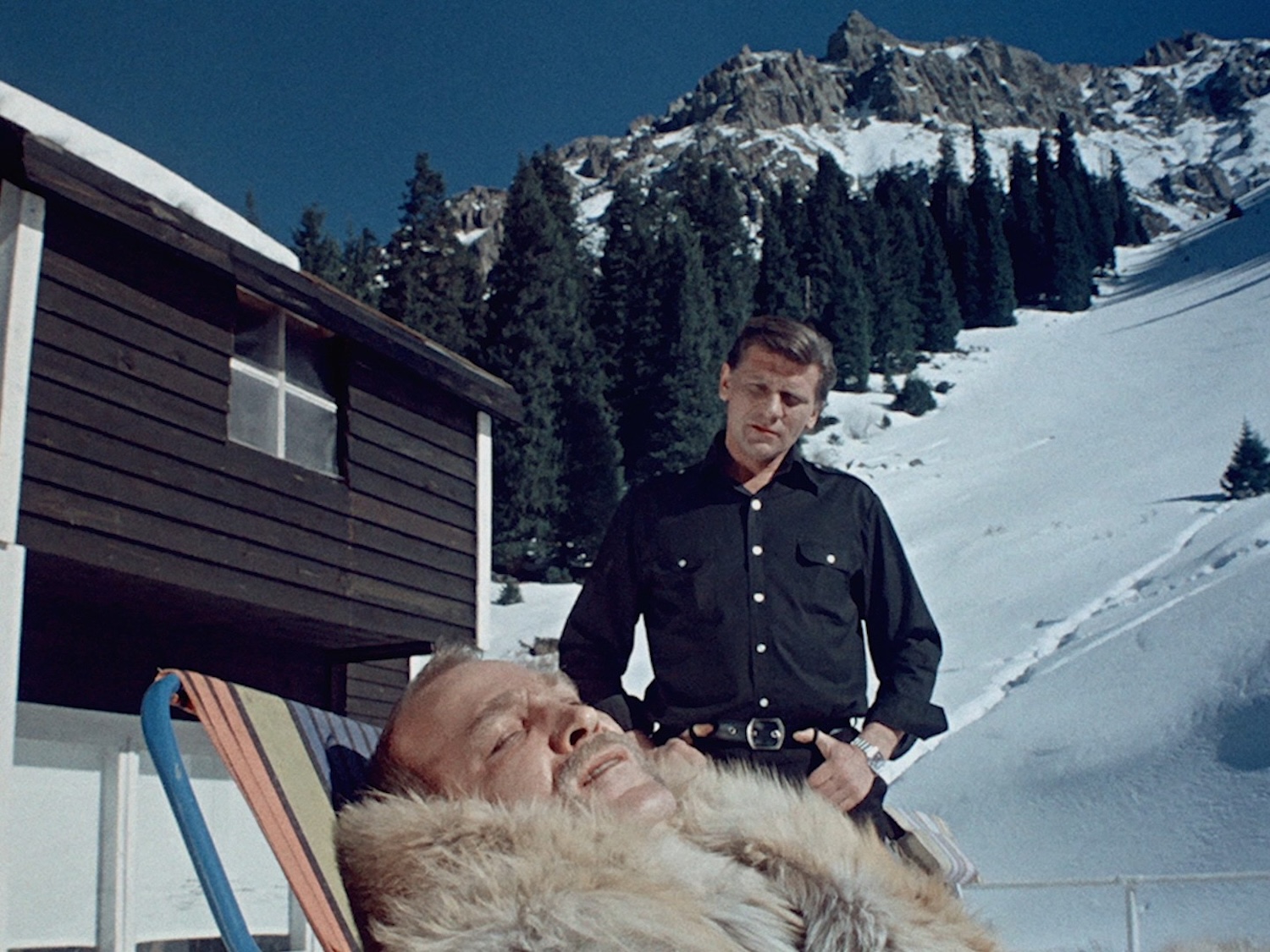
A detective story with a science-fiction soundtrack. Perhaps otherworldly goings on are to be expected. It’s based on a novel by the Strugatsky brothers, who also provided the screenplay for Stalker (Andrei Tarkovsky, also 1979). Shot in the snowy mountains of Kazakhstan, this restored Estonian movie shoots the slopes like an alien planet, the titular hotel a space for all kinds of surreal antics. Completely inscrutable. I’ve never seen a police inspector more over his head than Mr Glebsky.
Teddy 40
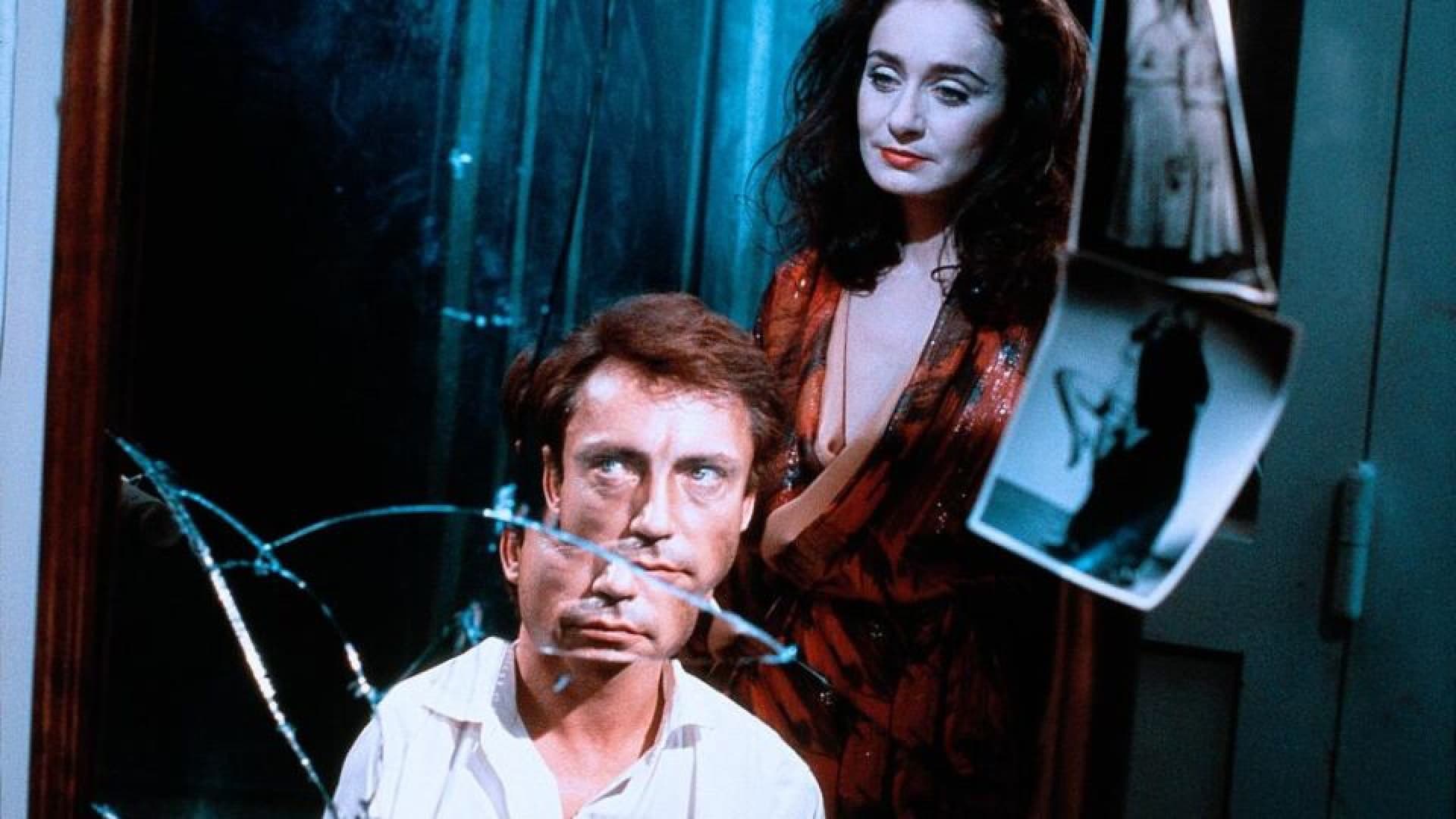
Seduction: The Cruel Woman (1985) by Elfi Mikesch and Monika Treut
I was completely mystified by Elfi Mikesch’s Macumba (1982) a couple of years back, but it certainly had a strange, slanting, gothic atmosphere that made for an eye-catching experience. But it certainly didn’t prepare me for Seduction: The Cruel Woman, co-directed with Monika Treut, which is one of the great movies about the world of sadomasochism and sexual power games.
Mechthild Großmann stars as the imperious Wanda, running a bizarre harem/polycule that counts a variety of willing submissives, including a human toilet, a slave American and the iconic Udo Kier (RIP) as a very particular sub who thinks he is special and can rise up the strict hierarchy. Avoiding much in the way of plot in favour of dynamic, sexy and plain weird spectacles, this gorgeously-made movie — lots of dutch angles and expressive horror-esque lighting, staged against the alienating Hamburg harbour — shows that sex is almost always about power, and that delayed and denied pleasure often makes for better cinema than giving into purely pornographic impulses.
Screened to much controversy back in its day — politicians railed against the original Forum screening, Toronto film festival wanted to censor it — this fierce, fierce movie is a must-see for BDSM heads.
Redmond is the editor-in-chief of Journey Into Cinema.
- Redmond Bacon

- Redmond Bacon

- Redmond Bacon
- Redmond Bacon