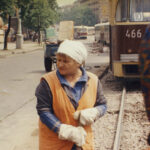
Most articles on Artavazd Peleshyan’s work focus on the theoretical background underpinning his work, specifically his famed montage-at-a-distance or “distance montage” technique. Indeed, if you were to go into his films having only read about them beforehand, you might assume his films are deeply theoretical, bordering on academic. But at Mostra Internacional de Cinema São Paulo, his films arrived with a beating heart.
Newly restored and looking sumptuous, these are essayistic documentaries with an operatic edge. This restoration project, which has been touring festivals since Cannes, ought to be applauded: Artavazd Peleshyan’s films are alive in a way that the theory doesn’t articulate.
Take, for instance, the wild coincidence of my arrival at Reserva Cultural on Avenida Paulista, where Peleshyan’s films screened on 24th October 2026. It was the day before Brazil’s momentous election, where left-wing incumbent Lula beat all odds to earn a fourth term as President, beating far-right failson and all-round scumbag Flavio Bolsonaro by over four million votes, having trailed significantly in the first round.
That day Avenida Paulista saw the final pro-Lula rally of the campaign, in which a mind-boggling two million people crowded on the city’s central avenue in a joyous show of people power and democratic values. Soaking up that joy, I set off towards Reserva Cultural amidst the masses: the venue was maybe less than 100 metres from me and fully within my line of sight, and yet the crowds were so intense and so thick that it took me a full twenty minutes to push through.
Man Can’t Live on Theory Alone
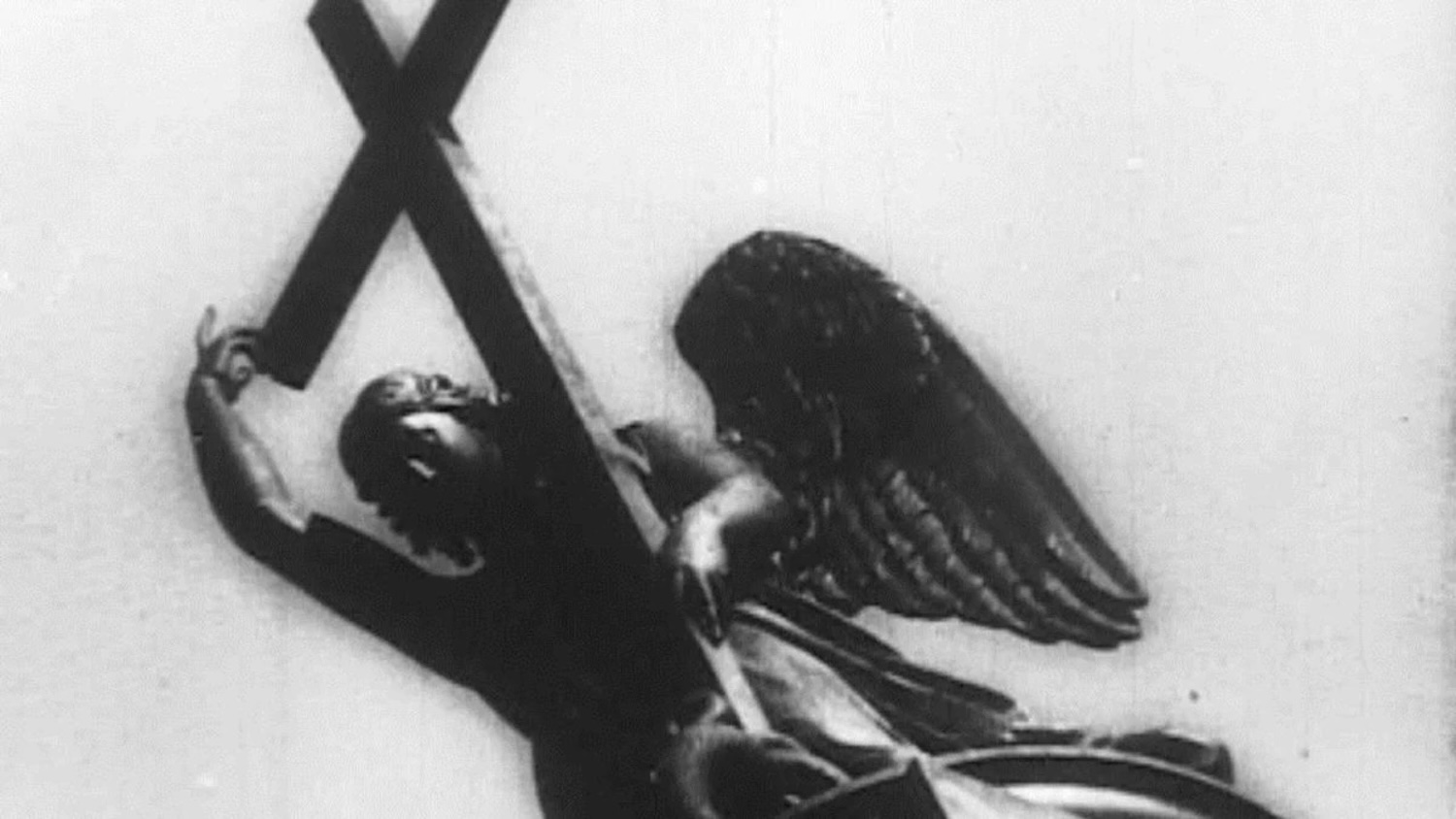
I snuck in around midway through the first of the films on show, The Beginning (1967, above), only to find the film caught in a loop of newsreel footage: revolutionary crowds breaking through barriers, police lines and oppression to take charge and ownership of their lives. A near-miraculous joining of film festival programming and the real world outside, it’s a reminder that after all the ink is spilt, all the footnotes exhausted and all the papers published, cinema’s role is to capture something real.
This is perhaps what makes Peleshyan’s work so thrilling. It is a cinema rooted in theory, but one that recognises that theory only works when tested in praxis; after all, a cinema of theory only is a cinema without accidents, a cinema doomed for academic textbooks and lecture halls.
Simplicity and Poetry
The Armenian director, born and schooled in the Soviet era in 1938, with all but a few of his films made within the USSR, is one of a long line of cine-theorists to emerge from there, harking back to days of Eisenstein, Vertov and Dovzhenko when the explosion of cinematic possibilities mirrored that of the explosion of possibilities of the Revolution—at least until the dead hand of Stalinism took charge.
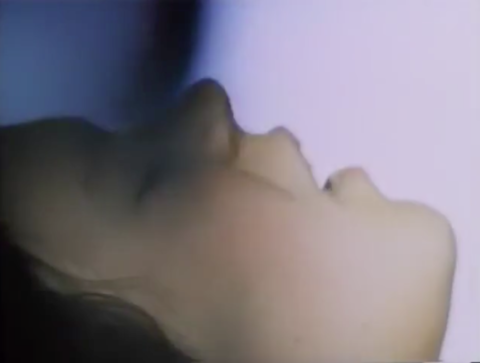
But strip away the theory, and the films are remarkably simple. Two of his post-USSR films made in independent Armenia are screened here: End (1992, above) depicts passengers on a train journey, the camera seemingly sneaking in on them inside their cabins; Life (1993, above) shows, in extreme close-up but with the camera positioned at a distance, women’s faces as they’re in labour, set to operatic choirs (both, it seems, are largely shot with telephoto lenses). End and Life are by far the most unadorned and the least obviously “ambitious” films here. They may be accurately described as his “late style,” refusing the grander “state of a nation” poetics of his more “significant” and acclaimed earlier works such as We (1969), Seasons of the Year (1975), and Our Century (1983).
Their simplicity in scope underscores the everyday poetics that was already long evident in Peleshyan’s work, but perhaps smothered by operatic and theoretical tendencies. In End and Life he simply isolates these images, placing them in media res, without introduction and with no fixed end point. All the ideology in the world is no substitute for a face gazing longingly out the window on a long journey; or hands listlessly playing with a cigarette; or the stress, pain and ecstasy of childbirth.
Distance Montage
The pinnacle of Peleshyan’s work, both in ambition and execution, comes in three pieces: We, a reflection on the self-actualisation of the Armenian people, as told through its landscape and its people, all behaving as one mass together; Seasons of the Year, which describes sheep-rearing in the Armenian highlands; and Our Century, which frames the twentieth-century space race as an internationalist achievement rooted in more than just technological development, but also ingenuity, bravado and deadly failures.
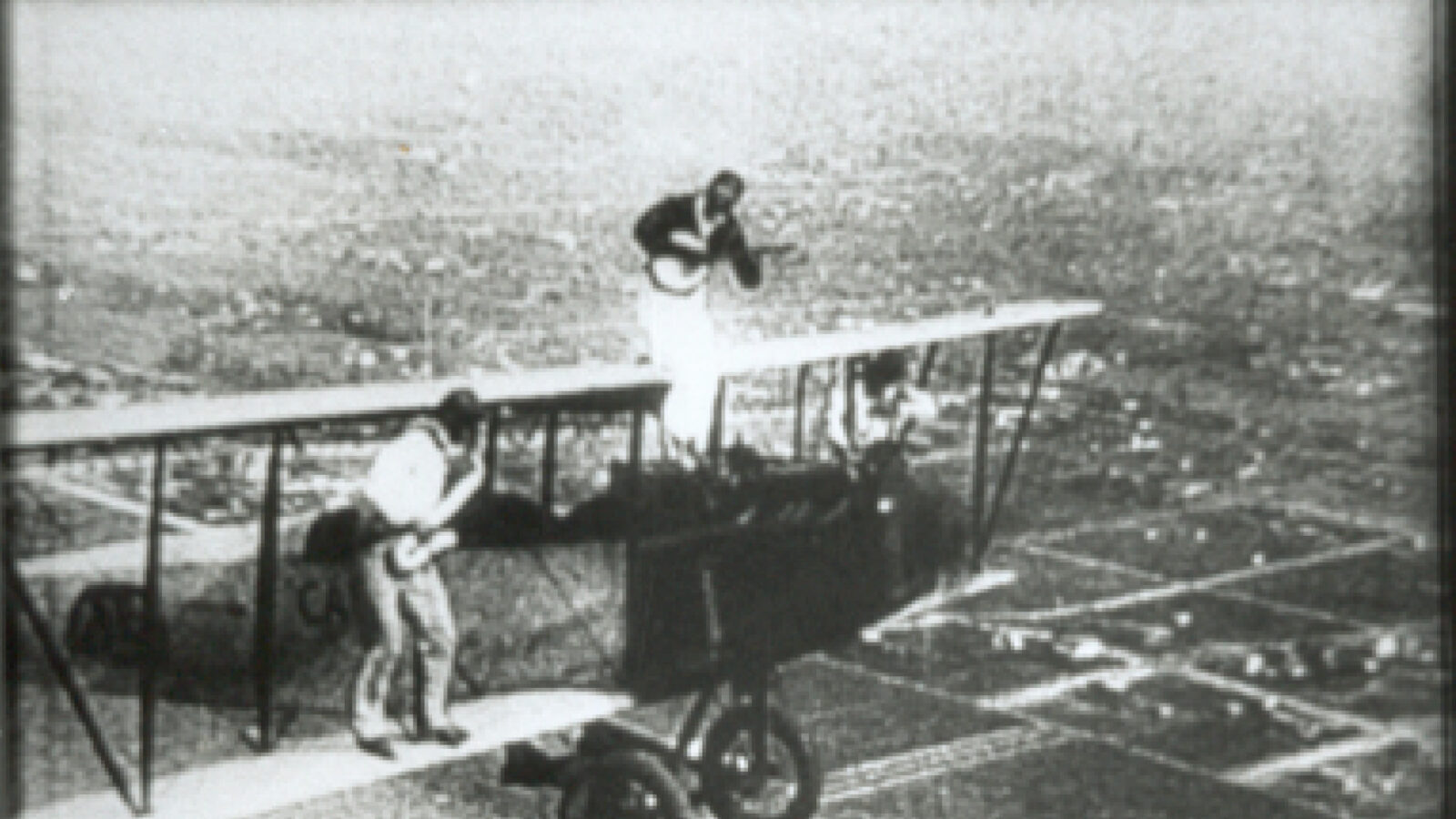
It is in Our Century that you can most visibly see the seams of Peleshyan’s distance montage theories at work. For every sequence of success in the space race story: astronauts passing rigorous training, or rockets surging up into the stratosphere, there is a turn away into the space race’s many failures, and that of aviation technology more broadly. There are sequences of misfiring launches, failed inventions — even grim accidents such as that of the Hindenburg disaster. The film is structured so that each success has a “stem” of failures behind it, like a cascading effect.
So what is meant by “distance montage?” In brief, it’s the attempt to “disjoin” the relationship between one image and the next, the idea being to heighten the semantic difference between images so that their narrative potential is distorted and their poetic or lyrical potential is heightened. As Peleshyan explained:
“The main essence and emphasis of montage work, for me, is not to join shots but to disjoin them; not their junction but their disjunction. It happened that, for me, the most interesting part begins not when I join two montage fragments, but when I disjoin them, putting between them a third, fourth and fifth fragment. When joining two key shots which carry an important semantic charge — we shall henceforth call them bearing shots — I strive not to bring them closer, not to make them collide, but to create a distance between them. The meaning of ideas that I want to express is best communicated not through the joining of two shots, but in the creation of interaction between them through numerous links. Thus one can achieve a much stronger and deeper expression of meaning than when the shots are joined in a consecutive way.”
When images repeat — such as in Our Century’s opening and closing where a giant apparatus for launching a rocket into space is wheeled into position, its tracks dwarfing the human engineers overseeing it — it serves to highlight the underlying story we’ve just witnessed. Our first viewing of the image gives us no context: it is simply a description of the machine. The second viewing of the image is the contextualisation and cognisance of the sweep of chaos that has put it in place. Over 40 minutes, these notes are repeated, harmonising, ever so differently at each point, visual information collated from a mass of American and Soviet archival sources to tell the story of perhaps the twentieth century’s greatest technological achievement through the framing of trial and error.
But there’s a simplicity to how these images simply feel. There is a mass at the centre of the film: the achievement of landing on the moon, and the ecstasy that comes with that. Behind that, there’s a sense of grief for all the lives lost to hubris, stupidity or just simple mistakes. Peleshyan has described his editing technique as “creating a magnetic field around the film.” In Our Century, this collapses into a sidelong glance at what feels like the entirety of aviation advancement, the totality of human success and failure summed up in one breath.
We, the Earth
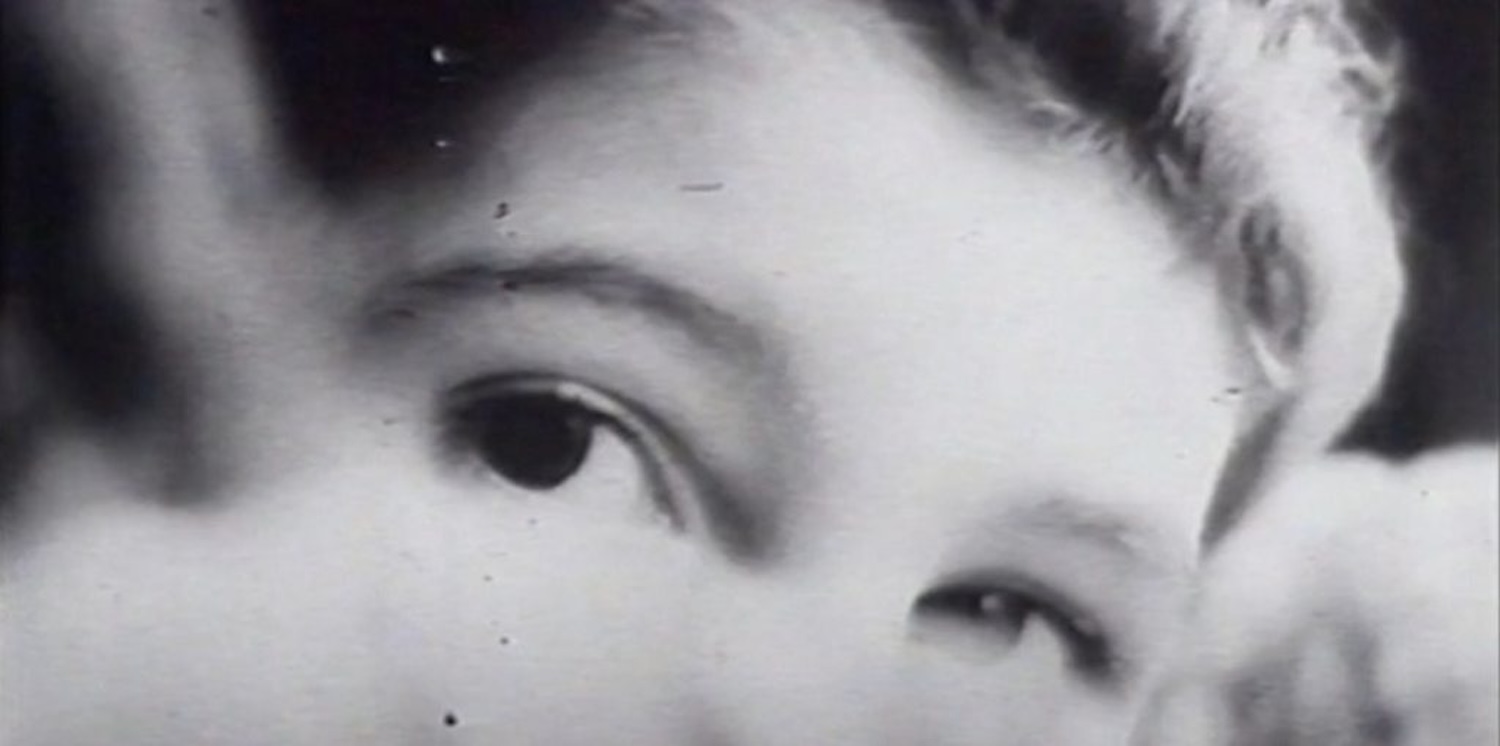
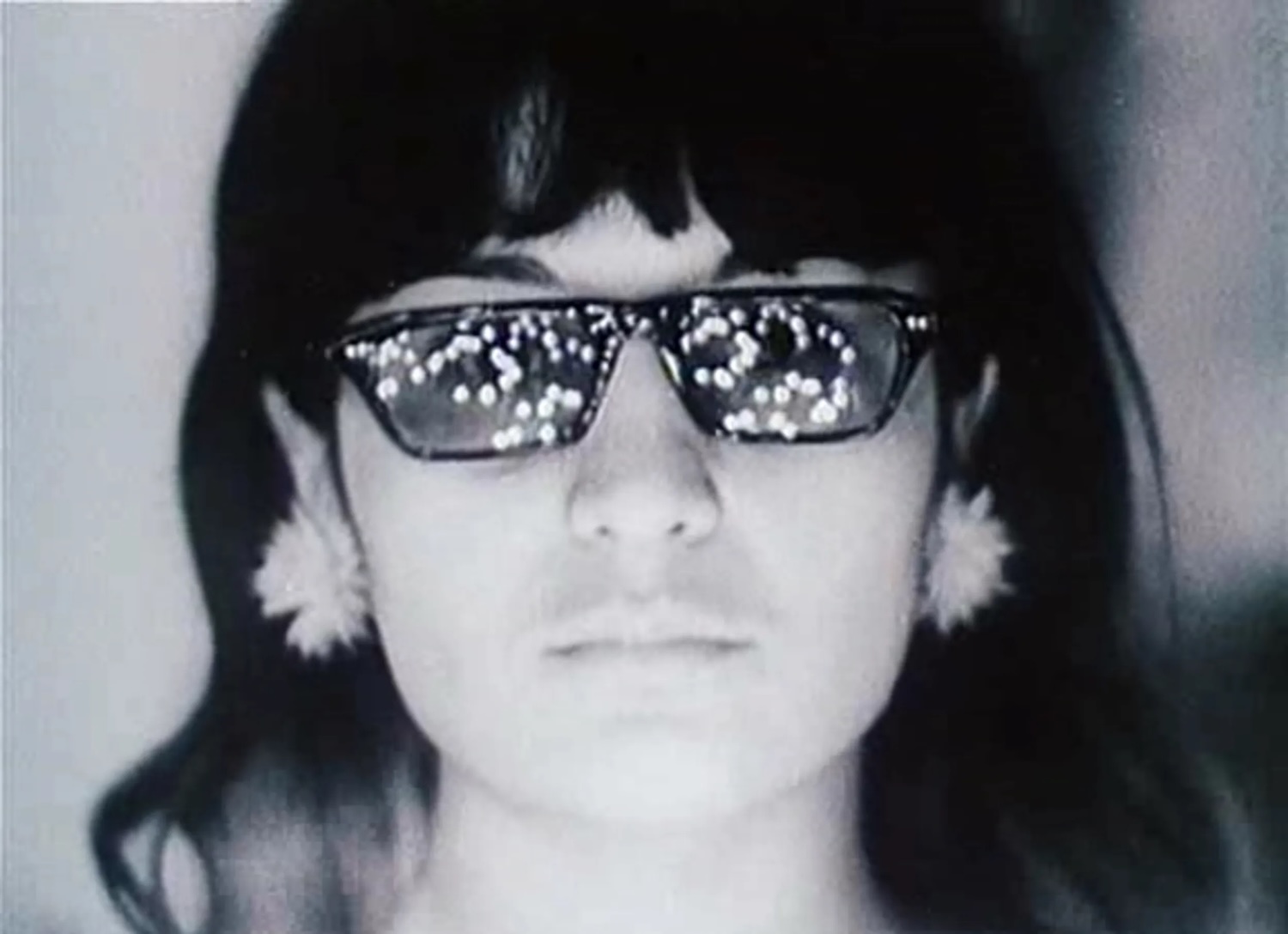
We (above) and Seasons of the Year apply these theories to different ends. In We, repeat shots of a still frame of a girl’s face, soundtracked to operatic music, are contrasted with images of Mount Ararat (highly significant to Armenian culture and history)1Today the mountain lies within modern-day Turkey, but is visible from Yerevan.; Armenian landscapes sitting side-by-side with urban city life, crowds of people in a crush moving like an ocean. In Seasons of the Year, shepherds in the country’s highlands struggle with wrestling sheep across rapids and steep hills; here images are repeated next to each other, and what begins as ethnographic description becomes more like a high-risk ritual, constant movement a necessity of survival.
Again, for all the intellectually stimulating theory at play here, it’s remarkable how “real” these films are. Peleshyan’s films are chaotic and grand in ways that are emotive and earthy, and in ways that reject pat intellectualisation. It’s a reminder that great cinema ultimately resists any easy answers; it always slips out of grasp just as you come to terms with it.
Fedor Tot is a Yugoslav-born Wales-raised Brazil-based film critic and curator specialising in Balkan cinema, with bylines at WeLoveCinema, Mubi Notebook and Photogenie.
- Fedor Tot
- Fedor Tot

- Fedor Tot
- Fedor Tot