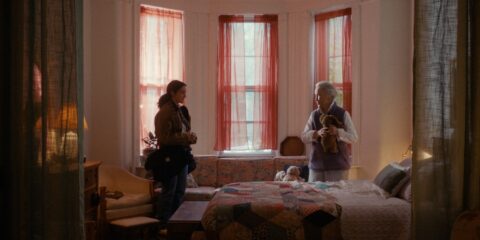
American filmmaker Paula González-Nasser’s feature debut, The Scout (2025), tells the story of location scout Sofia (Mimi Davila), who is recceing possible locations for a show’s pilot episode. She meets New York homeowners and residents, who welcome her into their personal spaces that she photographs for the filmmaking team’s consideration.
González-Nasser herself worked as a location scout and draws on her familiarity with the film production role to create an authentic representation of a day in the life of her character. She has also worked as an assistant on films including If Beale Street Could Talk (2018) and On the Rocks (2020).
In conversation with Journey into Cinema, González-Nasser discussed surreal experiences, seeking understanding from her audience, cinematographic experimentation, Chantal Akerman and Michelangelo Antonioni, as well as looking for the extraordinary in the ordinary.
The following has been edited for clarity.
The first narrative feature is a milestone moment. How do you look back on the experience of making The Scout?
It has been a long process, beginning before the film even knew it was going to be made. I worked as a scout full time for seven years, and even after that, I was still scouting on some independent non-union productions.
To now be on the other side and finally be releasing it after working on it full time for the last three years is surreal. I feel in many ways like we’re discovering the film through people’s reactions — getting other people’s thoughts and feelings on it has been very rewarding.
So, it’s a surreal place to be, and I’m really happy that it’s connecting with people in a way that I didn’t anticipate. I thought this was an insular film about a niche job, but it turns out everyone’s job, in many ways, has a lot of similarities that overlap, for better or worse. I’m just glad it’s resonating.
Does the idea that the audience completes the film resonate with you, and are you comfortable giving up that sense of control?
A film like this is designed to invite people to bring their own experiences to it, and from moment to moment, it doesn’t really tell you how you’re supposed to feel. And my biggest hope is that people do bring their own experiences to the film, whose takeaways could be very different to even my own experience or someone else’s. I do believe in that process of sharing it, which is so rewarding for a filmmaker, because as you said, you don’t complete the cycle.
Can you remember when this story started to take shape, and what compelled you to believe in it?
As much as I want to say that it came together from wanting to make a film about the job of location scouting, I think it came from a place deeper than that. It was feeling like all my friends who are in this creative field — not only filmmakers, but also musicians, writers, and journalists — have felt this stagnant period in their careers. It’s that moment when you hit your 30s, and you’ve been doing this out of school for maybe 10 years, and there’s just this weight of time passing by so quickly. You’re watching everyone around you either move on with their lives or feel that they’ve become disconnected from you.
I just wanted to capture what that feels like. And it was through the vessel of location scouting that I could explore that story in an unconventional way by just observing people and what they’re going through. This job lets you do that.
I really loved The Meetings of Anna (Les Rendez-vous d’Anna, 1978) by Chantal Akerman, which gave me the format to be able to tell the story in a way that tells you so much without giving you too much. In Akerman’s film, the character is a successful filmmaker showing her film in Europe. She’s meeting all these people, but she’s so disconnected from her audience. And I just thought that’s a unique way to touch on this feeling of what it feels like when your life is going quite well on paper. Sofia has a well-paying job, and she’s working in movies, but deep inside she’s pretty hollow and unfulfilled. Only she doesn’t quite yet know that. So, that’s really where the seed came from.
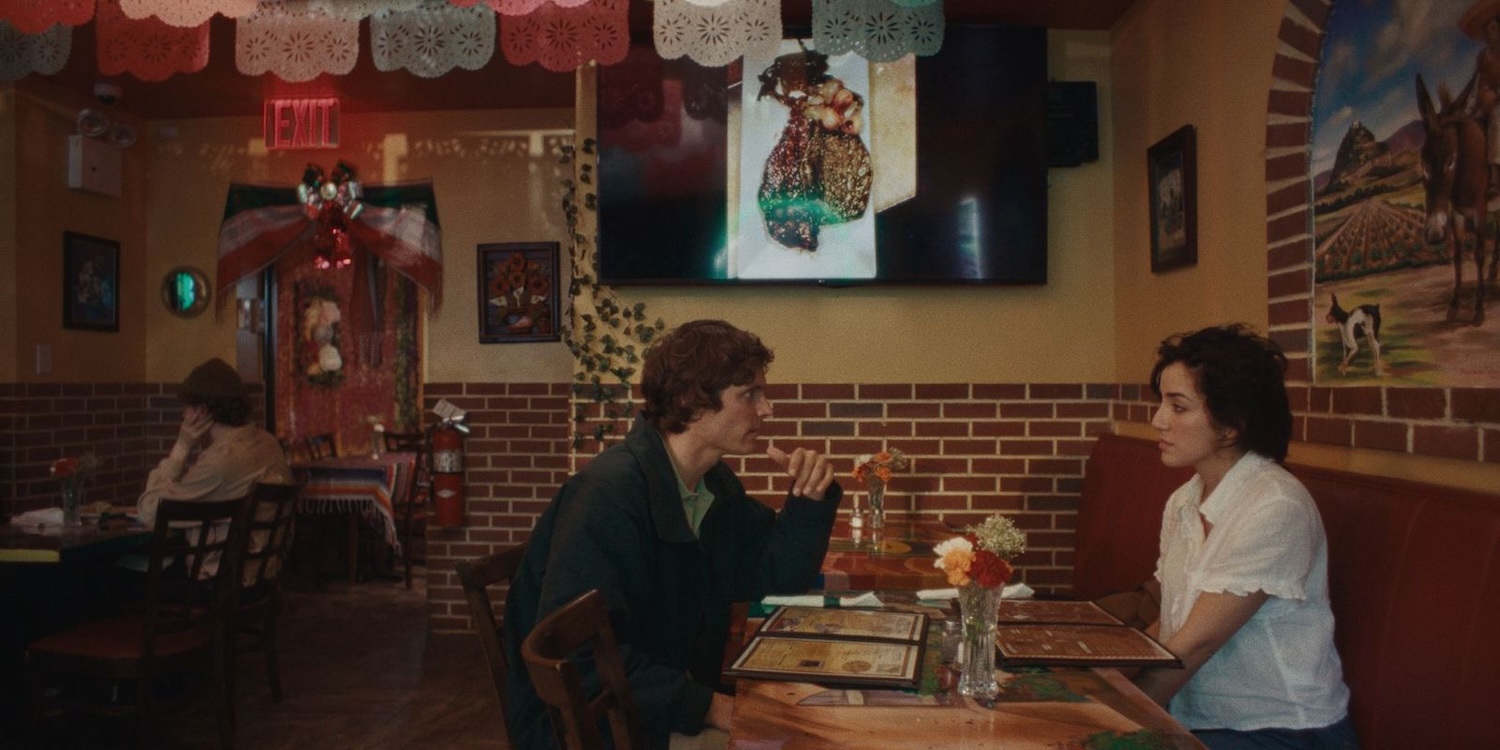
The Scout is about following and observing Sofia, which echoes Michelangelo Antonioni’s observational approach to cinema. And while we might enter Sofia’s personal space, a distance remains, at least for a while.
I’m glad you brought up Antonioni because he’s one of my favourite filmmakers in the sense that he really enjoys character studies. The observation of his characters is more of a sociological question, where he’s showing you a character to be a certain way, and he’s asking why? Like in Red Desert (1964), he’s exploring the environment, where you see this woman’s surroundings, and you’re putting it all together — you see where her neurosis comes from. Or you understand the economic situation of her time, and that’s maybe why she’s being this way. And I just find that fascinating because it’s letting you, the viewer, make up your own assumptions about her state of mind.
The approach to the cinematography is interesting because you deliberately create a distance between Sofia and the audience by obstructing our view. For example, shooting at a distance and through doorways or from behind her. Eventually, this stops, and the audience is invited into her personal space as the cinematographic language itself evolves.
One of my favourite aspects of working on the film was working with Nicola [Newton], our cinematographer. She had a lot of ideas about blocking Sofia in a way where you wouldn’t see her face. At first, I was a little nervous about that. Sofia was taking a phone call in the car, and we were only seeing the back of her head and other cars driving by. It was going against this taught notion that there’s a certain way things have to be shot.
But Sofia is so much so not the main character, even in her own life. Sidelining her like that from the very beginning was a way to let you know right off the bat what’s going on with her. And how you learn about the characters through their [lived] spaces, you’re also learning about Sofia’s headspace through the framing. It was very exciting for me to work with someone like Nicola who was thinking in that way, going beyond beautiful visuals and thinking about what a frame can really say about a character’s state of mind.
This puts the onus on the audience to be active viewers.
I’m a big fan of films that ask you to participate. If a film tells you everything, then it’s not really taking you inside its world. Art should challenge, force you to be present, ask questions and be frustrated. And maybe not know all the answers right away. So, I hope that people who watch it will feel that way too.
Throughout The Scout, there is a trust that the story and the character are interesting enough to engage the audience and hold their attention.
Oh, thank you. That was my biggest worry about something like this. But once I had Mimi on board, I knew she could hold that tension throughout the film and that others would too. And luckily for me, she’s fantastic. She does keep it interesting because she’s very alive and present, even for a character who’s not very present. I don’t think the film would have worked had it not been for her performance.
What’s interesting is that by the end of the film, we’re left to ask how much we really know about Sofia?
I’m glad you felt that way too, and with it being a one-day film, there’s only so much internal change that can happen within any of us in a single day. That is, unless you have a really big life event that day.
I wanted to drop in on what feels like an ordinary day in the character’s life. This isn’t a particularly unique day for Sofia; it’s a day that has probably been repeated many times. There’s so much to see in the ordinary, but we’re always trying to look towards the extraordinary to give us revelations about our lives.
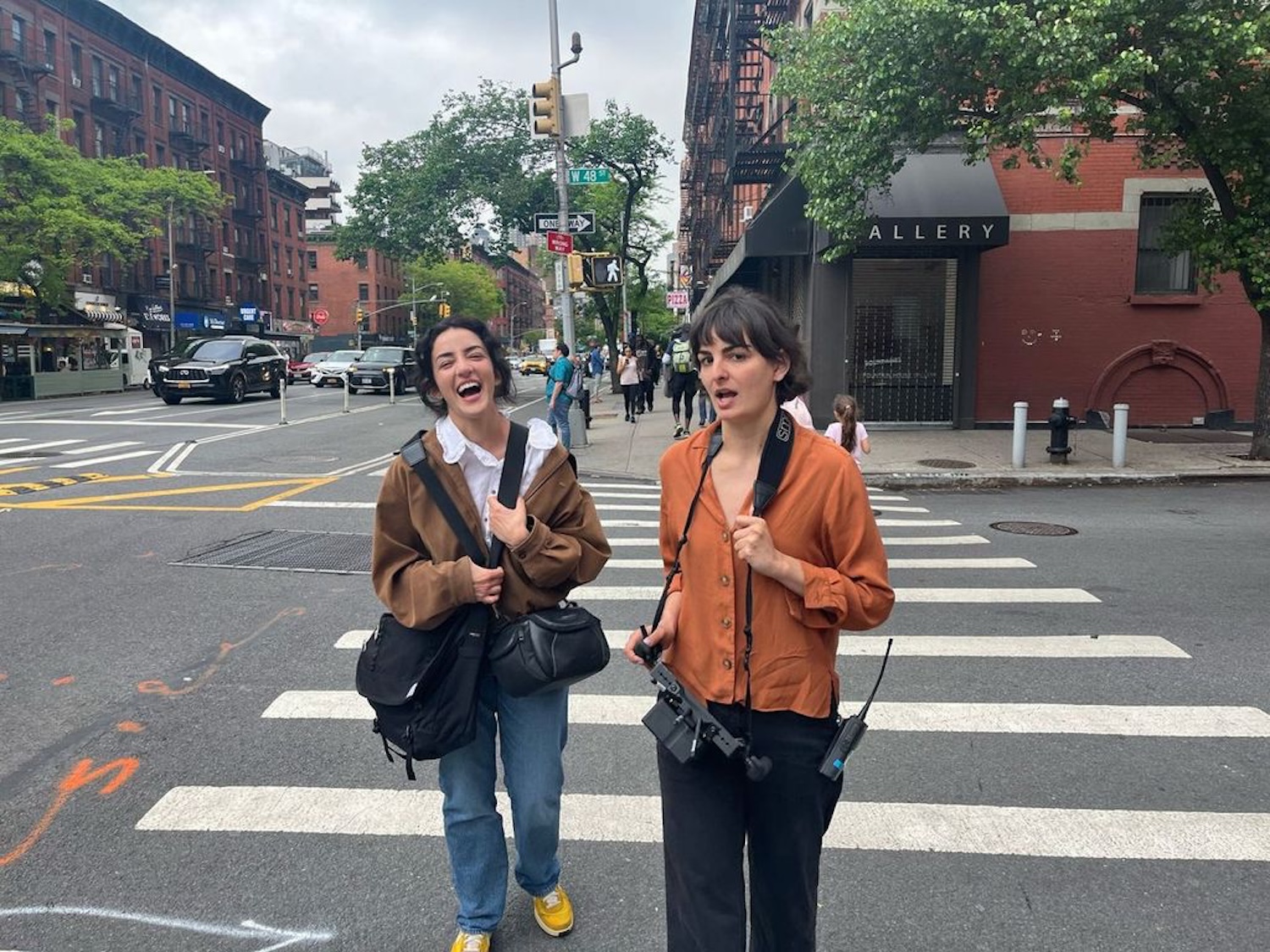
What we’re actually reckoning with in life is the mundane daily routines, the search for meaning and purpose, and the pursuit of happiness. This is where an unhealthy amount of anxiety comes from.
Even though I know this, I’m still struggling with that sense of: “If only I get to this point, or I reach this milestone, then everything will be good.” But when you achieve it, you realise nothing has changed. And it’s because the change needs to come from your mindset. That comes from doing it over and over again and changing your mindset. It doesn’t come from some external milestone dictating how you feel. So, I agree with you, and I think we’d be a much happier society if we could recognise that, [even] while most of us know that it’s really hard to put it into practice.
As humans, we’re not wired to take the rocking of the boat well. Our fear receptors are telling us we’re comfortable — don’t change anything. So sometimes we have to fight our own brains in order to change, and that’s really hard.
By the end of the film, the audience feels Sofia’s exhaustion, and we realise maybe it’s only the end of the beginning. It feels like there could be some big personal and career life changes around the corner, which we don’t get to see, but we can sense.
That’s exactly the feeling that I wanted to capture. Is this the beginning of the end, and a slight seed of change is being planted? Yet we don’t get to see it, but we feel that she’s aware of something not being right. And that, to me, is huge. Just that slight awareness of ourselves and our circumstances is monumental for someone in this position, whose every day looks like this.
Sofia does have a sense of who she is, but she’s stuck on the proverbial hamster wheel, going from one day to the next. She needs a reset, where she, rather than her colleagues, with their snide comments and unrealistic expectations, sets what her value is.
As hard as the job is, it’s easier for her to continue than it is to make that slight change, which is so scary. What’s interesting to me is that we’re willing to put up with our circumstances even when they’re not great, because it’s just easier than taking a step back and asking: Is this the right track? Do I really want to be doing this?
A disillusioned and fiercely self-depracating Englishman, his glass is always half empty, but thanks to cinema and writing, never barren.
- Paul Risker

- Paul Risker
