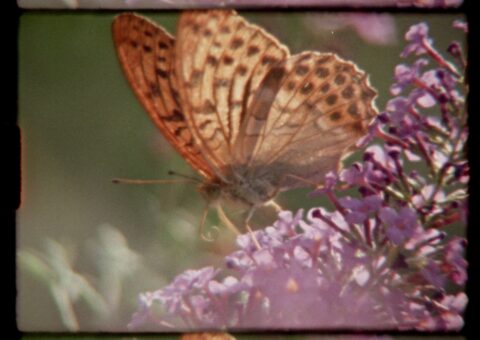
Director Ed Sayers’ documentary Super Nature (2025) brings together footage shot exclusively on Super 8mm film by more than 40 people, comprising local enthusiasts and filmmaking professionals from across the world. Each contributes their own story or experience with nature that contributes to an intimate reflection on the natural world — its beauty and savagery. The way in which Sayers threads together these different excerpts, from food and fire photographer Gideon Mandel and National Geographic photographer Ati Vitale, to the images captured by non-professional enthusiasts, communicates an idea at the film’s heart: nature is a point of connection not only between humans and non-humans, but individual human beings.
Sayers, who is the founder of the short film competition straight 8, has previously directed the short film Goldfish (2007), which starred Michael Fassbender, about a couple, two goldfish and one room. He also took part in a filmmaking experiment where filmmakers shot a short film of no more than 3 minutes on Super 8, without any post-production.
In conversation with Journey into Cinema, Sayers discussed working from a hunch, undertaking a transformative journey and humankind’s relationship with nature.
The following has been edited for clarity.
A good place to start is at the beginning. So, what was the genesis of Super Nature?
It was more of a feeling than a thought. I was struck emotionally by a short film that was made by an elderly French man in his 80s on Super 8 for the filmmaking competition straight 8, which I started in 1999. He made a number of beautiful nature short films, all edited in camera, which is one of the requirements for that filmmaking competition. And they were quite gobsmacking.
There was one in particular in 2019 that had such a gorgeous sequence, and the way the music and sound design worked was affecting. The bit of the film that really got me was where it showed these beautiful pink flamingos in France, where they have huge flocks of them. It looked so amazing with the colours: black, pink, and white in that grainy, saturated sea grey. But there was this moment as the sequence ends where they take flight in slow motion and then eventually, you’re focussing on one in the sky, which becomes like a sliver of information for your eyes, because it’s against a bright sky, and it’s going towards an even brighter cloud. They flatten out when they’re flying, so they’re thin-looking. And I realised I was getting this feeling that I didn’t want to lose.
So, it was more a feeling in my heart than a thought in my head, which sparked what ended up becoming a five-year journey about whether we could make a feature film that showcases the beauty of nature exclusively on the Super 8 format. What would that be? And like so many feature documentaries, it starts with curiosity and a question, that then takes you on a journey. That’s exactly what happened here.
What is it about the Super 8 format that intrigues you so much?
Well, in regard to this film, back then it was just a hunch. There was just something about seeing the nature that we’re part of and that surrounds us in this format that felt very potent. But now, of course, having lived through making the film all this time and learnt what I’ve learned in making it, and hearing audience reactions as we’ve toured festivals, I can now say a bit more about it.
Super 8 is like a memory-making machine. It’s a format that has always been about home movies. It came out in the 60s, and I was a kid in the 70s and 80s. So, my dad used to squirt off bits of Super 8 at various points during family holidays or events. Then, months later, sometimes on a rainy Sunday afternoon, we’d crack out the projector and watch a few reels on the wall. So, it’s linked to memories and, in the context of this film, what that means is that even a scene with an animal that was shot just yesterday feels like a time capsule — it feels like you’re holding onto a memory or a dream. And given the way things are going with biodiversity loss, it’s a pretty fitting way to observe the world today.
So, the film proposes this other way of seeing, but it’s not trying to say you’ve got to go and film on Super 8. I was just saying that if you really look at nature, if you really study it, maybe you’ll want to write about it or make a clay pot. It doesn’t really matter what; rather, it’s that act of stopping, looking and really seeing, which benefits nature and the world around us — the home that we share with nature.
The world is changing because of the human footprint. Parts of Spain are transforming into desert terrain, and parts of the world will one day be below sea level, risking a series of humanitarian crises. Cinema offers us a means to create a record of the world as we know it. And while it will not prevent the impending tragedy, at least there’s a record of what we lost that can be shared with future generations…
We wanted to make sure the film felt quite joyful, but also, it cannot help but stray into talking and confronting our feelings about that loss. And hopefully we’ve managed to do that.
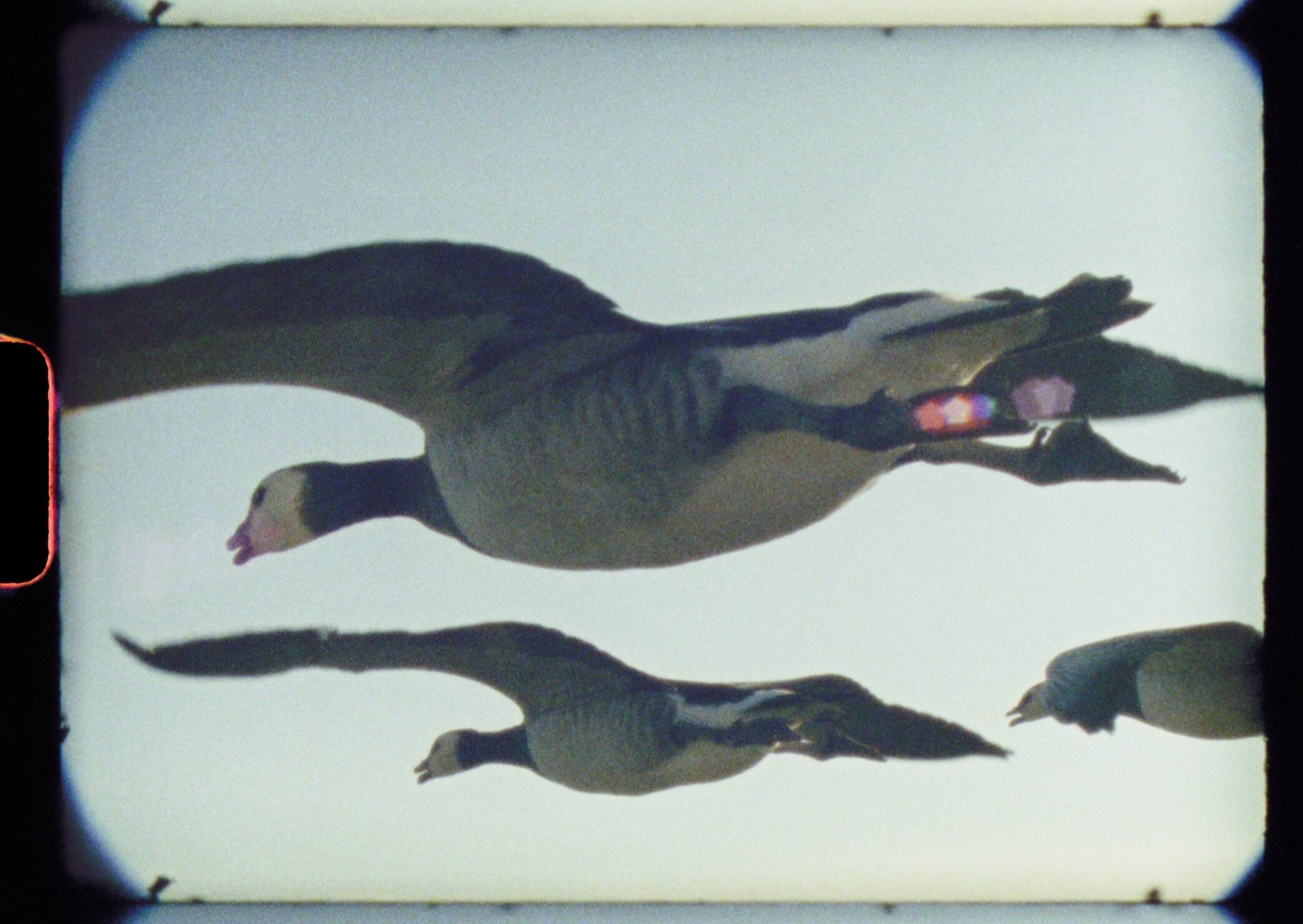
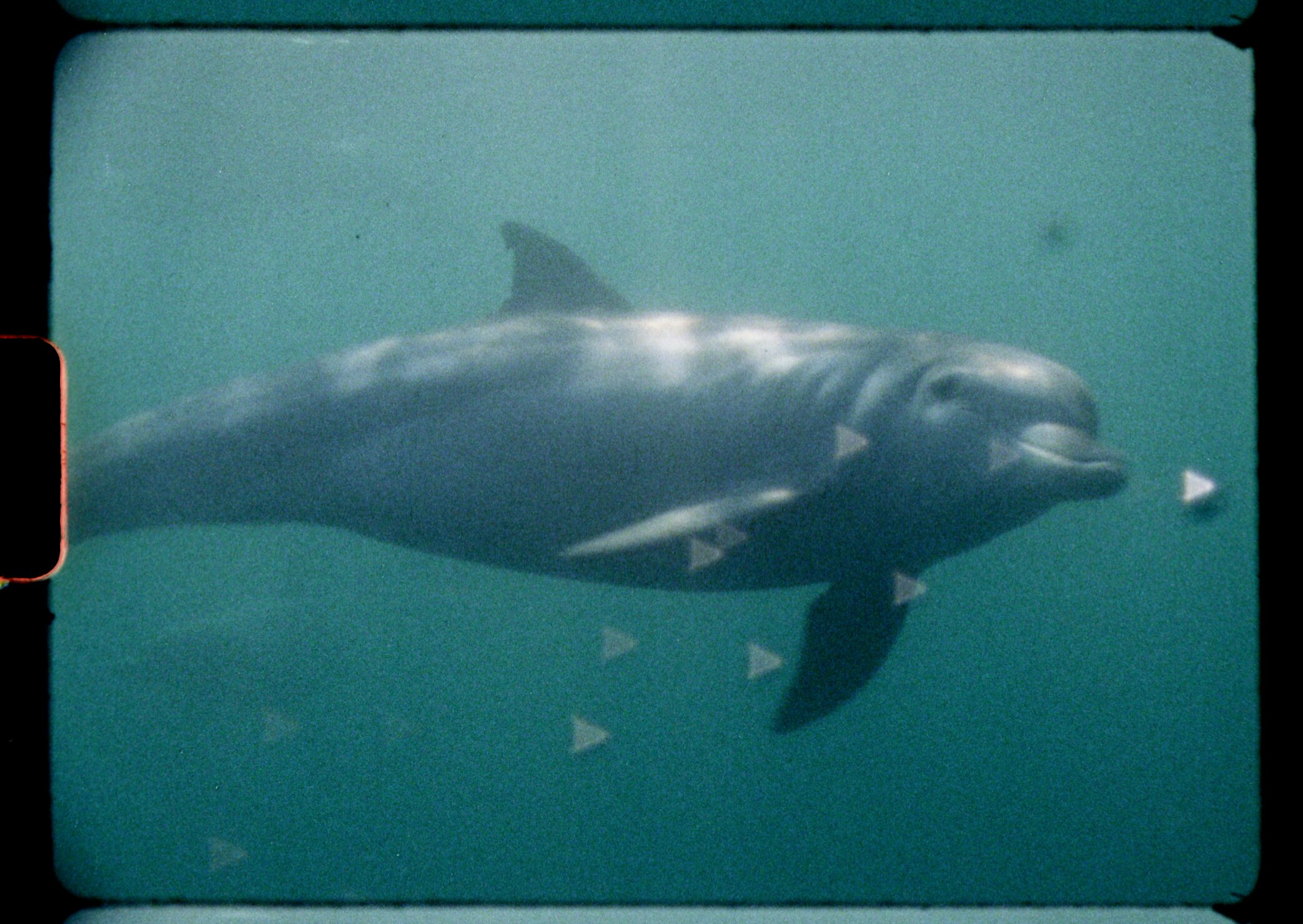
The film is loosely organised into three tones. The first is wonder where for example, isn’t it amazing when you look at a snail in macro, or you watch flamingos taking off in slow motion, or you’re flying up high with geese, or you’re swimming underwater with dolphins? Then there’s reality. And you can’t make a film about nature without looking at floods and fires and natural forces like volcanoes erupting and huge waves. So, we have the force of nature in there as well. It’s reality that’s the difficult part. For example, plastics in the ocean. There are certain topics that we managed to include within the film, but always on Super 8 format, which is a different way of looking at them.
The final emotional tone is hope. We wanted to make sure that the film leaves people feeling empowered to make choices and find groups that they can get involved with, or just inspire them to try and just do a bit of work on their own relationship with nature, no matter what that is. We’re not telling them to, but the film shows people whose own health has been positively affected by giving back to nature. It shows that nature is this superpower, and it’s there for us, but only if we give back to it.
Human beings habitually project our consciousness onto nature, equating a tsunami or another natural disaster as a conscious act of malice. The tension in our relationship with nature is rooted in our own psychology as well as the moral rationalisation whereby we subject nature to the violence of our human footprint…
We don’t really like to accept our own vulnerability. We spoke to some people who lived in the foothills of some of Hawaii’s major active volcanoes. We didn’t include this in the film, but they have a very different philosophy about life, because they know that at any moment, they could be the next Vesuvius.
They get on with their lives, and I suppose in the animal kingdom, which we don’t see ourselves as being in, but we are, there is day-to-day success but also fear. You hunt, and you are hunted, and it’s interesting that we like to insulate ourselves from these possible problems. We even buy insurance to insulate ourselves monetarily from things that might happen.
There’s the whole growth and greed factor, where businesses aren’t deemed to be successful unless they’re constantly growing. How much of the natural resources, like oil, gas, and rare minerals, is it okay to literally pull from the earth? When does it stop? How far can we go before we destroy ourselves? Because, as we know, that’s what happens to any species that gets to the top — eventually it gets checked in some way. In Darwin, it was war, disease or famine; one of those will come and get you. But why are we going to such a dark place?
Oh, it’s a joyful film that invites the audience into the intimacy of the moment these images were captured. Super Nature also encourages mindfulness — to lose ourselves in the moment, as if we were walking on a beach or through a forest. It’s about what we’re feeling in the moment.
Yes, it’s about connection and community.
There’s a bit in the film where I’m lying on the patio, and I see a snail crawling along. I wound up lying on the ground filming it on a macro lens so that in the cinema it looks enormous, and you’re right in with it in shallow focus.
I noticed it had these beady eyes on its antennae, and I didn’t really know that they had these — I don’t know how I didn’t know. And so, I’m looking at it, and it’s looking at me, and that’s a hell of a connection. We might not be able to speak to each other, and maybe that’s what makes it even better, because we’re such a vocal species, and so those types of moments of connection can be very special.
The other aspect of the film is about community, where we built up, bit by bit, a community of 40 filmmakers, some of whom I knew at the beginning, and many whom I would never have met if it hadn’t been for this project. This is what made it a real adventure, because when you go off on one, you meet people and they teach you new things. And this is what the story does. It encompasses more and more people, and to come back to your point, if you go and watch it in the cinema, the music and the sound design and the Super 8 visuals are there to give you this very experiential and immersive feeling of being in nature, but the film is made by a community of people whom you meet within the film. So, it’s about community and how we can do things together even if we’ve never met each other.
Our problems are global, but if we don’t think of them as such, and we instead think about our own local problems, if everyone did that, it would be a joined-up, global exercise. And so, what the film tries to do is talk about community.
Then there’s, of course, this community beyond humanity, which is the community we share with other beings. Anyone who’s got a dog or a cat, they’ve got that connection with them. But how often do we go out like Carlotta, the Italian woman in the film, who goes into the mountains? For ages she hasn’t seen an Ibex, and then, there’s suddenly one looking right at her, and she’s looking right at it — it’s a moment that gives you goosebumps, and it’s giving me goosebumps just talking about it. Those moments for connection don’t come along often enough for us, especially when a lot of us are living in cities.
On the subject of connection, what were the challenges of pulling together the mass of footage to find the right rhythm and pacing?
It’s an 82-minute film, and you can never take an audience’s patience for granted. You know that you’re going to have to weave a story that is compelling and, with this, because it was at least 40 separate shoots from all over the world, they all started off as mini short stories.
What I would do is I’d get footage back from the couple in Italy, for example, and I would cut digitally. I wasn’t snipping Super 8 and taping it back together. I’d edit a four-minute piece with some of the voiceover they’d given me, with their footage, some music and some sound design, and then we’d have a sort of short story. I did that with everything, and then I could show them, and they could have input. We could tweak it and even get new bits of voiceover.
Ultimately, it needed to be a feature-length collection of short films, not a portmanteau collection of short films. So, we knew that we had to get classic story arcs into the narrative, because to hold an audience for a short feature-length film of under 90 minutes, you’ve got to take them on a journey. And that’s where those emotional tones of wonder, reality, and hope came in useful. It’s not: Act One; Wonder, Act Two; Reality, and Act Three; Hope. It weaves in and out of them with slightly different thematic emphases, and it helps it to feel like a journey. In the end, the narrative spine of the journey is my own discovery through the project, which, as I said, became an adventure and a huge learning curve.
I was a filmmaker with a hunch that Super 8 could be a great way of recording nature, but I wasn’t someone who came from nature filmmaking, and working with these people from around the world, we had our perspectives of the world and how we feel about it collectively awakened.
A disillusioned and fiercely self-depracating Englishman, his glass is always half empty, but thanks to cinema and writing, never barren.
- Paul Risker

- Paul Risker
