On my last day in Thessaloniki, I went to a talk with the renowned film theorist Laura Mulvey and didn’t get in.
It was a sunny Thursday, and I’d just finished an interview with the filmmaker Alex Thompson. I arrived at the Pavlos Zannos Theatre a little before the 11 am start time only to find that Mulvey (who coined the term “male gaze” in her famous essay “Visual Pleasure and Narrative Cinema” in 1975) had packed the place out. The rush line had already snaked its way back to the elevator door, where a handful of fans had already started losing their cool.
For anyone who spends their time worrying about cinema’s longevity, there are few more encouraging sights than this — and few more encouraging places to find them than Thessaloniki, a city, and a Film Festival, where history lingers and eras overlap.
Home Advantage
A few days earlier, I’d ducked into a bar between screenings to catch a bit of the Greek Super League. Iraklis, the city’s second-biggest team next to PAOK, were playing league leaders Panathinaikos at home and were one-nil up with 20 minutes gone. I’d selfishly considered blowing off both films that day to attend, but doing so would have involved downloading a government app and registering my passport. As it turned out, the Panathinaikos fans had been banned from attending due to safety concerns, even though both sets of ultras are well known to lean (if to subtly varying measures) far left. Had I stopped to consider the politically nuanced debating culture being fostered on Greece’s football terraces, I probably would have considered arriving a little earlier for Mulvey’s chat.
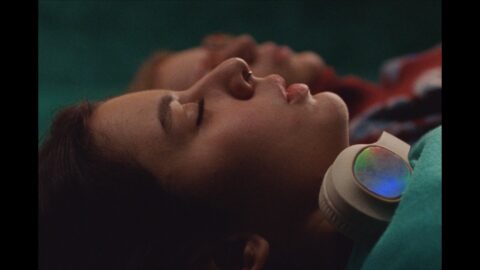
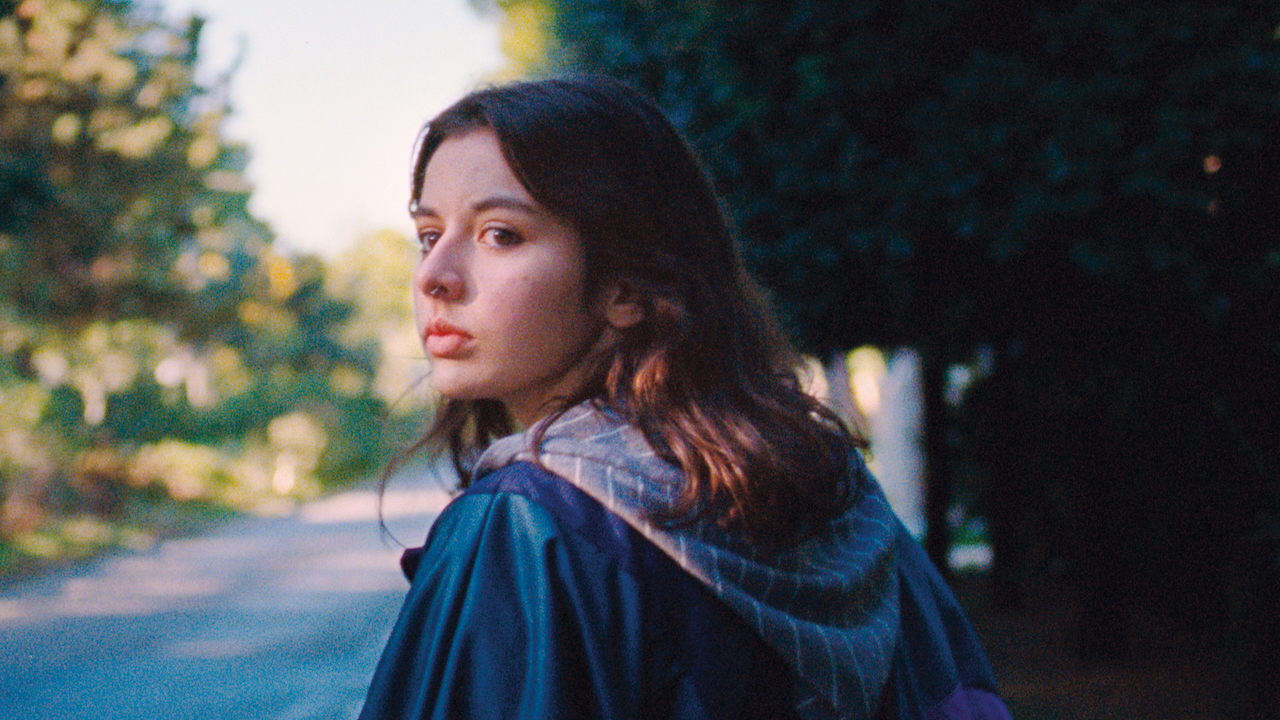
Next to all that, the festival’s hottest ticket was for the Greek premiere of A Day in the Life of Jo: Chapter Phaedra (feature and above; all films 2026 unless otherwise stated), the sophomore feature of Jacqueline Lentzou, an Athens-born filmmaker who moved to Thessaloniki when she was seven years old before relocating to the UK to attend London Film School. Phaedra, which takes place over a sun-kissed day in Athens, was the buzziest title to emerge from Venice’s Orrizonti sidebar this year, and the cram to get in it was about as unruly as anything I’d seen at that Italian festival in September.
The film itself is, blissfully, only 90 minutes long, 70 of which follow a 15-year-old girl named Jo (Evita Andriopoulou, a great find) as she goes about her day (fighting with her single mom, hanging with friends, falling for another girl at school) before a daring final act that roughly splits the difference between Stan Brakhage and Frank Capra. Fresh, funny and packed with lovely visual ideas, it confirms the arrival of a fresh voice in Greek cinema — and after 17 years of getting washed by the Weird Wave, Lentzou’s taste for warm hues and warmer emotions could hardly have come at a better time.
In the packed-out Olympion Theatre, the reception that greeted the director and her young stars was as enthusiastic as you’d expect — though I could hear some shuffling in seats during the film’s more adventurous detours. (I was not at all surprised to see it win the festival’s main prize while missing out on the audience award — as Iraklis learned the previous evening, in the 94th minute no less, a home advantage can only get you so far.) Having caught the film on the screener a few weeks back, it was my second time seeing it and my first time seeing it large. Without giving too much away, I will say that certain glimmers hit differently the second time around.
Away Days
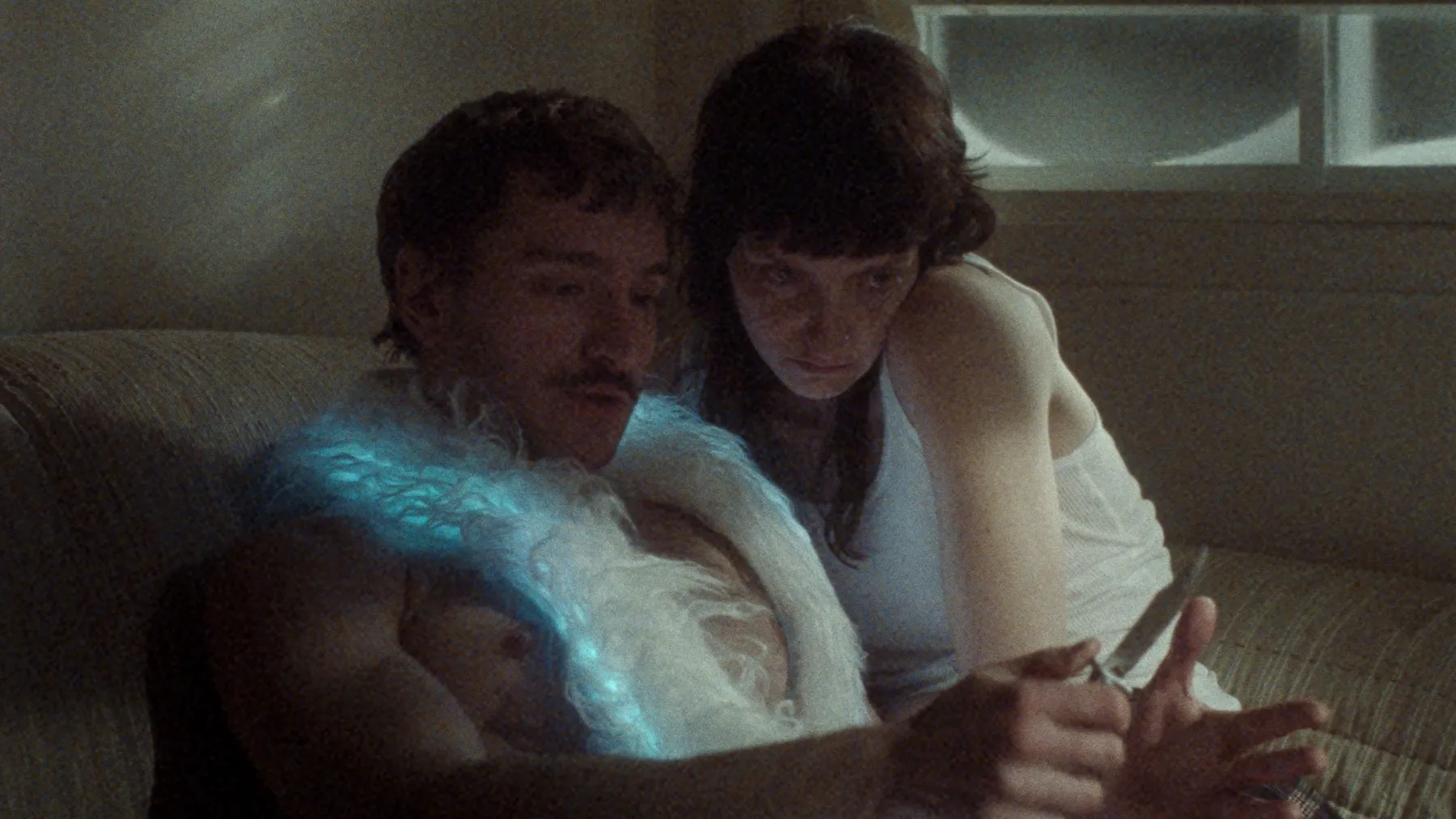
Allusions to the infinite are also present in Denis Côté’s Nobody’s Violence (above), a Locarno prizewinner1Second Prize from the Junior Jury and Special Mention for Xavier Bergeron that sees the idiosyncratic Quebecois director reunited with the aquiline star of That Kind of Summer (2022), Larissa Corriveau. In that tough but rewarding film, Corriveau was wonderful as a sex addict in rehab who eventually danced her way to a moment of hard-won catharsis. In Violence, another film of faded colours and jagged desires, she plays a travelling euthaniser who works for a close-talking hippy who might actually be the devil — though I’m sad to report that the film is far less fun than all that sounds, and Côté never quite locates the transcendent moments to make the oppressiveness of the mise-en-scène worthwhile.
For explorations of death or limbo served with a little more joy and panache, there were plenty on offer in “Welcome to the Desert,” a one-off sidebar curated by the statuesque Galician filmmaker Oliver Laxe — whose 2025 phenomenon Sirāt was rejigged especially for Thessaloniki into an immersive, three-channel installation that allows you to enter that film’s entrancing, climactic dance sequence right up to the moment when the music stops. The six-foot-seven filmmaker was conspicuous for his presence throughout the week and was on hand to introduce each screening in his selection, including this writer’s first-time watches of Ted Kotcheff’s remarkable 1971 film Wake in Fright and Werner Herzog’s contemporaneous Fata Morgana (which, at 55, hasn’t aged a day), and to work the room after a screening of Laxe’s adventurous narrative debut, Mimosas (2016).
Now a decade old, the film is occasionally a little narratively slack, but it’s a wonderful showcase for Laxe’s abilities as an image maker and a spinner of mythical yarns. Similar to Sirāt, Mimosas is a Morocco-set trance film that’s situated on the border between life and death. It’s also a real proof of concept for the Mad Max-fueled (George Miller, 1979) wonders of his recent smash. In the Q&A, Laxe fielded queries about deeper intentions and orientalism with the kind of steady gaze and easy charm that can leave an audience satisfied, regardless of how elusive the artist is choosing to be with their insights.
There was somewhat more to be gleaned from Donna Deitch’s post-screening chat for Desert Hearts, a beguilingly (and given the year, incongruously) sweet lesbian melodrama from 1985 that’s been on a bit of a 40th anniversary tour for the last 12 months. The film, which entered the Criterion Collection in 2017, was shot by Robert Elswit (who went on to win an Oscar for There Will Be Blood [2007]) in a style reminiscent of Robby Müller, the German cinematographer whose neon-hued love affair with backroad Americana had peaked with Wim Wenders’ Paris, Texas (1984) the previous year. Deitch had come to town for the screening, roughly 41 years to the day since its Toronto premiere, much to the delight of a majority Gen Z audience who, much like myself, seemed happy to bask in the rare discovery of an under-appreciated gem.
Heritage Sights
The second biggest city next to Athens, Thessaloniki is home to 50,000 students and is the only Greek city to feature on UNESCO’s food heritage list — though having more or less alternated my meals between ladled helpings of Giouvetsi (a hearty dish of orzo rice and braised beef) from the lunch ladies at Μικράκι and the char-grilled souvlakia of local institution Laikon, my dining experiences were as limited as they were gratifying.
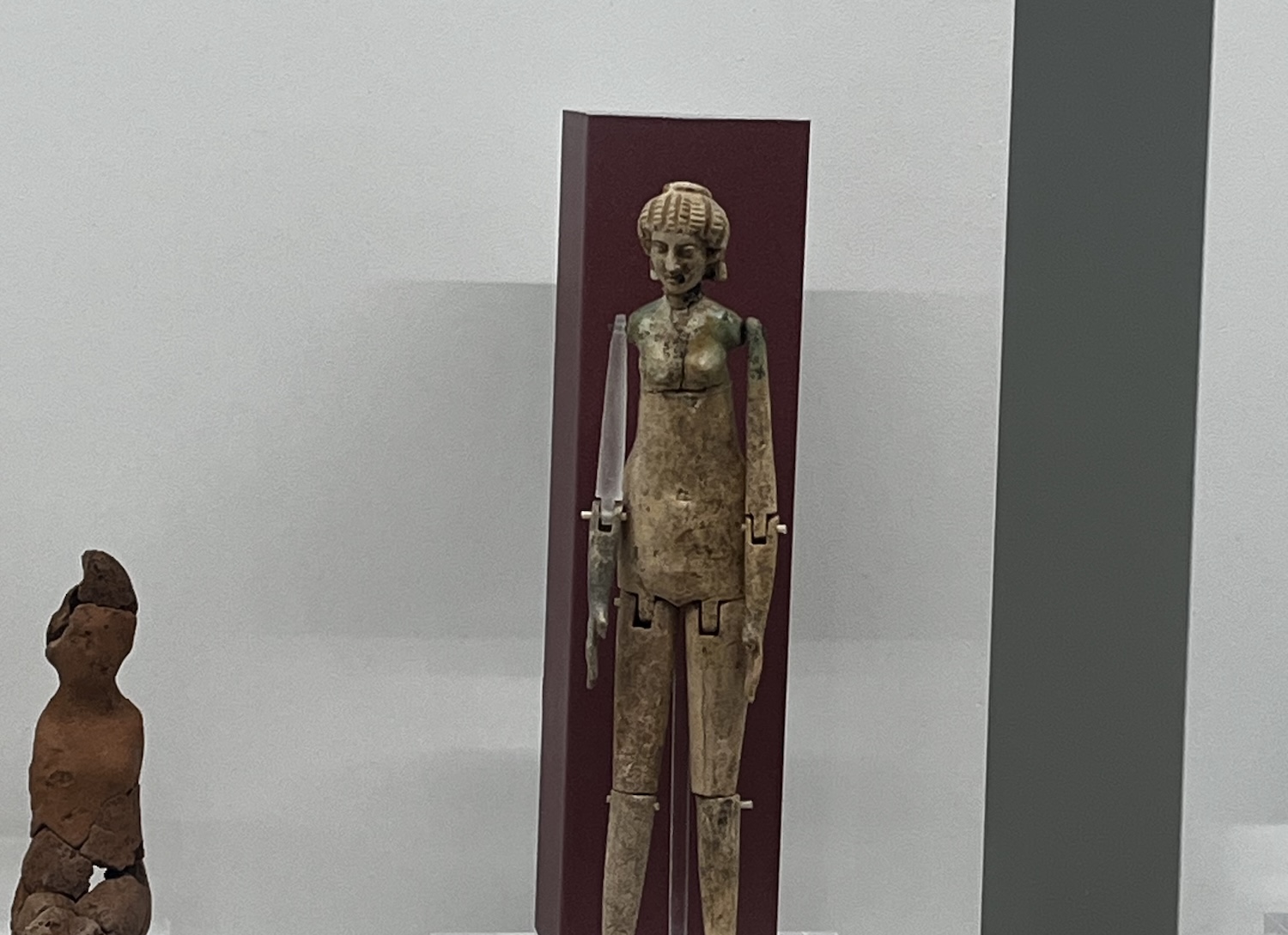
Outside of these, my main cultural outing was to the newly minted Mitropolis Museum, which opened in May in a renovated barracks a few kilometres inland from the port town’s bustling promenade. Capacious and gleaming, the Mitropolis is home to a collection of artefacts that were unearthed during the construction of the city’s metro line, amongst them a fascinating selection of children’s toys from roughly 300 BC which range from the elegant (a slender doll with posable elbows) to the macabre (the knuckle bones of livestock that were apparently thrown like dice). From the more recent past, there was also the intriguing story of the Hamza Bey Mosque, which was built by the Ottomans in the 15th century as a place of worship before later briefly becoming a Nazi Soldatenkino (soldier’s cinema) in the 1920s.
I was especially thrilled to learn that the 600-year-old structure was still managing to cause controversy as recently as 2007 thanks to a screening of the French artist Ange Leccia’s erotically charged Nimfea. On Friday, the space was used to announce the nominees of this year’s European Film Awards, which are set to take place in Athens on January 16th, where Paweł Pawlikowski’s undeniable Fatherland looks set to sweep. With all that history in the ether, it was pleasing to find three films on this year’s program that used the aesthetics of the archive to tamper with or fully embellish the past — if to dramatically varying degrees of success.

The first I saw was Joseph Archer’s Snapshot (above), a found-footage horror that swaps the Sony DCR and woodland settings of The Blair Witch Project (Daniel Myrick and Eduardo Sánchez, 1999) for an old-timey pinhole lens effect and Jack the Ripper’s London. It’s a nice idea, if a little tiring on the eyes after a while, and with an acting style that’s a little Fringe-coded (incidentally, the film premiered at the Edinburgh Film Festival in August) for any real tension to hold. The second was Bérenger Thouin’s L’âge d’Or, an ambitious and ethically dubious film (Buñuel-adjacent title included) that premiered at Cannes Classics this year. It fuses archival footage (some of which is colourised, including some remarkable images from the Paris floods of 1910) with newly-shot material in an effort to tell a Zelig-like (Woody Allen, 1983) and somewhat anachronistic story of a woman’s journey through the political and social upheavals of the first half of the 20th Century.
The best of these historical reworks by far was Kevin Walker and Jack Auen’s Chronovisor, which I first saw in Rotterdam back in January and which has lost none of its shadowy intrigue on second watch. It focuses on a vaguely Robert Langdon-esque academic who stumbles on a story about an old machine invented by a Benedictine monk in the 1970s that holds the power to photograph the past — like an archaic version of the device in Alex Garland’s Devs (2020) — but told here in a way that feels two parts ghost story and one part magic. The majority of the film is nothing but written text, and it contains essentially no “real” history, yet it feels emotionally true — even on its second watch I hung onto its every image like someone in the 19th century encountering an incandescent bulb for the first time. Chronovisor was made for somewhere in the region of $55K: proof, if any was needed, that there are still some stones to be turned in this medium. As a famous Greek once said, you never know what treasures lie behind them.
Rory O’Connor is a writer and critic based in Berlin, covering European Festivals and new releases for The Film Stage and Frieze.