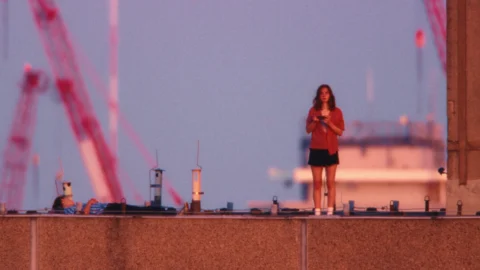
There is a certain responsibility in being Serbian in Sarajevo.
I keep thinking this as I drive past the Cyrillic billboards of Republika Srpska. Since the Dayton Agreement, ending the Bosnian genocide, Bosnia and Herzegovina has been divided into two entities and a third, neutral ground. I want to ask my mother about it but our conversation is preoccupied with the scenery. We come from a village, yet cows, goats, grass and mountains seem unusually important this time. I wonder how many untold memories “look, there’s another one” has covered up. We must have counted at least thirty cows, some of them imaginary.
We arrive on a pitch-dark August evening, and my mother’s car stops right in front of the Siege of Sarajevo Museum. I’ve been coming here since I was a little girl, and I’ve never seen it. I try to find all sorts of excuses for my previous political blindness, yet I remember every corner of the National Museum of Bosnia and Herzegovina vividly. Oh, and this gallery. And that one. Oh, and the Tito one, too. For the rest of my two-week stay, the Siege of Sarajevo Museum sign will accompany every one of my cinema rushes. I have not dared to enter it, just as I have not dared to enter the Sarajevo 80s Museum, where, according to someone from my past, a once-to-be engagement ring is still waiting for me. Sarajevo suffocates, exhaling memories into the heavy fog.
There is a certain responsibility in returning to a city in which you have a personal, let alone political, past. But memories belong in museums, locked away until morning, at least. Right now it’s midnight. There is a hill to climb to reach my dorm-hotel, and I check the Google reviews as I pant my way up. From “THIS IS HELL ON EARTH” to “the best part of my life.” I am nostalgic for my Balkanism and lean towards the latter. The only restaurant open and in sight takes cash only. “Euros are illegal, but it’s fine,” the owner tells me. This is the last night the city will be this quiet.
A Private Mann
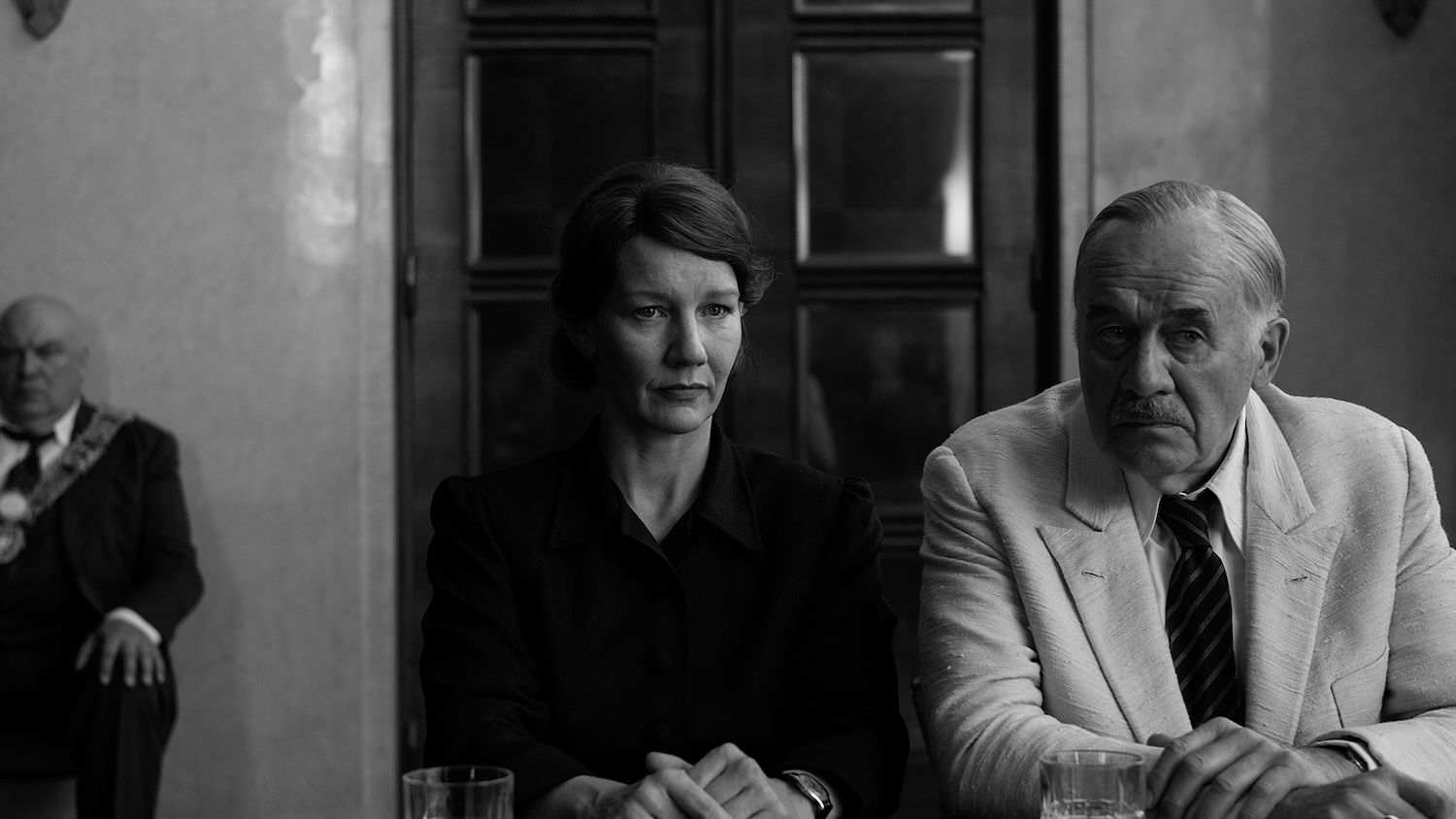
I wake to freezing fresh air and what will turn into a week-long fever. An initiation every Sarajevo Film Festival attendee must go through. The privilege of attending the festival from the very first day is getting to pick the time and place of the one film being shown that day (across multiple screenings). This year, that’s Fatherland (all films 2026 unless otherwise stated), Paweł Pawlikowski’s portrait of Thomas Mann in postwar Germany. Eager to get to the regional premiere first and feed my critic ego, I attend the morning screening. The National Theatre is empty, and the regional critics are as old as Mann himself, yawning their way through their workday.
Pawlikowski ends his Cold War trilogy after 13 years and three black-and-white masterpieces, rumour has it. Nothing like Ida (2013) and Cold War (2018), Fatherland speaks of the postwar loneliness of a grand man, stripping him bare of emotional and fatherly duties as much as of his literature. Refreshingly, Mann (Hanns Zischler) is characterised not through his work, but through his ceremonial title as a writer. The US-exiled Nobel Prize winner, accompanied by his daughter Erika (Sandra Hüller), returns to a newly divided Germany for a speech-giving, award-receiving tour, moving between Allied West Germany and the Soviet-controlled East. Pawlikowski’s Mann seems determined to remain above the politics of both, struggling to keep his private life private.
Klaus’ suicide arrives as an interruption to the tour. His father’s grand cultural mission is suddenly forced to make room for a son he failed to reach. Erika, meanwhile, is everywhere and nowhere: Mann’s driver, translator, tour manager, assistant, daughter, deprived of the famous journalist life she led outside his. But there’s much more to Pawlikowski’s emotional and stylistic sostenuto, and this is a movie about exile, (national) identity and the collision of private and public life, made by an immigrant himself. Maybe this is precisely why this music-obsessed director ends his supposed trilogy on what seems to be a picardy third.
Pawlikowski is here giving a masterclass, but a critic knows no idols. Sarajevo’s density works in my favour the next morning; I catch Pawlikowski casually drinking his coffee on the Festival Square, as I spill mine running into the screening of Kosara Mitić’s 17.
The Edge of 17
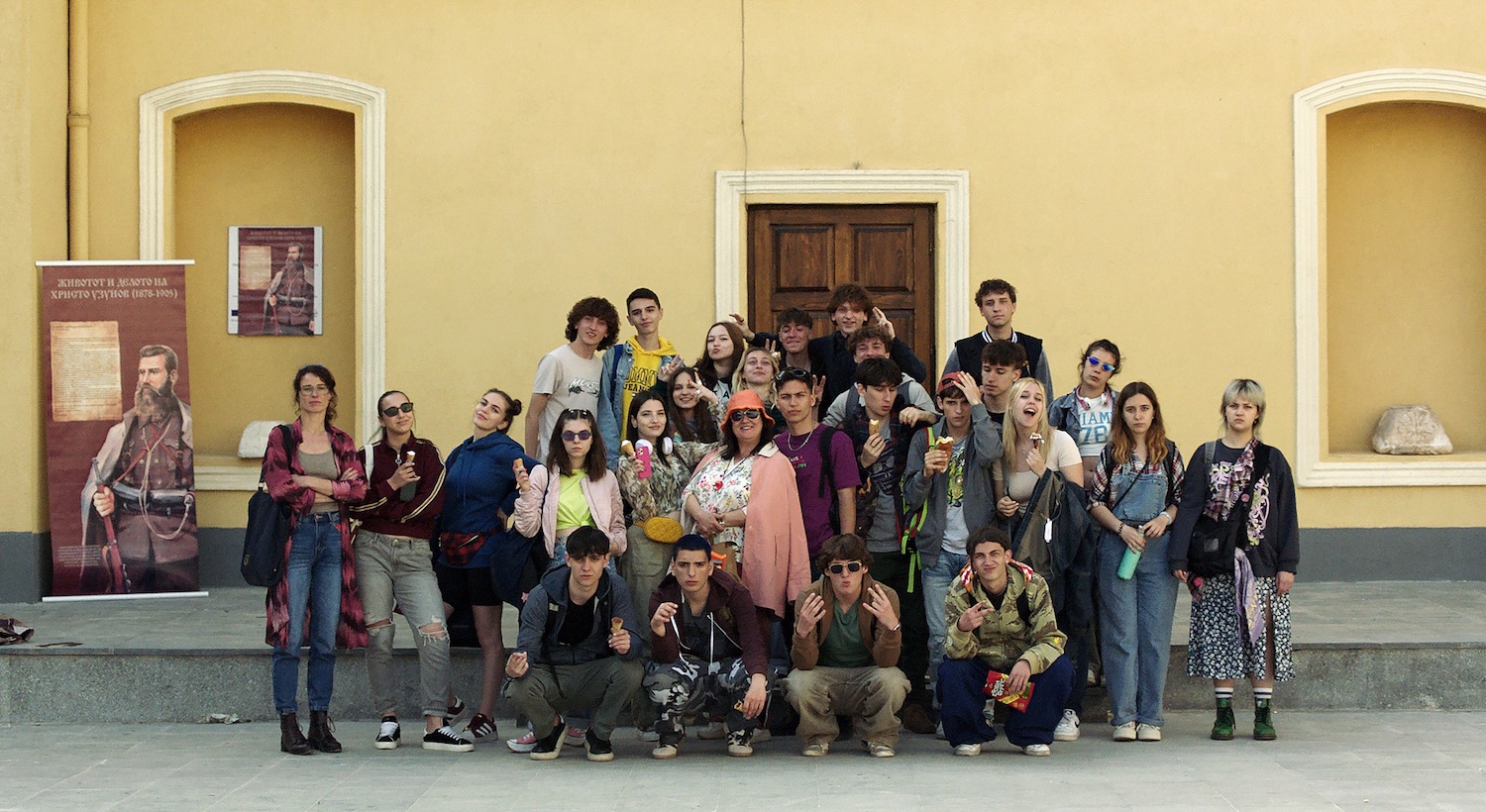
Everything but a good morning movie, 17 is one of those long-awaited regional premieres, yet the screening is only attended by a handful of early-bird enthusiasts. I’m seated right between Emily Watson and Igor Bezinović, both on this year’s Feature Film Jury. All I know about 17 is what my Berlinale colleagues have told me: “shocking,” “controversial,” “vomit-inducing.” The first shot explains the comments: two naked teenage boys over a teenage girl’s body. I thought threesomes were a Western thing, I think — and eat my words as the two boys order the already-still girl “not to move.” Pregnant as a result, Sara (the brilliant, brilliant Eva Kostić) hides it successfully from her entire social circle, but she is forced to reveal it to her roommate Lina (Martina Danilovska) when she goes into labour during the class’ school trip to Greece.
Inspired by a real event in which a 23-year-old North Macedonian student gave birth at the Serbian-Macedonian border in Tabanovci, threw the baby into a bin, and continued with the university trip to Prague, Mitić’s bold debut’s shock value lies in its capacity to deal with such a heavy topic in such a controlled, small-scale way. The intensity is there: Dame Joveski’s shaky handheld stays so close to the young girl that you’ll catch yourself holding your breath, afraid to breathe down her neck. But Mitić refuses to make the subject matter the scandal it was in 2016, placing the camera that close: “now you can’t look away.” After all, the tragedy of the film isn’t the underage pregnancy, but the fact that there is a society in which it goes unnoticed. I am a part of that society, and my mind drifts away into the abyss between sexual consent and non-consent.
I think of the beginning of Mitić’s movie: two bodies on top of one, a hand on someone’s throat. If this essay were a piece about a pornographic film rather than an artistic film, it would be worth looking at the trending categories on porn sites, the most common of which involve choking, slapping, spitting, and other verbs that are, to us Balkans, well known from early childhood, as the class’ peer behaviour in 17 proves. Before I exit the choking horror of 17, I hear Bezinović curse, as he realises that the baby Sara gives birth to, first appearing to be stillborn, is alive – one of those instances in which I’m incredibly lucky to share a language with my ex-Yugoslav neighbours.
As the international participants board their return flights, the number of those who speak none of Sarajevo’s three official languages dwindles; it’s still possible to avoid those you do not want to meet and unexpectedly run into those you do. We enter the second half of the festival.
Personal/Political
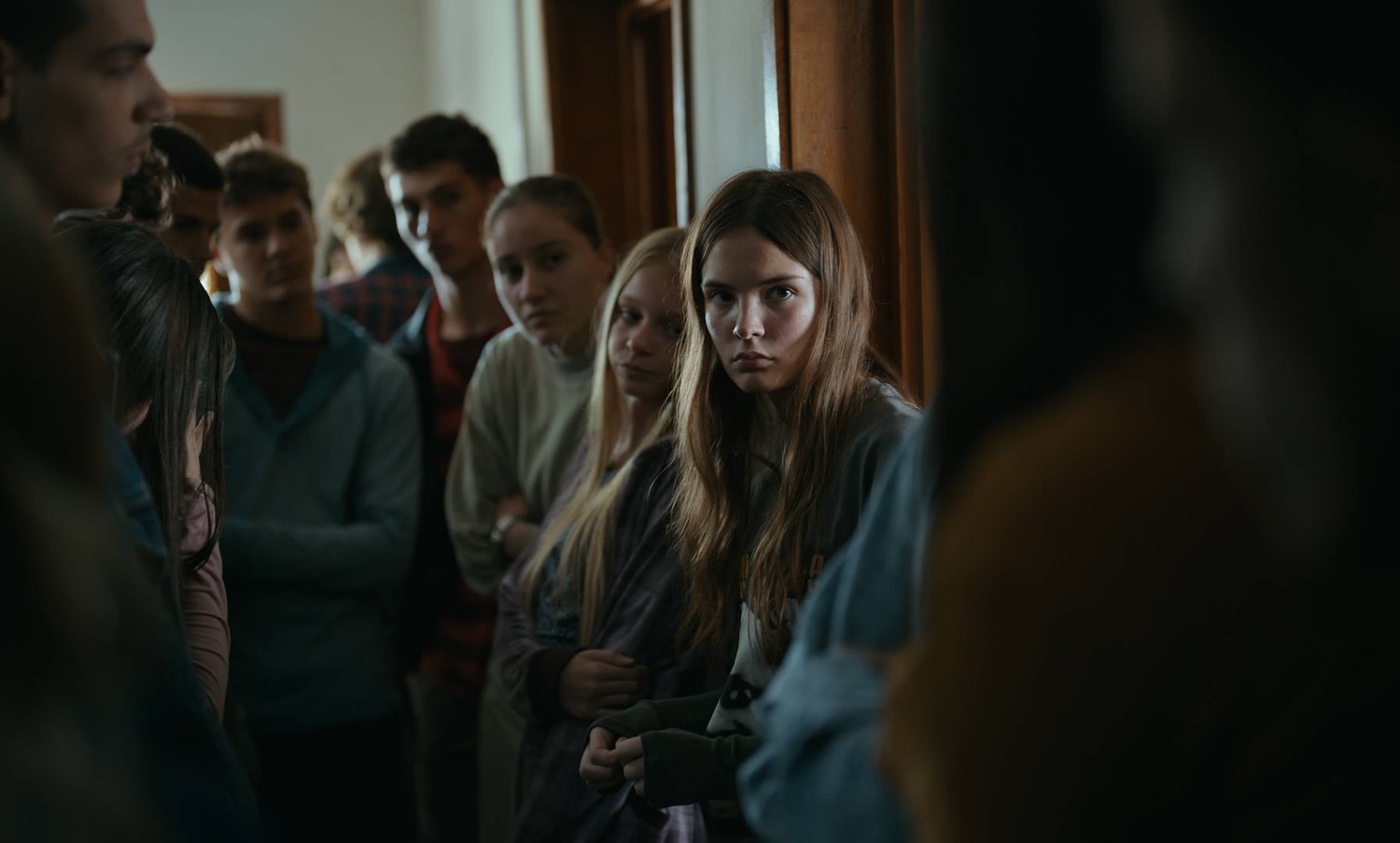
Sold out for all its screenings, Blerta Basholli’s Dua intrigues me precisely for that reason. With a synopsis of a 13-year-old girl’s coming-of-age story (played by Pinea Matoshi) during the rise of ethnic tensions in late-90s Kosovo, this movie fits not only my professional but also my personal realm. Born in April ‘99 in Novi Sad – the height of NATO’s two-month bombing campaign – the past I was never consciously a part of has engraved itself into me. Maybe this is why, after days of working at the National Theatre, tonight is the first time I take advantage of it.
I walk myself through the long hallways of this Yugoslav relic and find a seat in the upper-left balcony. The screening really is sold out; however, I’m confused by the glamorous, red-carpet-worthy dresses and neat tuxedos filing in. I want to own my political knowledge by comparing it to theirs; I wear jeans and a T-shirt, suggesting socio-political awareness, but the recurring guilt of being Serbian swallows me alive before my prejudices do.
The film is decent, and noticeably, EU money helped produce it. There’s something inherently French in the way Basholli treats her young female character — a sort of boldness and strength that doesn’t interfere with gentility, an ideal for my rough Balkan self. While the film’s clear harsh political background is key to the narrative, it seems somewhat imbalanced compared to Dua’s presence. The complexity and anxiety of Serbs and Kosovars co-existing amid ethnic terror is well written but executed slightly sloppily. The film’s strength lies in its portrayal of Dua’s premature adulting. It may not work well enough formally, but I think to myself: this is how it should have been. The scenes of protests in the streets, in which Serbian militia beats innocent civilians, make me sink deeper into my uncomfortable seat. I’m already on edge when the sudden brightness of someone’s phone further provokes my irritation. I glance at their screen and see them text in Cyrillic. I politely ask them to turn it off. A small win. If I’m forced to face our past on the screen, so should they.
Death Is Only the Beginning
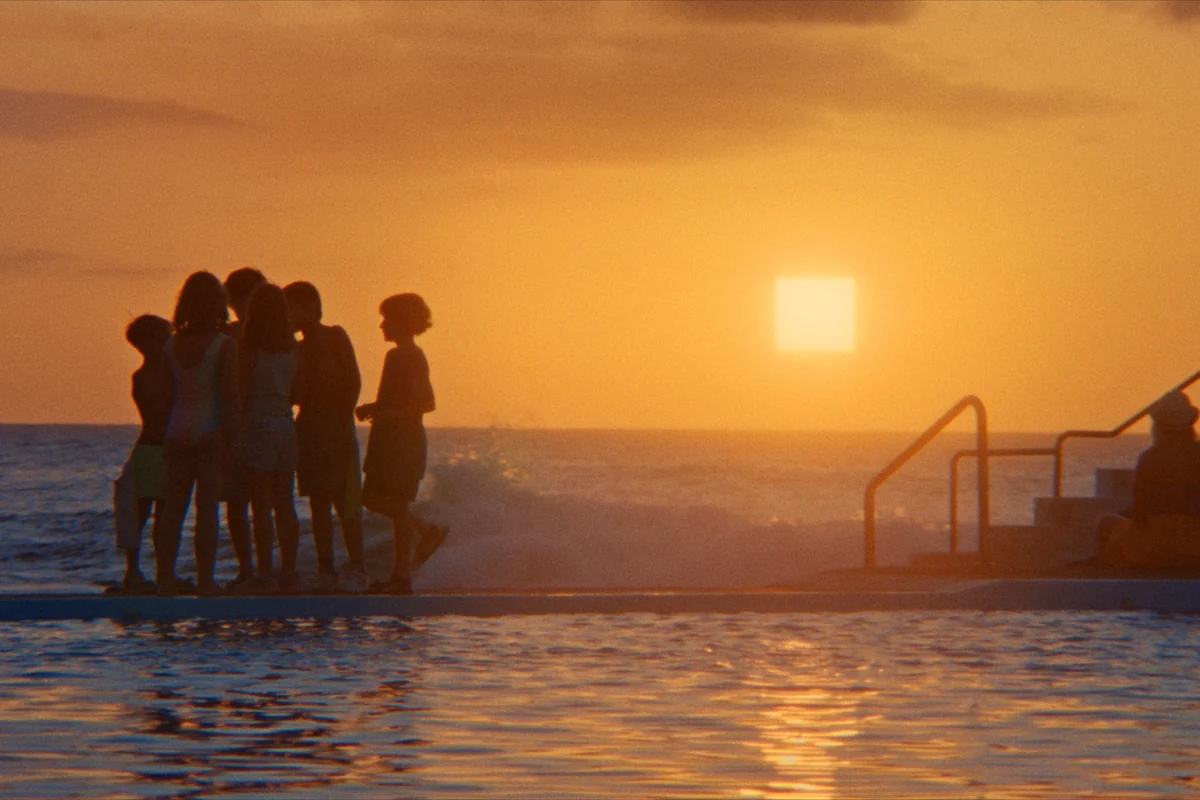
By the end of the festival, countless sleepless nights and cheap — compared to the EU anyway — ways of relieving festival stress get to me. I’m tired of making decisions, so I ask for recommendations and find myself choosing Sandra Wollner’s Everytime (feature) over yet another party. Described to me as “practically Aftersun (Charlotte Wells, 2022)” (the two share a DOP, Gregory Oke), I try not to have my guard up. A pitch-dark shot — an older sister sets a water trap for her sleeping younger sister before sneaking out to her last-ever party — and I’m already sold. Such care goes into establishing the sisters’ dynamic, only to have it cut off within minutes. Jessie (Carla Hüttermann) dies trying to capture the sunrise after a drug-enhanced party. Her boyfriend lies still beside her – sunrise, youth, young love. All should have been well. A teenhood cut short re-establishes the order. Jessie’s boyfriend Lux (Tristán López), her single mother Ella (Birgit Minichmayr), and her younger sister Melli (Lotte Shirin Keiling) are back at zero, trying to deal with grief, guilt and the love that remains.
If there is any recent “trend” in cinema I appreciate, it is the celebration of unlikely relationships. The teenage ex and a no-longer-teenage mum bond through their inability to communicate and forgive – one another and themselves. There is so much to observe as their relationship unfolds slowly and gently: Lux gradually takes Jessie’s place as both sibling and child, while Ella provides the motherly love he probably needs more than anything right now. Berlin and Vienna’s greenery, set against the white rocks of the Canary Islands, make this movie a study in landscape. Wollner treats all her filmic devices with equal care, whether it’s a character, a rock or a building. Her large-objective lens gives us a small wonder.
Traditionally, narratives treat death as, well, terminal — it ends a standing order by destroying it irrevocably. Here, death is precisely the recalibration of that very order. The adage “life goes on” is always already a response to the fact that it ends. “One generation passeth away, and another generation cometh: but the earth abideth for ever. The sun also ariseth, and the sun goeth down, and hasteth to his place where he arose,” (Ecclesiastes 1:4-8) I remember walking out of the ever-so quiet cinema. It is time to go home.
Memories Can’t Wait
In search of a proper goodbye to the city that has been a home, a workplace, and much more, I visit Trebević, the mountain that hosted the ’84 Winter Olympics. My mother still remembers the day it was chosen over Tokyo. She says it was “more convenient.” I realise what she means as I see Sarajevo from the cable car. Sarajevo is a basin. A geographical depression. I try not to give in to linguistic analysis and wonder instead how my parents feel about our nationality. I continue my post-festival blues and ponder national responsibility as I take down our temporary office in the National Theatre. “Susan Sontag used to work here during the war,” I text my partner — a subtle reminder that Sarajevo is more than the festival. There it is again, an immense wish to stay. I ascribe this to my forever longing to own cities that have shaped me, but the reminders of how my country has shaped this one sober me: I find myself in front of the Siege of Sarajevo Museum once again.
Pavla Banjac is a Serbian film critic, translator and editor based in Budapest, currently double MA-ing in Film Theory and English Literature.