
Being silly is a serious business. This is especially true if you are working as a clown, where you dedicate your life’s work to developing a persona characterised by stupid gestures. In Adrian Goiginger’s poignant drama Four Minus Three (2026), a female clown has her world turned upside down by a tragic accident — and with it, an existential challenge to her joy-filled life.
This Austrian work is essentially the Alan Moore anecdote about the man telling his doctor he’s depressed in full form. As we all know, when the doctor recommends he visits the Great Clown Pagliacci, he breaks down and reveals he is Pagliacci. What do the people who entertain the depressed do when they are depressed? This film is your answer.
Based on the true story of Barbara Pachl-Eberhart, and her best-selling novel, Four Minus Three shines in the fact that it takes the artistic integrity of clowning (a phrase I never thought I would ever write) seriously, using its premise to explore the intense peaks and troughs of living through a seemingly impossible life event.
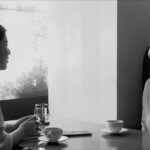
Valerie Pachner stars as hospital clown Barbara — performing to sick and dying children — married to the professional artist clown Heli (Robert Stadlober). Their life is chaotic — two manic kids, a disordered household, an uneven split between work and domestic duties — but happy, characterised by a deep silliness and a variety of playful antics. But when Heli’s clown van collides with a train, killing him and the children, she is forced to slowly rebuild her life, taking us on a journey through bad decisions, awkward sexual experiments and stirring moments of quiet relief.
Moving backwards and forwards in time to capture life both with and without Heli, Four Minus Three at first seems like it’s spinning its wheels a bit, but eventually the cumulative aspect of the past and present colliding provides a true tearjerking experience, capturing how grief never works in a truly non-linear aspect, but is a constant companion that jerks you between eras.
I appreciated the subtle use of colouring here, with the flashbacks captured in light-filled yellow and orange tones, while the modern-day takes on a sickly blue-and-green hue. Yet it’s not as black-and-white as that, with the occasional mixture of colours allowing for more nuanced emotions. There’s plenty of close-ups and handheld camera too, but there’s nothing too flashy, with the drama firmly rooted in powerful, subtle performances — especially the excellent lead Valerie Pachner.
It’s great to see her back to peak form after last year’s dreadful Panorama entry, Delicious (Nele Mueller-Stöfen, 2025). This work reaffirms her major talent as a dramatic actress, moving between comic antics and deep-seated grief with ease, especially during one standout scene where she acts as her clown persona in front of a potential new lover. Tragedy, grief and desperation commingle in a powerfully affecting combo. Nothing particularly special here. Just solid Euro drama, extremely well-executed.
Redmond is the editor-in-chief of Journey Into Cinema.
- Redmond Bacon

- Redmond Bacon

- Redmond Bacon
- Redmond Bacon