Radu Jude is best known for his outrageous, often loopy feature films, especially recent works like the frankly ridiculous Dracula (2025) — which rubs your face in its exceedingly weird AI-generated bad taste — or the gross Andrew Tate-stylings of influencer Angela in Do Not Expect Too Much from the End of the World (2023). But in his documentaries, such as The Exit of the Trains (2020) and Memories From the Eastern Front (2022), working alongside Holocaust historian Adrian Cioflâncă, he takes a far more sombre, dry approach.
Gone are the provocations, in place are simple photo montages, often exploring a side of the Jewish Romanian experience the authorities would simply rather forget. Yet his latest Shot Reverse Shot (2026) might be the most accessible — and even slyly playful. Although it features no music and just plain voiceover, Jude and Cioflâncă’s latest creates a truly evocative sense of Romanian life in the tail-end of the Nicolae Ceaușescu regime.
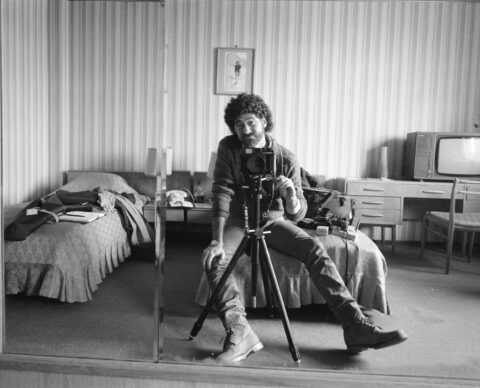
This is mostly down to its choice of photographs, kindly supplied by Edward Serotta, one of the most important chroniclers of the Jewish experience in Central and Eastern Europe after the end of World War Two. His black-and-white photographs of Bucharest at this time, a particularly impoverished era, as the dictator implemented an austerity policy to help pay back the national debt, provide a startling depiction of a country on its knees, with hotels lacking heating, black marketeers running rampant, and Kent cigarettes being used as an alternative currency.
Serotta’s upbeat American-accented narration keeps things sprightly, reflecting on how his entry to Bucharest felt like an Eric Ambler novel. Considering that no one could afford petrol, he often felt it was pretty obvious that the car constantly behind him was keeping tabs on him. Yet, he still managed to visit the site of mass murders of Jews and capture the beauty of Jewish life in Romania in its twilight years; family gatherings, prayers, meal-times, shop-owners in their place of business. After all, there aren’t many Jews left in Romania now. With over half a million 100 years ago or so, these numbers have dwindled since the end of the Cold War to a mere couple of thousand today.
The first half is Serotta’s account; the second half compiles the surveillance file the Securitate (secret police) had on him. With poorly blown-upand framed images and matter-of-fact narration from Diana Mărgărit — with particular care to mention that he photographed gypsies or stacks of empty bottles — we see that the photographer’s concerns about a tail were no mere fantasia, but an active reality of being a foreign guest in Romania at this time. And in typical Jude fashion, the film continues his piercing critique of Romania’s role in the Holocaust, which included mass killings and violent pogroms, yet was something the Communist regime denied and is an unfortunate belief held by large swathes of the population today.
This active documentation of the Romanian-Jewish experience is certainly not as flashy as Jude’s pornographic, ridiculous side, the kind that lights up film festivals in their competitive sections, yet I would argue it’s just as important. This is another vital film from Europe’s most conscientious director.
Redmond is the editor-in-chief of Journey Into Cinema.
- Redmond Bacon

- Redmond Bacon

- Redmond Bacon
- Redmond Bacon