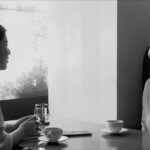
In resisting easy categorisation, hybrid documentaries can offer a challenge to homogenous political structures; imagining alternatives outside of Western binaries, and based upon mutual solidarity, trust and love. And in the case of debut filmmaker Rand Abou Fakher’s Why Do I See You in Everything? (2026), the form can also challenge homogenous notions of documentary filmmaking — tidy endings, a powerful moral — to varied, unsatisfying results.
This misshapen work, charting the changes in the lives of two friends living in Berlin since the start of the Arab spring in Syria, is a typical example of an ever-present film festival form (grainy footage, ambigious voiceover, lack of conventional structure, etc, etc) — one that appears to be finding a theme — and a style — as it goes along, tying life in exile with the ongoing struggle of Arab liberation. Modest and well-meaning, but ultimately unengaging.
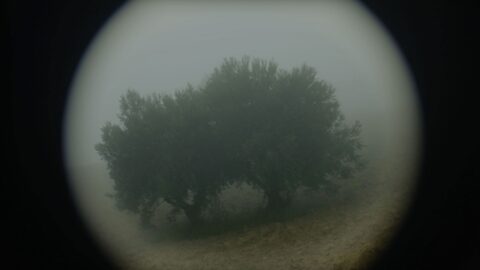
It starts promisingly enough, with the idea of a strange, new world; thick, large, bulbous trees being shipped in vast pots on the back of trucks.1I never saw this option in Euro Truck Simulator 2 (2012)! It’s a tidy metaphor for the work, which is quite literally about uprootment, yet unfortunately, we never see anything as fascinating as that image again.
Still, plants and their relationship to home are a continuous theme of the film, as close male friends Qusay and Nabil — although their proximity to one another, captured in long, meaningful takes, suggests a more romantic pairing — make their life in Germany while dreaming of the soil and the olive trees of home. But their newfound homeland is hardly a paradise, with Fakher provocatively cutting between scenes of Assad’s statue being deposed and the Berlin police’s violent crackdown on pro-Palestinian protests. These men’s lives are defined by these makings and unmakings, whether people or plants, and they crave the normalcy of home, even if, for so many years, this seemed a distant dream.
But like many films that wind up at Rotterdam, this all sounds better in theory than in practice, as if Fakher’s work is meant to be simply pored over and dissected, rather than experienced. And in practice, all this praxis tends mostly towards the tedious. The lack of contextual understanding, at first disorienting and liberating, curdles into more and more reasons not to get involved. It’s a shame because I loved Fakher’s 2020 Berlinale short So We Live, which suggested a far more formally bracing director.
Redmond is the editor-in-chief of Journey Into Cinema.
- Redmond Bacon

- Redmond Bacon
- Redmond Bacon
- Redmond Bacon