Jean-Luc Godard famously said, “All you need to make a movie is a girl and a gun.” The queer shot-on-video equivalent might be closer to: “All you need is a guy in a jockstrap and a villain named Mangina.”
Since the early ’90s, Pacific Northwest DIY filmmaker Kelly Hughes has built a cult résumé, from the public-access horror circus Heart Attack Theater (90s) to Le Cage Aux Zombies (1995), a wild crime caper about an unfaithful couple and a rash of Seattle stranglings. But his most infamous creation — the long-unavailable Twin Cheeks: Who Killed the Homecoming King? (1994) — has remained one of the decade’s most sought-after oddities. Now it’s finally back in circulation thanks to Vinegar Syndrome’s VHSHitfest sublabel.
Harder to classify than the show it’s poking at, Twin Cheeks plays like a deranged, hyper-inspired slab of queer outsider art. If shitposting about prestige TV existed in 1991, this is exactly what it would’ve looked like: a delirious homage that skips straightforward parody and instead builds its own cracked universe — jammed with bizarro characters, even more bizarro ideas and a gloriously sloppy score that sounds like an Atari game made violent love with an old Casio keyboard.
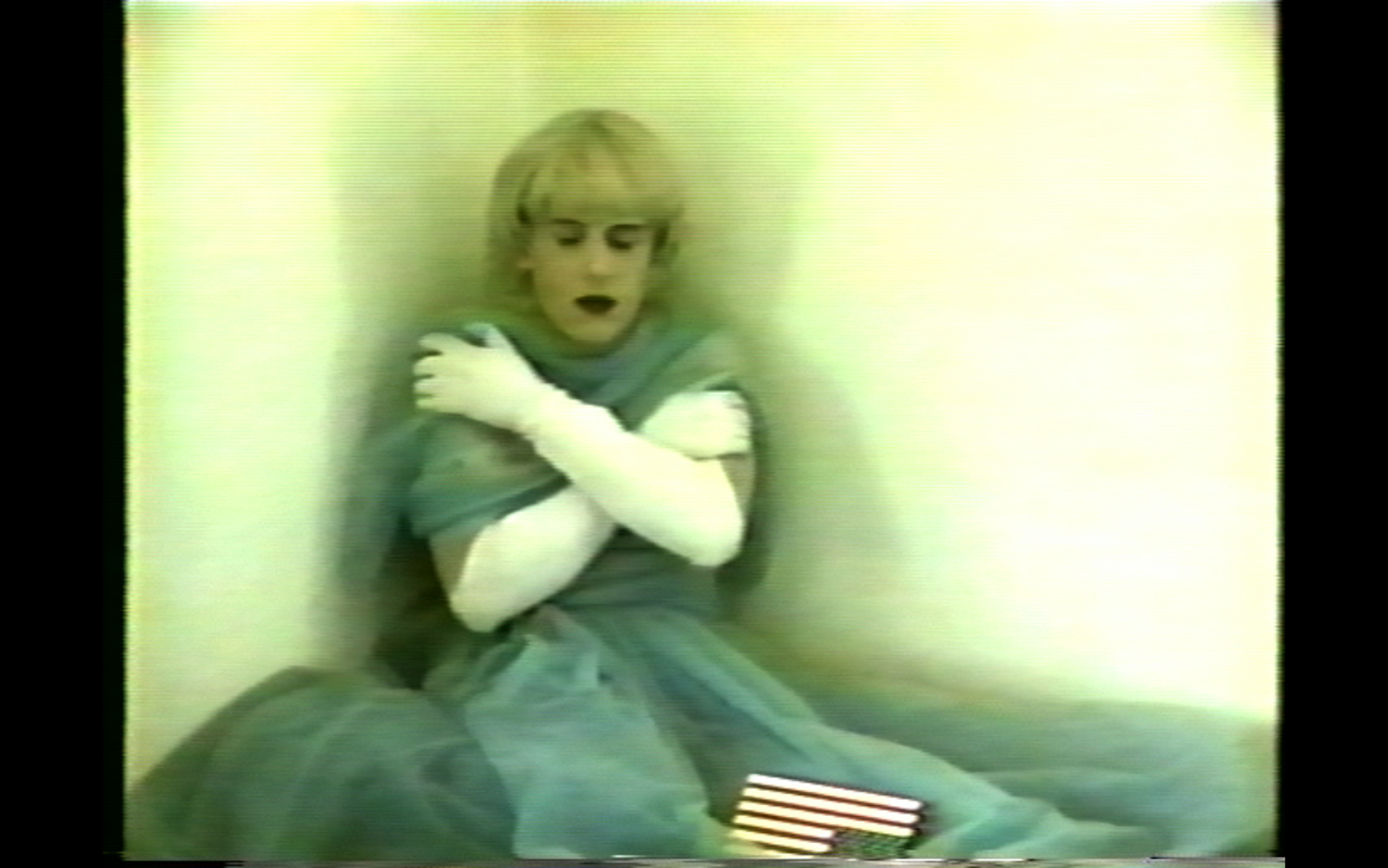
The visuals match the mood – lots of camcorder-ish murk. The image is so smeary and raw, you can hear the tape wheezing. No amount of modern “restoration” could ever clean it up, and tbh, that’s the charm. The fuzz, the blown-out whites, the shadows that swallow entire faces — every frame looks like it was shot either beside a sex offender’s house or in his basement at 2 a.m., giving the whole thing a wonderfully swampy, low-rent beauty.
I won’t spoil the deeper plot spirals, but imagine the main Twin Peaks (David Lynch, Mark Frost, 1990-2017) storyline tossed into a trash-filled backwoods blender. The homecoming queen (played by former L.A. punk/Go-go boy Tom Bliss) is dead — but so is the homecoming king (Jeff Randall). His brother (Troy Sinatra) goes deep undercover into the local heart of darkness, posing as a stripper to inch closer to the crime ring that might explain it all. There’s some fun callbacks — a reimagined loglady (Gloria Hapshot) and the homecoming queen’s diary, this time covered in the American flag — on top of that, we get some striking new additions to this version of the Twin Peaks universe, like bootlicking, bathroom sex and a troll doll floating in piss.
The 50-minute film opens with the homecoming king’s death after a sexy rendezvous at an outdoor cruising spot. What follows is a feverish hybrid: part video-art mockumentary (mainly interviews with the victim’s clueless mom), part murder-mystery-infused personal diary and part fake ethnography, complete with silent-cinema-style text scrolls that drop plot crumbs, backstory and character beats. Instead of putting the text on a blank screen, Hughes just throws them directly onto the image, coming from multiple directions, which only adds to the film’s already haywire energy.
Beneath all the cheeky chaos hums something unmistakably Lynchian: every American town hides something rotten, something dangerous. Here, that “something” is Mangina (Helen Bedd) — a genuinely unsettling boogey-lady who kidnaps men, turns them out and gets them hooked on junk. Mangina is bad news: she’s married to a peroxide-blonde in a leather jacket, might have killed her own son, and owns a sleazy male strip club, complete with DIY Flashdance (Adrian Lyne, 1983) effects (lots of water thrown on the dancers). It goes without saying, this film shifts gears between horrifically funny, weirdly hypnotising, sometimes very stupid, and somehow still closes on an emotionally resonant note.
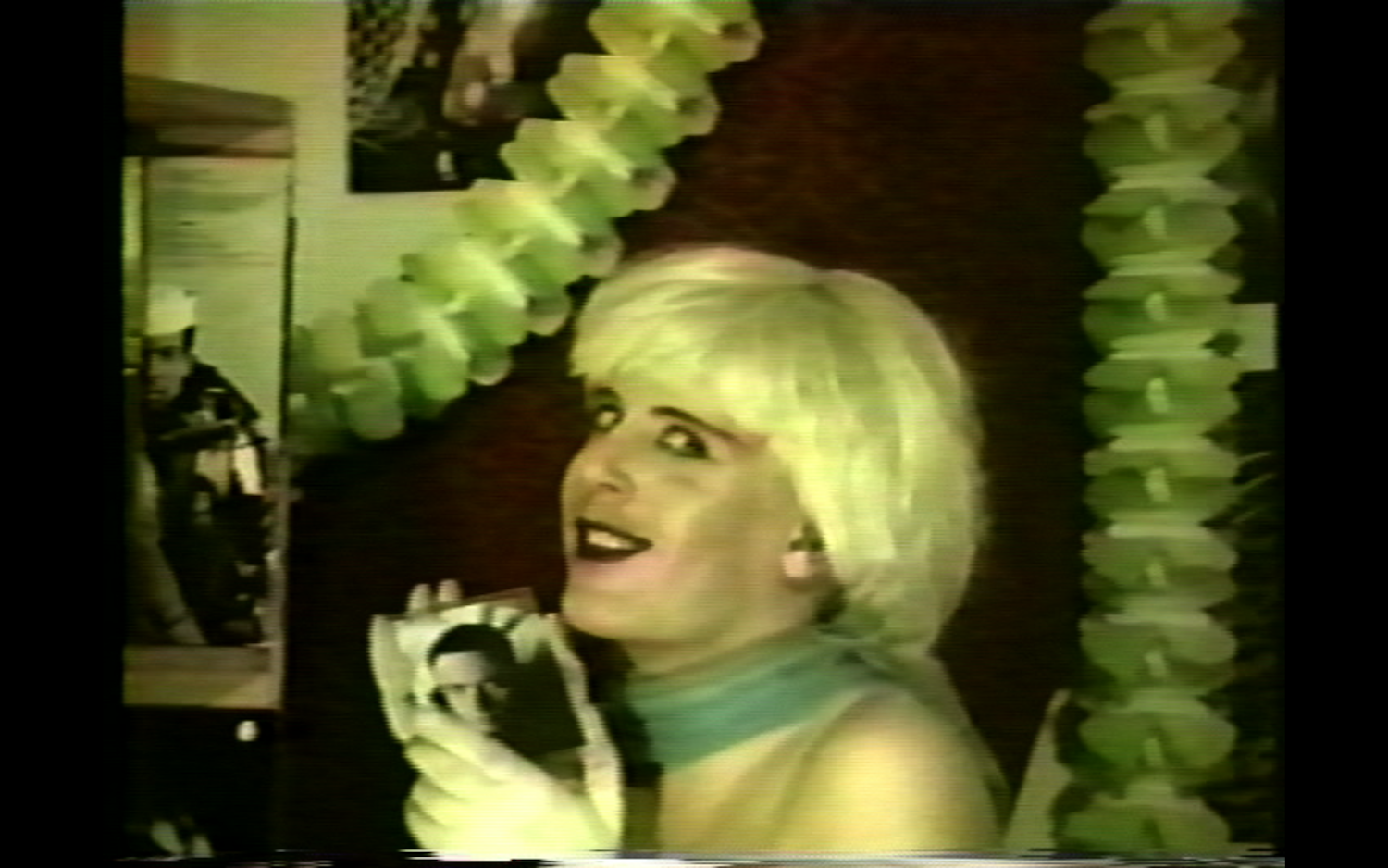
Like the best no-budget, shot-on-video oddities, Twin Cheeks achieves greatness not just through its gonzo “we’re shooting this shit no matter what” energy, but through a strangely inspired vision underneath it all. It feels like you’re watching something no one else on Earth could have made — personal and universal at the same time, twisting a beloved, familiar property into something entirely its own.
Editor-at-large Jared loves movies and lives with Kiki in Berlin.
- Jared Abbott

- Jared Abbott

- Jared Abbott

- Jared Abbott