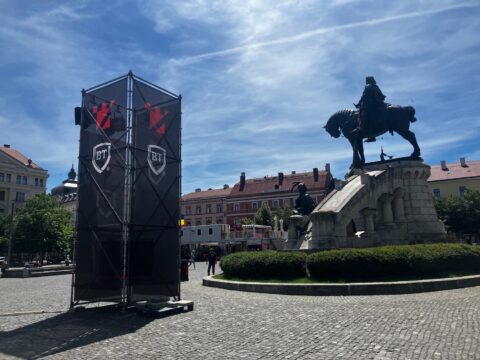
It’s been three years since I’ve been to Cluj, but a lot seems to have changed. Korean BBQs (the international sign of yuppification) are everywhere, the price of a beer has almost doubled, and, befitting its moniker as the “Silicon Valley of Eastern Europe,” a large billboard on the way from the airport promotes an upcoming conference, “Where artificial intelligence shapes strategic decisions.”
Bleary-eyed from a morning start, the cloudless sky providing no respite from the sun, I shape my first filmgoing decisions with a tired spontaneity; picking the first movie I see available on the ticketing app. It’s a Romanian one. Makes sense. We’re in Romania after all.
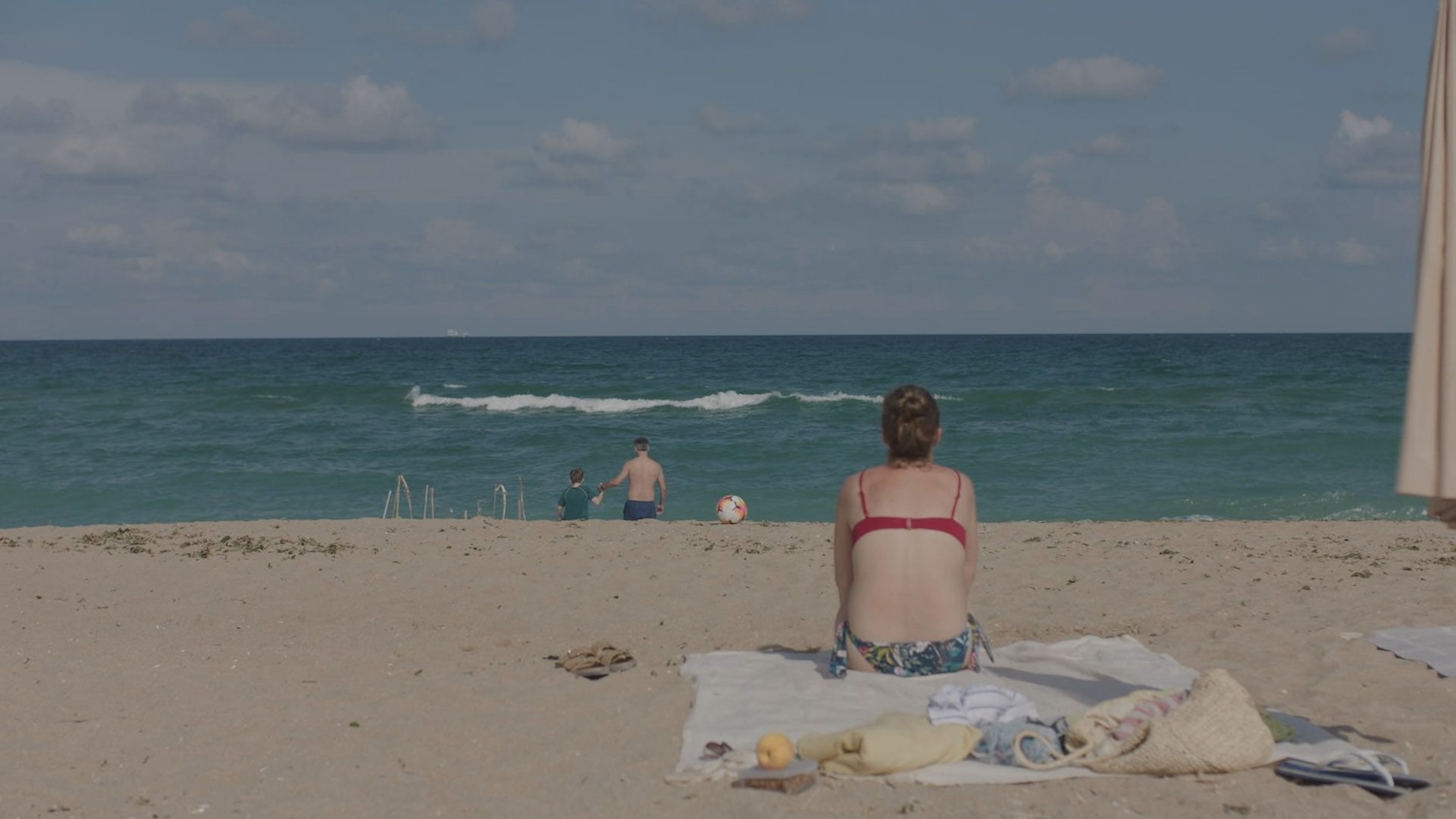
Black Sea. Blacker Moods.
A Safe Place (Cecilia Stefanescu, 2025), playing in Romanian Film Days (all films are in this section unless otherwise mentioned), is firmly in the tradition of depressing New Wave kino, and reminds us that modern Romanian cinema is an actor’s cinema, making more with minimal resources by a hyper-attenuation to the contours of the human body; its myriad expressions and the infinite sublety of an ever-changing mental state.
Marina Palii plays the depressive mother-and-wife Lucia, on holiday with friends in Bulgaria, with exceptional passivity, her sense of a life ebbing away from her conveyed in large close-ups as she stares at her brutish husband Gelu (Virgil Aioanei) with her child playing in the Black Sea. She barely talks, even as he shamelessly paws at her in front of their friends, her deep eyes constantly scanning the landscape for something more than what she has.
Stefanescu’s debut has had mixed reviews since it played last year at the Tallinn Black Nights, but I was mostly taken in by its languorous tone (heavy on long takes and immersive sound design) and powerful exploration of transgression, linking Romanian-Bulgarian history, building civilisation and bourgeois comfort upon centuries of extraction and violence, with the misogyny inherent in marriage.
With marriage still seen since the 19th century as the bulwark of civilisation, there is a naughty thrill in A Safe Place’s messy deviances, with one remarkable revelation shot and blocked with a master’s eye by DOP Luchian Ciobanu. Palii, slowly building moods and feelings on top of each other, unafraid to contradict herself in spirit and performance, provides a fantastic presence to a woman constantly on the verge of some kind of almighty breakdown.
But then there’s the ending, which erases all ambiguity and takes us into firm miserablist territory. While powerfully shot and with a savage implication, it puts too fine a point on its anti-patriarchal thesis while revelling in cheaply earned revenge. A small blight on an otherwise promising debut.
Kids Without Adults
Tudor Cristian Jurgiu’s On Our Own (2026) played in the Berlinale Forum this year, which is odd, because it’s the most Generation-coded movie I’ve ever seen, suffering from many of the tropes that make that programme feel so tired, confusing people talking about a conflict with actually bothering to portray one. Exploring the phenomenon of kids being left to fend for themselves in Romania while their parents are working abroad, it boasts strong characterisation and a smattering of engaging moments, but lacks any real stakes to elevate the thin material.
Still, relative newcomer Denisa Vraja, playing the young lead Flavia, is definitely an actress to watch. With dirty-blonde hair, prominent aquiline features, and a slightly asymmetrical face, she commands the screen as a young girl becoming increasingly exasperated with her parents’ immature behaviour, flitting between impulsive decisions and proto-maternal instincts with ease. It’s a shame that she’s reduced to taking FaceTime and Zoom calls (rarely cinematic), or walking around the streets for no reason, or doing something precious and cringe, Jurgiu’s film that particular breed of coming-of-ager that feels more performative than deeply felt. For a better take on similar material, especially in its evocation of the chaos of untamed youth, check out the Swedish Paradise Is Burning (Mika Gustafson, 2023) instead.
Kazakh Attack
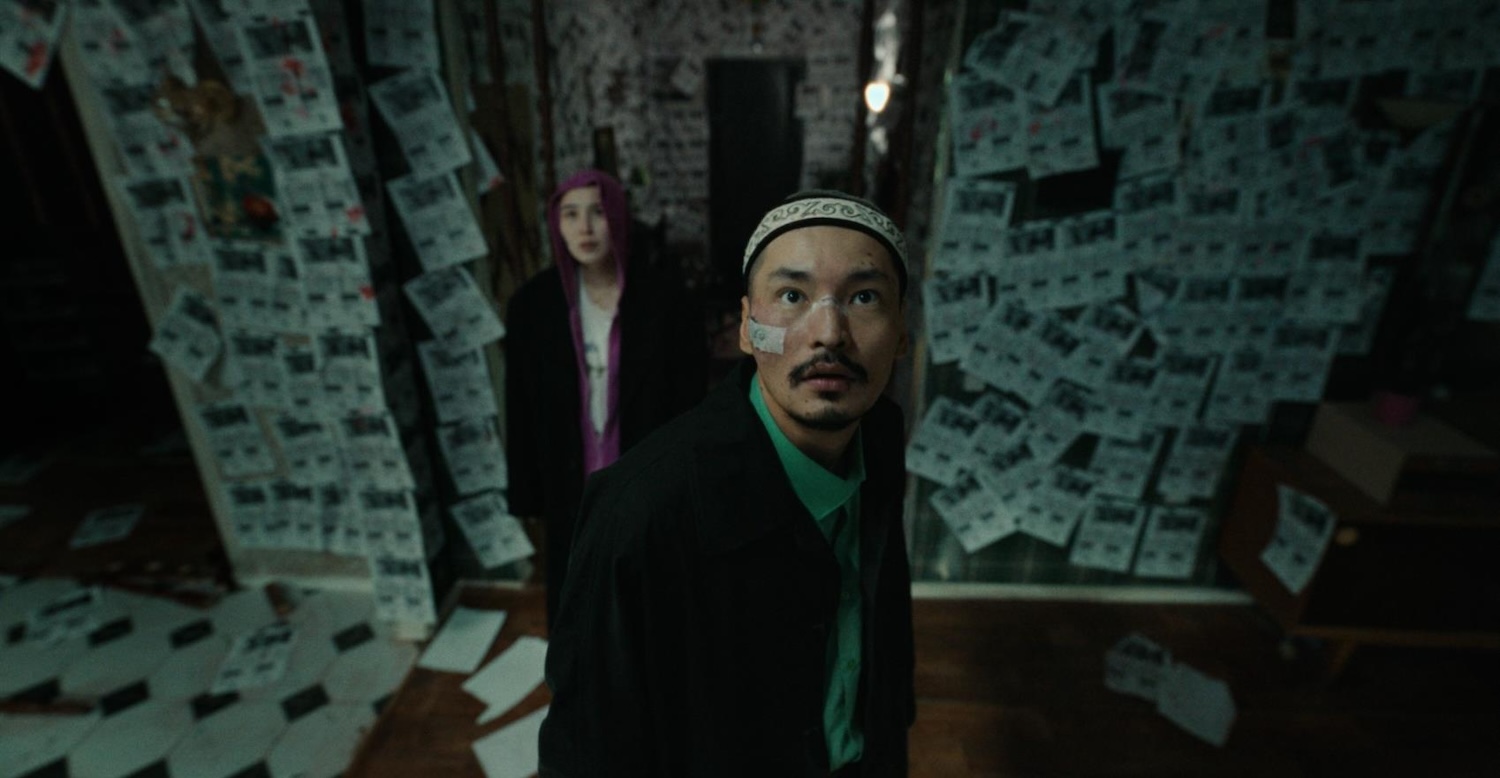
After two Romanian Film Days entries, it was time for the Competition with the deliriously entertaining Sicko (Aitore Zholdaskali, 2025). Although it’s from Kazakhstan, the style (fast cuts, layered digital stitching, quirky angles) and the content (people becoming extremely violent in their shameless pursuit of wealth) feel indebted to South Korean cinema, especially the work of Park Chan-Wook. But while Park’s recent efforts feel a bit too complex and overblown, Sicko hits its deeply cynical ideas straight down the middle to great crowdpleasing success.
“New day – new opportunities,” says Tansholpan (Dilnaz Kurmangali), waking up her husband, Azamat (Ayan Utepbergen), in bed so he can go and make some money. But right from the beginning, like a Central Asian Safdie, Azamat’s problems start piling up. He owes everyone money, and then, bemoaning the state of the country, ends up crashing his cab. In a moment of particular desperation, he steals a charity donation box from a corner shop. Which gives him his next idea: pretending Tansholpan has cancer so they can make money to pay for her “treatment.”
As their scheme gets bigger and bigger — almost instantly, they are national celebrities — the film barrels ahead with more and more conflict, more and more problems, more and more violence, culminating in an epic fight scene that would make Tarantino himself jealous. Exceptionally goofy (Gorillaz needle drop!) and bleak, often in the same frame, Sicko is an insane experience, in almost all the best ways.
I saw almost, because the ending, with Amazat turning on Tansholpan, is filled with unsettling implications, especially when viewed in a local context. Despite recent reforms, domestic violence in Kazakhstan, as represented in Happiness (Askar Uzabayev, 2021), is rife, with 300 reports registered every single day (the real number is likely more). By treating it as entertainment, there is the potential to trivialise the real impact it can have on women across the country. In other nations, it may be kinda shocking — and it may even work! But in Kazakhstan, these scenes are, unfortunately, all too tragically normal. A bitter note to an otherwise fantastic film.
An Instant All-Timer
For a long time, I only used to watch new films at film festivals. This changed a few years back, however, when I realised that there is nothing better on earth than watching a certified banger on the big screen. So when I realised that The Vanishing (George Sluizer, 1988) would be playing here in the Netherlands Focus section, I knew that I had to finally see the film that many consider to be Holland’s greatest. And well. There aren’t enough superlatives.
One of my favourite authors is Patricia Highsmith, an inspiration for my own writing, and possibly how I even see the world. What makes a Highsmith novel, for example, Those Who Walk Away (1967) so entertaining, is the way that she pushes past the conventional ideas of suspense and thrills, and takes us as deep as possible into human psychology — and most notably, how pathetic the minds of sociopaths can really be.
I wonder if Highsmith, who died in the 90s, saw The Vanishing, based on Tim Krabbé’s 1984 novella The Golden Egg, because it has all the hallmarks of her greatest work: pathetic, obsessive men, women as an ideal — impossibly beautiful yet exceptionally vulnerable to male violence — the mad urge to reveal your sickness to the person you have hurt the most, and the remarkable scene of two enemies somehow bonding in a dark dance of death; all culminating in one of the darkest endings to a movie I think I have ever seen.
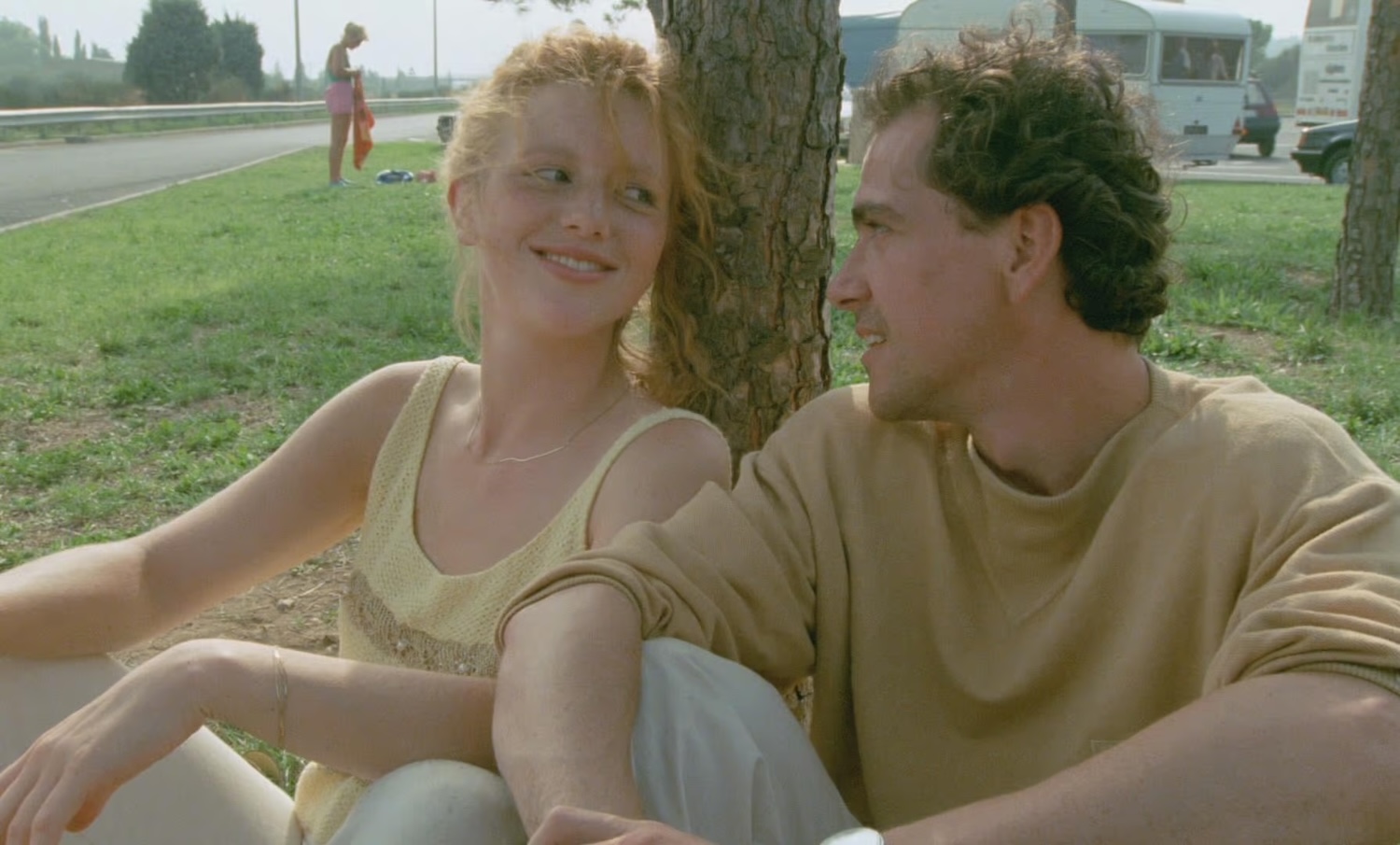
Dutch couple Rex Hofman (Gene Bervoets) and Saskia Wegter (Johanna ter Steege) are vacationing in the south of France. After an incident in a tunnel, where the car runs out of fuel, and Rex walks off, Saskia makes Rex promise to never leave her alone again. So when Saskia goes to get a beer and a cola from the gas station, and promptly disappears, Rex is utterly disconsolate, spending years to try and figure out where his wife went. (Spoilers incoming; skip to next subheading if you haven’t seen the movie).
–
Raymond Lemorne (Bernard-Pierre Donnadieu) seems like a normal family man. He teaches in the local college; he is doted upon by his lovely daughters. But, in his urge to fight against what he calls predestination, he is driven to kidnap beautiful women. We watch with utter horror as he methodically plans out all the nuances of his abductions, as well as his previous attempts, ending in amusing bathos. But he finally, brutally, succeeds with Saskia.
The saddest part about it, though, is that he cannot share his masterpiece. How sad is that?! So this drives him to seek out Rex, who has never given up on his search. The way that this is represented, Sluzier demonstrating a truly Hitchcockian aptitude for suspense and framing, is simply fucking mesmerising. The use of focus, the movement of the camera, the way that Raymond flits in and out of frames, Donnadieu’s terrifying blank face, one of the most unsettling depictions of evil ever, the haunting, ethereal beauty of ter Steege, the absolutely chilling, sparing use of music; just every choice makes me fall in love with the beauty and power of cinema anew.
I just can’t believe how good this movie actually is. Artificial intelligence will never be able to shape all these pitch-perfect strategic cinematic decisions.


Wheatley’s Lost It
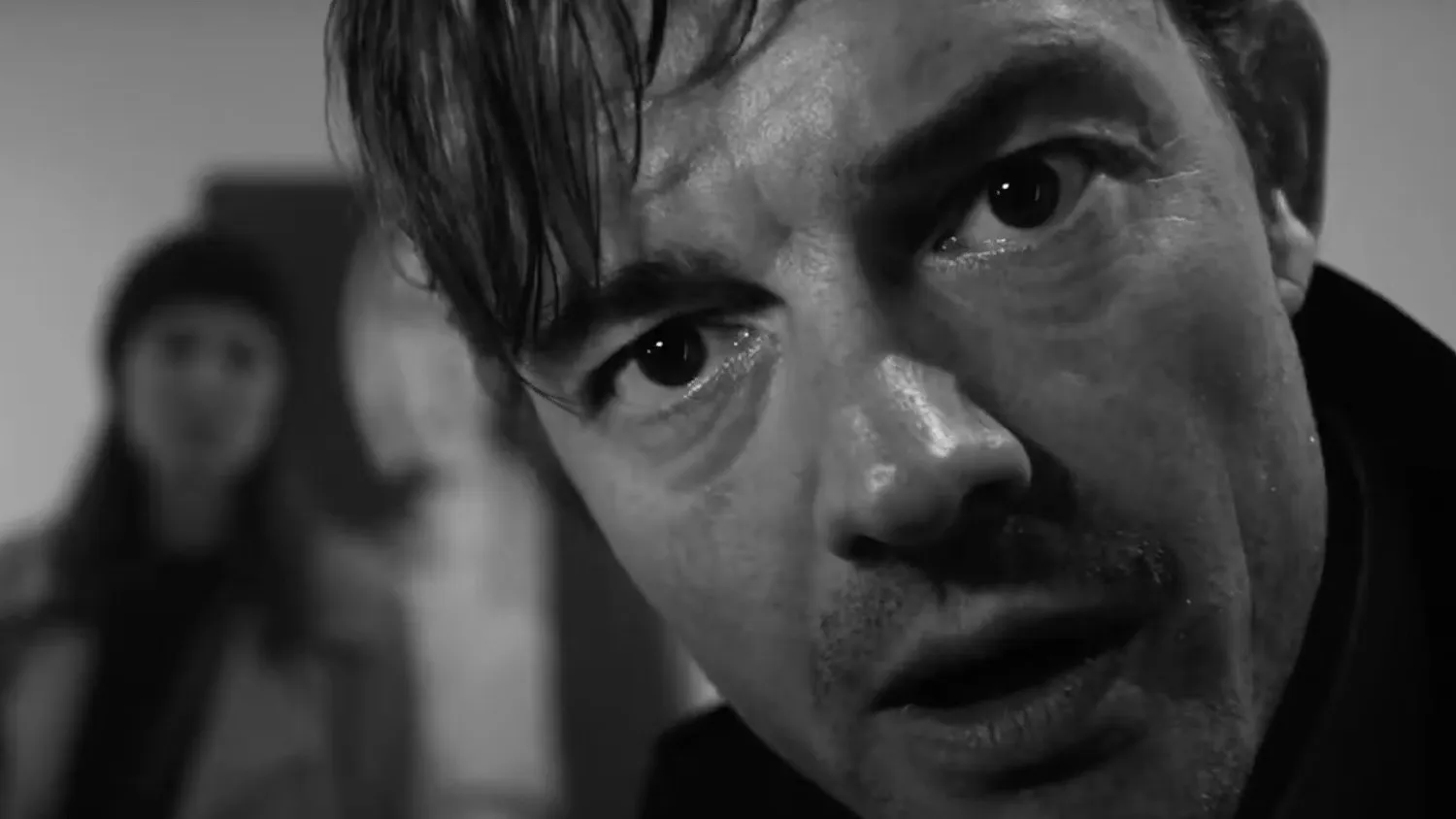
Talking of AI (sorry, sorry, it haunts me like a dark, all-consuming spectre of sadness)… someone in the audience after the screening of No Limit entry Bulk (Ben Wheatley, 2025), asked the affable British director if he used it in the making of his film. He could’ve been very mean at this point, but he simply said: “No.” Then he went on to talk about Star Wars (George Lucas, 1977).
The most charming part of Bulk — which is not a good film at all, in fact, it is a very bad film, but bad in very specific ways — is the end credits, which feature little drawings explaining how the film is made, and tips for your own low-budget feature. It’s actually very inspiring! Use little models from eBay! Use rear projection! Shoot with two iPhones at 90-degree angles so you can get lots of coverage and not worry about breaking continuity! Making movies is, perhaps, not that hard; and no, you do not need to use AI!
After seeing him degrade in Hollywood with sloppy nonsense like Free Fire (2016), Rebecca (2020) and Meg 2 (2023) — although apparently Normal (2025) is fun — its nice to see him get back to his microbudget British roots with this old-school, sci-fi-inspired film, featuring Sam Riley, Alexandra Maria Lara, Noah Taylor, Mark Monero and the voice of Bill Nighy. It’s a shame then that this black-and-white vision, taking us on a weird vision quest across all kinds of dimensions and times and spaces, is beyond exhausting, taking all the worst pointless excesses of A Field in England (2013) and ramping them up to 11.
I was completely disengaged. To be totally honest, I even nodded off. I could not get into this at all.
I really miss the Ben Wheatley of Happy New Year, Colin Burstead (2018) — perhaps his most Romanian New Wave-esque film — a director deeply attuned to interpersonal relationships and dialogue and people and ideas and feelings. But given his prolificacy, I don’t think it will be long before he comes back and makes something I like. Hopefully.
Godard with an iPhone
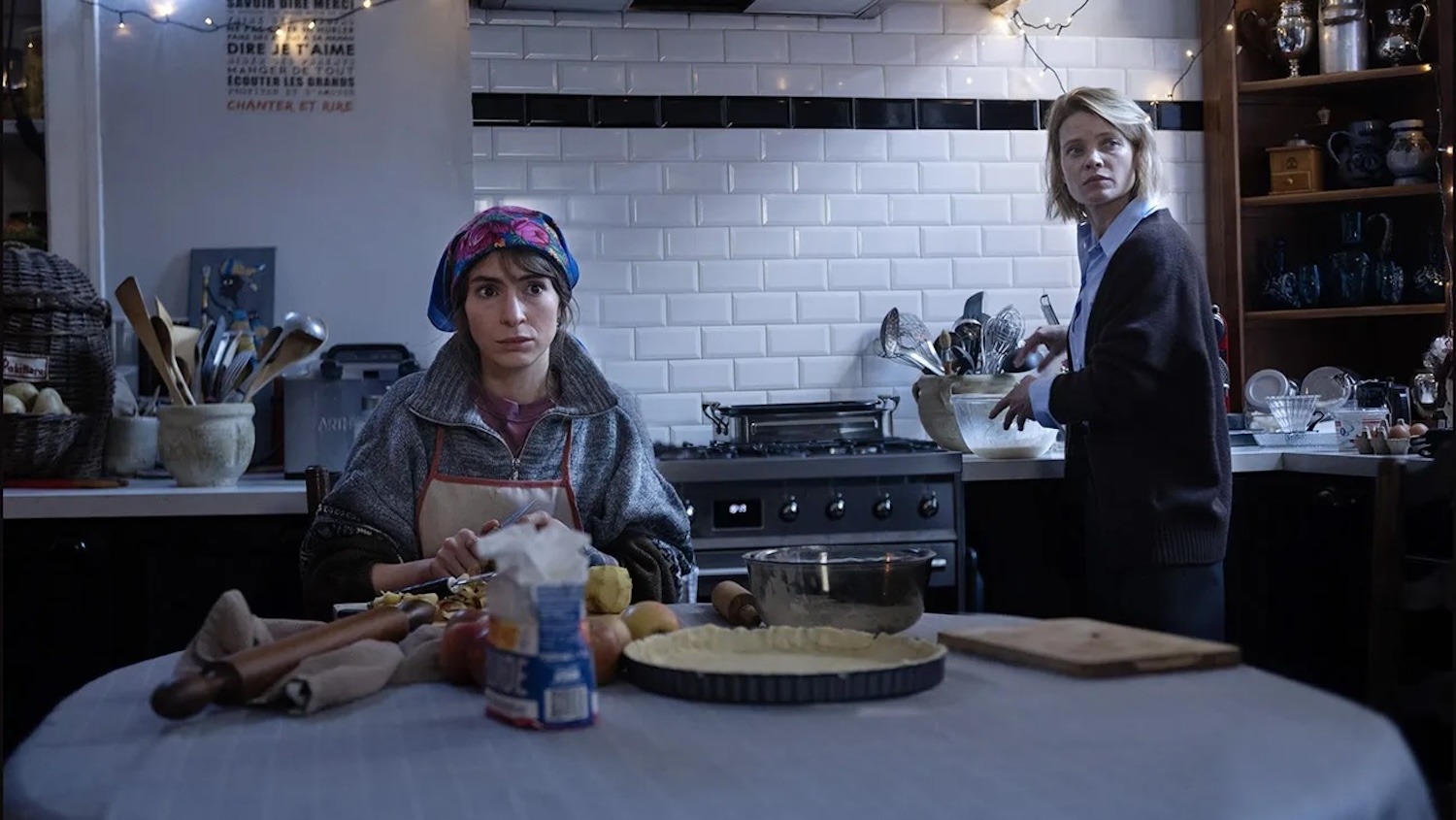
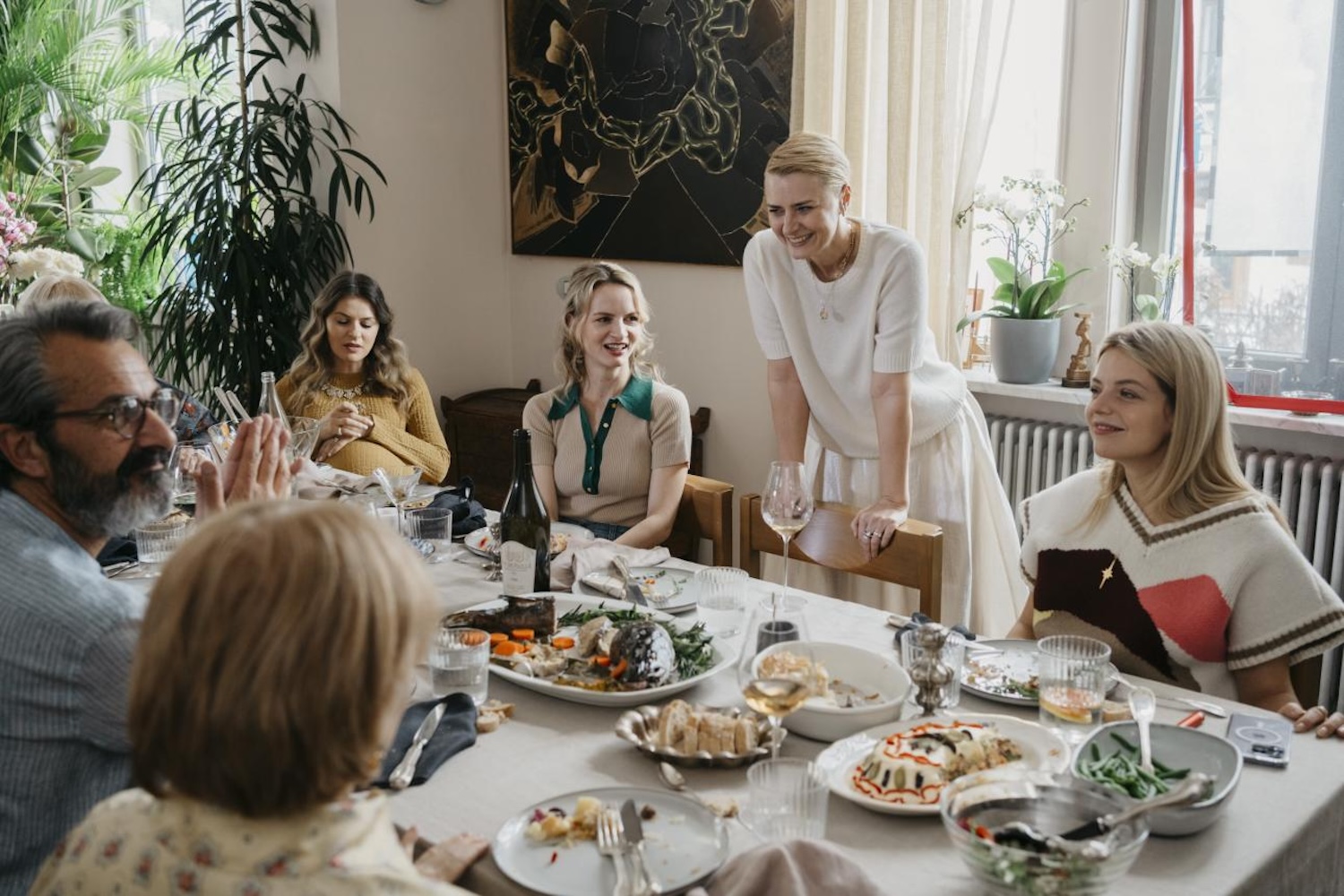
Besides Hong Sangsoo, Radu Jude appears to be the most reviewed auteur over here at Journey Into Cinema. It’s not surprising. The itinerant, highly prolific Romanian is on a run like Godard in the 60s, overflowing with political and creative ideas that speak powerfully to our current vulgar moment. Naturally, The Diary of a Chambermaid (2026) felt like a proper event, the Florin Piersic cinema full and fans sitting on the steps. Refreshingly laid-back after the exhausting Dracula (2025), this loose adaptation of Octave Mirbeau’s novel of the same name (1900), made famous by Buñuel (1964), is a suprisingly tender and nuanced — as well as extremely funny — depiction of a Romanian immigrant in Bourdeaux working for a posh French family, showing how Jude can certainly thrive in a more low-key tone than his flashier, headline-grabbing works might suggest.
Ana Dumitrașcu stars as Gianina, who has, like the mother in On Our Own, left her child, Maria (Sofia Dragoman), behind with her own mother (Liliana Ghiță). Somehow, while the phone calls home in On Our Own are rather uncompelling, Jude sprinkles these ones with his trademark wit — often showing Maria filming chickens and dogs on the farm — as well as a surprisingly melancholy tone, showing the sacrifices Gianina has made to provide a better life for her child. The irony is that she is spending far more time with the young Louen (Louen Bouteiller), the son of Marguerite (Mélanie Thierry) and Pierre Donnadieu (Vincent Macaigne), telling him fantastical Romanian fairytales while cursing him in her native language under her breath. This contrast between Gianina’s polite French exterior and inner Romanian rage is milked for constant laughs, as well as the way she is fetished for her easternness by the well-meaning French couple. (The argument about the Ukraine war — and its venom against weird Putinist leftists — is particularly inspired.)
Using an episodic structure, the film gets great mileage out of its iPhone footage, which captures both the bourgeois, almost imperial interiors of the Donnadieu home — with various lavish furnishings and trinkets — as well as the beautiful architecture of Bourdeaux, with a crisp, generous tone. It’s certainly a step up from the look of Kontinental ’25 (2025), which seemed rather flat. The look complements the warmth of the film, which, despite satirising the French and their so-called worldliness, doesn’t descend into caricature. By the end, Jude reveals a great beating heart underneath all that cynicism. My favourite Jude after Bellingham. When is his Le Mepris (1963)?
Ceauşescu’s Shame
At one point in The Diary of a Chambermaid, Gianina and Pierre’s mother (Rohmer royalty Marie Rivière!) have an illuminating conversation about the French left’s relationship to Nicolae Ceauşescu during the Cold War. As he was non-aligned and supported Palestine, she says that she used to have a lot of respect for the Romanian dictator. Only years later, when the full scale of his horrors — as seen in Jude’s own short from this year Shot Reverse Shot (2026) — including huge food shortages and wide-scale poverty, were revealed, did she realise how mistaken she was.
Ceauşescu’s legacy is given much bigger weight in Romanian Film Days winner Y (Alexandru Baciu, Maria Popistașu, 2025), which examines the horrific adoption scandal that blighted the country throughout the late 80s and 90s, with up to 20,000 kids dying in orphanages as a direct result of his policies. Taking a slow, heightened naturalist approach, composed mostly of long conversations shot in medium takes, betraying the wealth and privilege of a well-off modern family, Baciu and Popistașu’s work carefully examines a familial revelation that threatens to show the horrors at the heart of their comfortable lives.
Director Popistașu stars in the lead role as Olga, who learns from her grandmother on her deathbed that her role in the adoption agency was filled with poor decisions, with many kids’, most of whom were mentally challenged or physically handicapped, final fates unknown. Living with her female partner (gay marriage is still not recognised in Romania), Olga has no kids of her own, leading to a small, domestic journey both outwards — reflecting on a national scandal that is a stain upon the nation — and inwards, with her own relationship towards family and motherhood radically challenged. It’s a decent film, if modest. My favourite thing is that they made her a sommelier, which is about the most obvious signifier that she is posh possible.
Stuff and Dough 2?
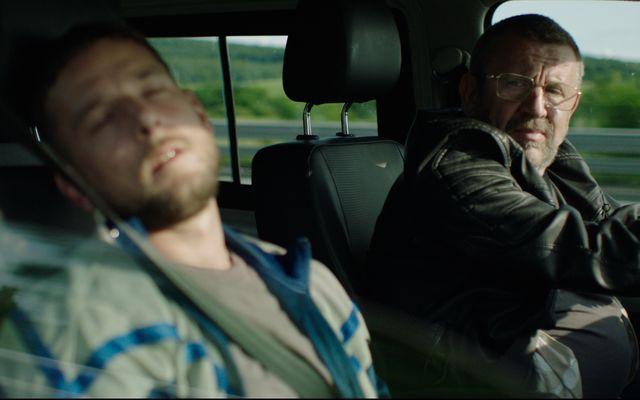
Cristi Puiu’s brilliant Stuff and Dough (2001), more or less the film that kicked off the Romanian New Wave, is celebrating its 25th anniversary here. Judging by premiere (the only one I witnessed) Back and Forth (Cristian Bota, 2026), it appears that its influence on Romanian cinema hasn’t waned at all. Bota, who stars in the film as a struggling actor who doesn’t get on with his wife, children, father, and possibly the world, gets incredible mileage out of shooting large quantities of the film in the car, just like in Puiu’s debut, showing just how powerful the open road is at amplifying conflict.
Part road-trip, part domestic drama, part actors showcase for the brilliant Bota himself, starring opposite veteran actor Adrian Titieni as his father, Back and Forth demonstrates how exciting simple ideas, well-executed, can be. Cornel is struggling to pay the bills and can’t seem to find constant work. He has an idea to become an Uber driver, but to do that, he needs a car, so he joins his father on a road trip to Austria with one simple plan: ask his brother for money over the Easter break.
This road trip, featuring insanely long takes of the two men talking in the car, blaming each other for all their problems — sexual, psychological, financial — is deliriously entertaining, especially in the way that Titieni absolutely revels in his complete lack of compunction or political correctness. He’s an awful man — almost every ist you can think of — yet his delivery and insane lust for conflict make for a truly riveting watch. The crowd loved it; I expect a strong hit in Romania. Yet due to its modest means, perhaps an international breakthrough is unlikely. That’s a shame, because this movie, with that specific brand of black comedy that the Romanians seem to do better than almost everyone else, deserves to be seen by basically everyone.
Growing Up Is Hard to Do
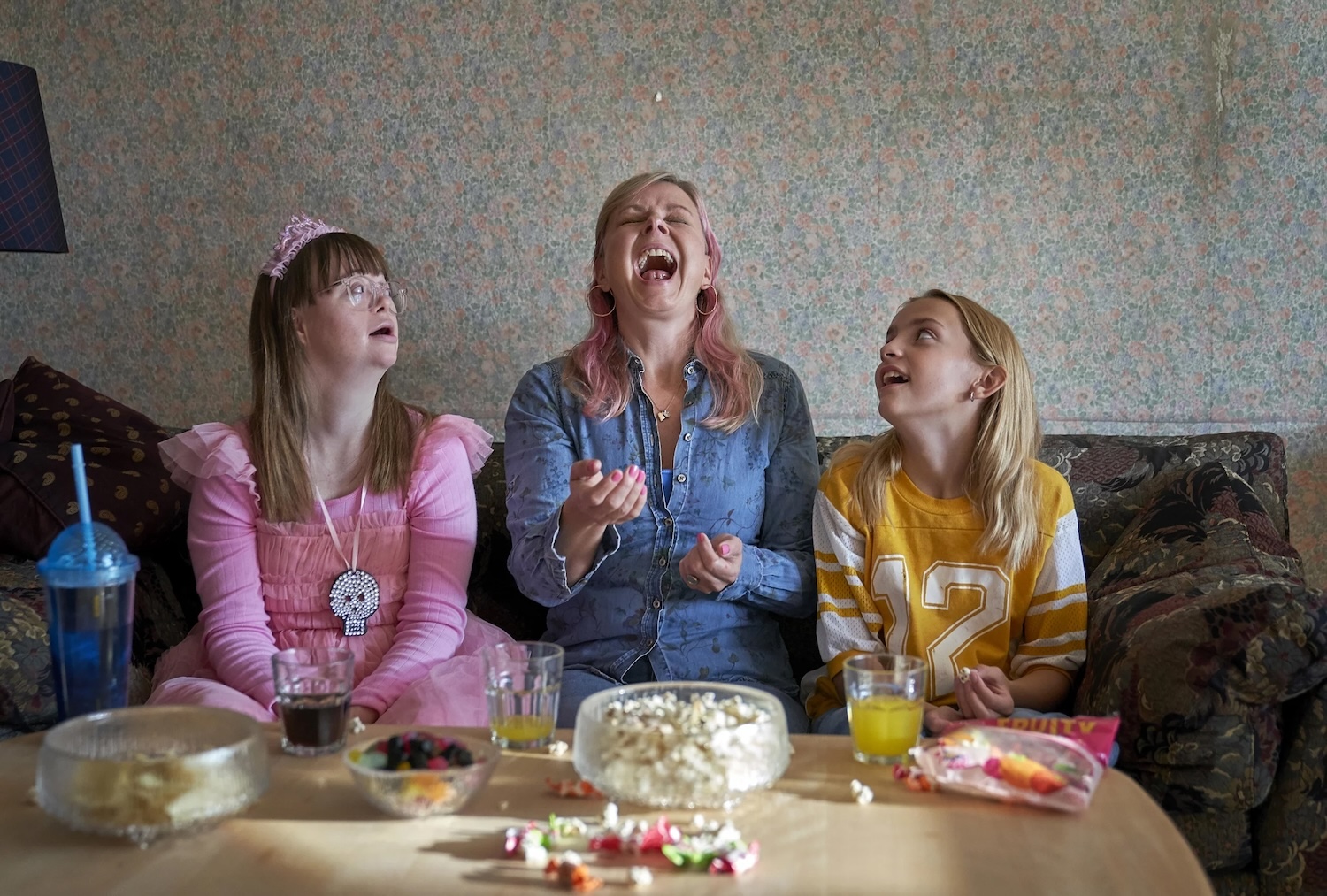
I finished my final day with a couple of coming-of-age movies, the Danish Honey (Natasha Arthy, 2025, above) in miniTIFF, probably destined for a limited domestic run, and the Dutch TV movie Nuclear Boy (Joren Molter, 2026, below) in Teen Spirit, which has the potential to be a modest festival hit.
Honey, mainstream to a T, is not usually the kind of film I would see at a festival, but it was the only thing on at 10 am. It concerns the teen travails of the eponymous 13-year-old (newcomer Selma Dali Pape), who has moved to a new school and has trouble fitting in. Thankfully, she is a talented ukulele player and finds a place in the new school band. But this is complicated by her role as a semi-guardian to her older sister Mikala (Sidsel Boel Kruse), who has Down syndrome. As a glass child, she is shy and has trouble asserting herself.
When she realises that her grandfather Marcel (veteran Danish legend Jesper Christensen) might not be dead (as her mum told her), this takes her on a journey of self-discovery and affirmation that is, yes, extremely corny, but effective in its own way. It’s rather unbelievable just how talented the school band — who barely rehearse at all — turn out to be. But I am not the target audience, and accepting a little suspension of belief — as well as multiple hijinks, especially with her weed-loving dad Simon (Simon Bennebjerg) — is part and parcel of the genre.
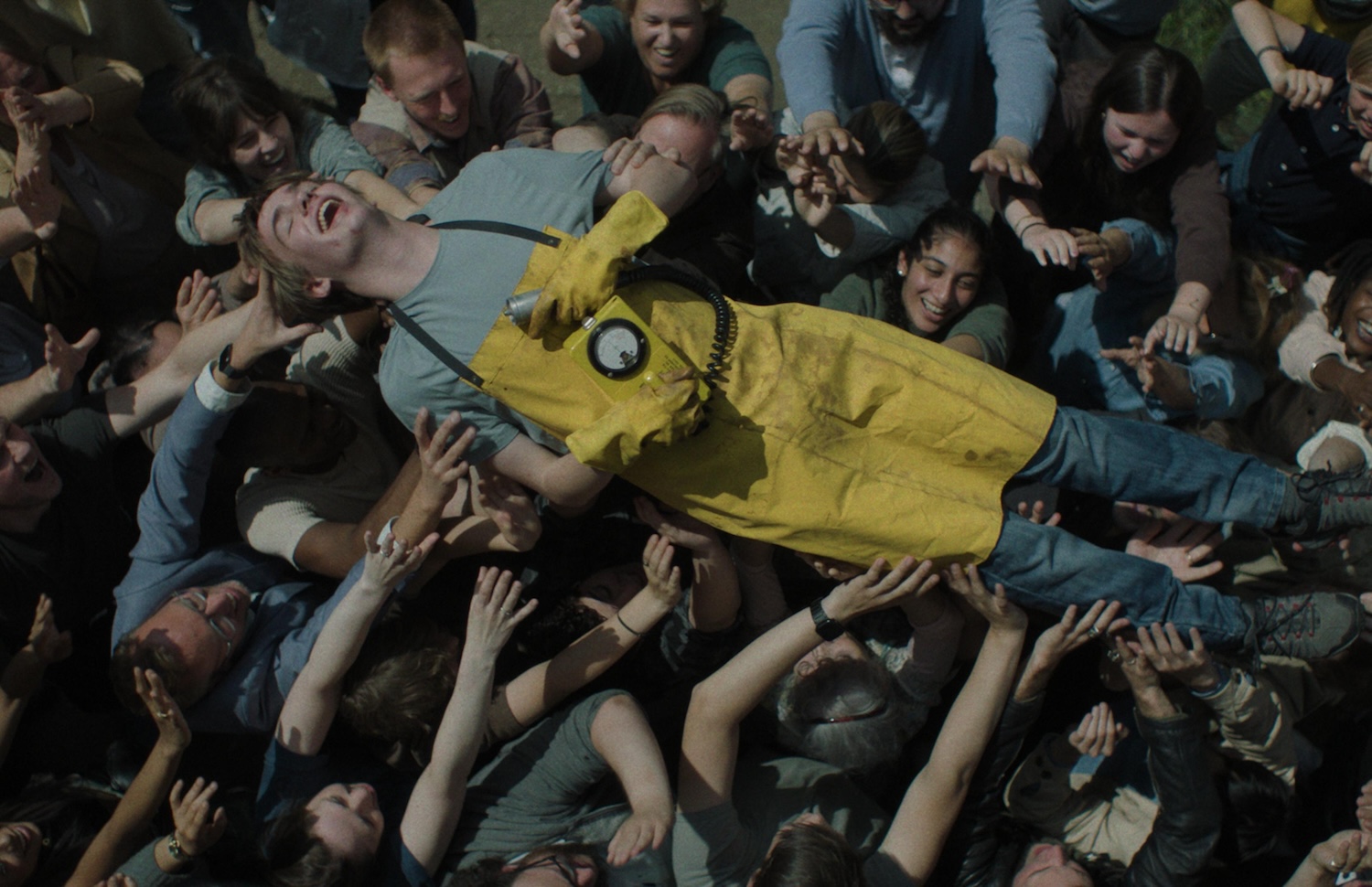
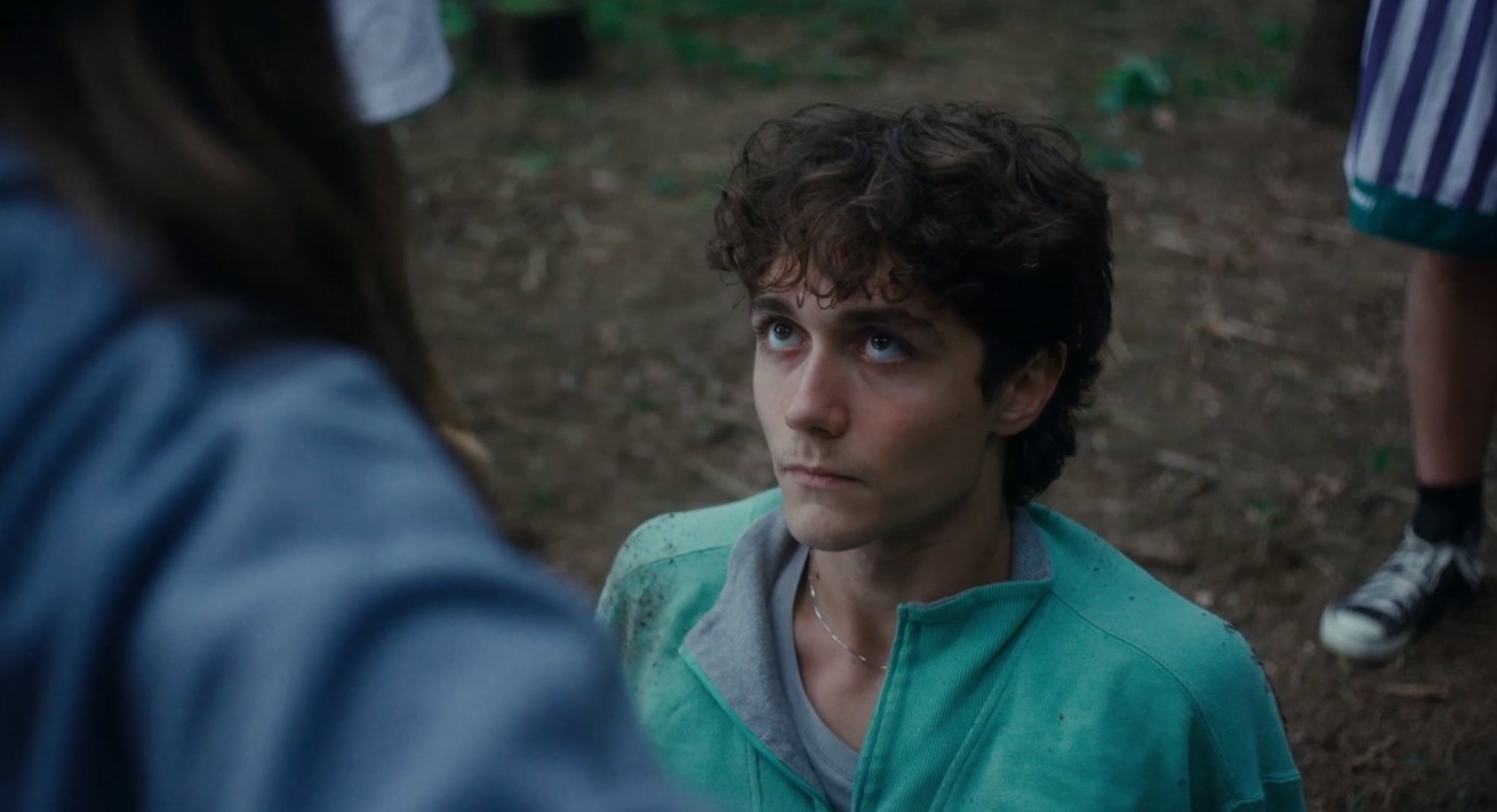
More up my street, due to its quirky tone and creative use of static frames, as well as a genuine willingness to embrace the weirdness at its heart, Nuclear Boy thrives in its exploration (based on a true story, kind of) of lonely nerd Aike (newcomer Guus Blanken), who builds a nuclear breeder in his own backyard. Particularly entertaining are the ways he must hustle to find the rare materials for his project, including ransacking radium clocks, nicking old camping lights and even stealing from his mother’s hospital in his quixotic quest to win the Nobel prize. But really, this is a film about not fitting in; for poor Aike, it seems easier to become a nuclear chemist than to make friends with the other boys at scout camp. At first, I was worried that this would quickly descend into Sundance-esque twee nonsense, but Molter’s careful modulation of tone makes for an experience that works on both an emotional and aesthetic level.
It shows that when it comes to teenage aspirations and desires, there are no limits on creativity (or foolishness). Along with the other nine films in this programme, TIFF has shown me the widest variety of human intelligence. I’m glad I made the strategic decision to come.
Redmond is the editor-in-chief of Journey Into Cinema.
- Redmond Bacon

- Redmond Bacon

- Redmond Bacon
- Redmond Bacon