Between weak films, absent Americans and a French cinema on the brink of collapse, the Cannes Film Festival appears to be facing a rare crisis of authority.
Now that the 79th edition of Cannes is behind us, it becomes a little easier to reflect on that strange, persistent sense of imbalance that hung over the festival for nearly two weeks. There were precious few films capable of generating genuine excitement, and the Competition was frequently dominated by work that seemed chosen more for the safety of its names than for the strength of the films themselves. Running alongside all of this was an unusual tension: from the sustained booing that greeted the Canal+ logo every time it appeared on screen, the heated mid-festival debate around AI and the increasingly undeniable feeling that Hollywood no longer sees Cannes quite the way it did even a few years ago — a shift reflected in the much-discussed absence of American titles from the programme, and in the growing suspicion that Cannes may no longer be their problem to solve.
A week before the festival started, in an interview with Variety, artistic director Thierry Frémaux recalled the advice he received from former director Gilles Jacob when he took over in 2001: “We need to bring the Americans back.” Twenty-five years on, Jacob’s words have acquired an unexpected resonance. Because the problem no longer seems to be convincing Hollywood that Cannes matters. The Americans know perfectly well that it does. What has changed is the risk calculus. Right now, that calculus appears to leave the festival out of the equation.
But the Americans did not vanish from the programme entirely. They were here and there, in a more timid presence, but one that did not go unnoticed: James Gray returned to Competition with Paper Tiger (all films 2026 unless otherwise mentioned), a film that marks a return to the formal classicism of his earlier work and found some genuine admirers throughout the festival. It was, however, in the sidebar Un Certain Regard that the American presence made itself felt most forcefully through two of the most talked-about titles of this edition: Club Kid, Jordan Firstman’s queer comedy about a washed-up party promoter forced to grow up when he discovers he has a son he never knew existed, and Jane Schoenbrun’s self-aware horror oddity Teenage Sex and Death at Camp Miasma, about a group of queer teenagers at a summer camp slowly dissolving into body horror and apocalyptic paranoia. Two indie films that swiftly won over audiences — particularly Firstman’s, perhaps the noisiest success story of the festival, acquired by A24 in a bidding war that reportedly settled at around $17 million.
And yet that American presence at Cannes now feels increasingly confined to the territory of prestige indie cinema, insufficient to carry the media weight and symbolic charge that the major studios historically brought with them. That spectacle and noise are part of what makes Cannes what it is; without them, the festival felt strangely naked, stripped of one of its strongest mythologies. Not long ago, Tom Cruise arrived with eight military jets trailing smoke in the colours of the French flag above the Croisette to promote Top Gun: Maverick (Joseph Kosinski) in 2022. It is precisely the sort of madness that infuriates the purists but fills the headlines — and reminds the world, in its own absurd way, that cinema can still stop traffic. This year, there was none of that.
The reasons are not hard to understand. Studios are increasingly wary of exposing their films to a press capable of inflicting damage weeks before commercial release. Joker: Folie à Deux (2024) has become the ground zero of this conversation: after premiering in Venice to brutal reviews, the film spent months carrying a disastrous Rotten Tomatoes score ahead of its worldwide rollout, eventually becoming one of the most expensive box-office failures in recent studio history. Whether one agrees with that calculation or not, studios are no longer willing to take the risk, and Cannes is paying the price. The question now is whether Frémaux intends to address the problem with more seductive invitations or instead through a more fundamental rethinking of the role the festival wants to occupy within a rapidly shifting ecosystem.
The Films
Perhaps it is precisely for this reason that the festival responded to this moment of instability in a mode of near damage-control: a cautious Competition, dominated by already-legitimised names, and markedly less interested in discovery or risk. The result was a frequently tepid selection, in which several filmmakers seemed to be producing diluted versions of themselves, whilst others were met with bafflement, outright rejection and some particularly thorny ideological disputes.
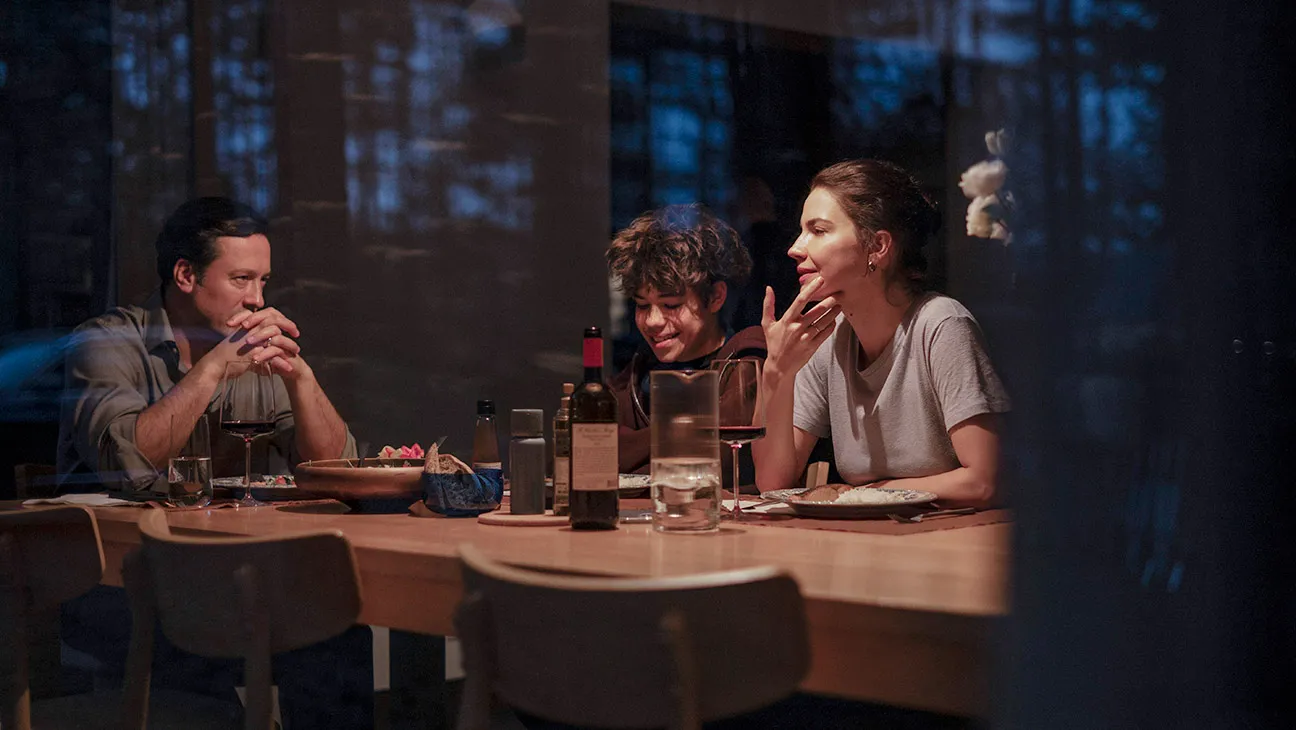
Such was the case with Asghar Farhadi, who returned to Competition with Parallel Tales — his first film since that explosive New Yorker investigation alleging that several of his films had been built, fully or in part, on ideas stolen from collaborators and former students. The article emerged in the wake of a scandal involving Azadeh Masihzadeh, a former student who accused him of plagiarising central elements of A Hero (2021) from one of her own documentaries. The irony is hard to miss: one of Parallel Stories’ central storylines revolves around a young man who steals his employer’s manuscript and passes it off as his own. If anything, the film gives the impression of a director returning not in retreat, but with the confidence of someone who believes the controversy is already behind him. And indeed, Farhadi resurfaces now seemingly unscathed by the exposé, flexing a guest list of extraordinary distinction: Catherine Deneuve, Isabelle Huppert, Virginie Efira, Vincent Cassel, Adam Bessa and Pierre Niney, all in the same film. It has the feel of an ostentatious display of his network of protection, a procession of stars still willing to lend his name their legitimacy.
Parallel Tales is a sort of reworking of the sixth episode of Kieślowski’s Dekalog (1989) (later expanded into A Short Film About Love), transplanted to Paris, where real-life stories intersect with others drawn from a writer’s pages and brought to life within the film itself. All that effort, all that talent, in service of a bloodless result: characters who brush past one another without ever truly connecting, or touching us.
If Farhadi’s film represented the fatigue of a certain type of high-end auteur cinema, Minotaur (above), by Russian filmmaker Andrey Zvyagintsev, revealed what that same tradition can still look like when pushed toward genuine extremity. This is Zvyagintsev’s first film in nearly a decade, and it marks a shift from the opaque, mythological tone of his previous films, The Banishment (2007) or Leviathan (2014). On the surface, it’s almost shockingly legible: the story of a jealous husband driven to the edge by his wife’s all-consuming affair. Gleb (Dmitriy Mazurov) is a successful company director whose orderly life spirals into violence as pressures close in from every angle. At home, his wife, Galina (Iris Lebedeva), sinks deeper into an extramarital affair. Outside, a military operation on the Russian-Ukrainian border pushes the nation into a state of growing panic. The film effectively reimagines Claude Chabrol’s La Femme Infidèle (1969) into a Russian context, loading this quintessentially bourgeois narrative with the weight of a country at war with both its neighbours and itself. What Chabrol used to explore the latent violence beneath French middle-class comfort, Zvyagintsev transforms into an examination of masculinity in the Putin era. The man who runs a company, a household, and a marriage, discovers that when that control unravels, there is no real self left underneath it. The film ultimately won the Grand Prix, with Zvyagintsev using his acceptance speech to directly urge Vladimir Putin to end his war against Ukraine.
The anxiety running beneath Minotaur echoed across much of this year’s Competition. Spain, rarely this well-represented in a single Cannes edition, brought three very different films that ended up in unexpected dialogue with one another. Pedro Almodóvar delivered one of his weakest films in years. In Bitter Christmas, Raúl Durán (Leonardo Sbaraglia), a screenwriter in creative freefall, is writing the very film we are watching: the story of Elsa (Bárbara Lennie), an advertising executive drowning in grief, neuroses and romantic melodrama, who vampirises the lives of those around her to feed her art. The trouble is that Almodóvar once again turns this autofiction into a kitsch, soap-operatic exercise, recycling the same meta-textual games and the same ornamental sentimentality from his cinema that has long lost its freshness.
La Bola Negra, from the Spanish duo Javier Ambrossi and Javier Calvo, known in Spain as “los Javis”, arrived bringing considerable buzz from its premiere, complete with the widely publicised “twenty minutes of applause,” and quickly became one of the major talking points of this edition before being acquired by Netflix, a platform that always seemed its natural home. Interweaving three stories of queer men across different eras of Spanish history, the film takes as its point of departure the unfinished manuscript of Federico García Lorca’s only explicitly homosexual work (1936), which gives the film its title. Combining early Almodóvar tropes with constantly eroticised male bodies, imagery that consciously evokes Beau Travail (Claire Denis, 1999), and a pop-operatic sensibility, the film attempts to transform Lorca into a grand transgenerational queer tragedy. But the arthouse veneer never quite manages to conceal the pair’s television origins, nor the calculated sentimentality they had already displayed in series like Veneno (2020) and La Mesías (2023). The near-hysterical enthusiasm surrounding the film also felt symptomatic of a festival increasingly hungry for instant events and easy emotional consensus.
It was also through a story where fiction and real life collapsed into one another that one of the Competition’s most genuinely compelling films emerged: El Ser Querido, by Rodrigo Sorogoyen, Spain’s third entry in the main lineup. After presenting the gripping Beasts in Un Certain Regard in 2022, Sorogoyen arrives in Competition with a film-within-a-film in which Esteban (Javier Bardem, delivering one of the festival’s finest performances), a celebrated Oscar-nominated director with a long history of excess involving alcohol and drugs, offers the lead role in his new project to his daughter Emilia (Victoria Luengo), an actress with a modest career whom he has not spoken to in twelve years. As the shoot progresses, the boundaries between the film Esteban is directing and the relationship he is trying to rebuild with his estranged daughter become increasingly porous, though Sorogoyen is smart enough never to resolve that tension too neatly. In a year when comparisons to Joachim Trier’s Sentimental Value (2025), which played in Cannes last year and won the Grand Prix, were frequently invoked, El Ser Querido offered the adult, uncomfortable response to many of the same questions: a vision of love that cannot be sanitised, that resists reconciliation, and that leaves marks no film can erase.

The Aliens
Then came the films that generated the kind of noise Cannes also needs to justify its own existence. Na Hong-jin’s Hope (above) sent the Competition into a sci-fi horror delirium, packed with gigantic extraterrestrial creatures and Alicia Vikander and Michael Fassbender almost unrecognisable beneath alien make-up and prosthetics, only appearing in the film’s final half-hour. Na Hong-jin, the director of The Wailing (2016), brought a CGI-laden blockbuster to Cannes that left many critics incredulous at its inclusion in Competition. There was a sense that Hope was there to serve the same function The Substance had in 2024: a genre film that injects some electricity into a lineup otherwise dominated by sober prestige dramas. But whilst Coralie Fargeat’s film rapidly became a phenomenon with both critics and audiences, Hope encountered a far more resistant press.
And yet, beneath the spectacle of destruction and digital creatures, there was a surprisingly effective action film there, built around a sustained disorientation as to who really occupies the position of threat, observer or invader within the classic encounter between humans and extraterrestrials. Perhaps that is why the most memorable moment surrounding Hope ended up being comic rather than cinematic. At the press conference, Na Hong-jin kind of lost his patience with a journalist who asked what humans might learn “from the aliens that invaded the Earth” replying with visible irritation: “So you think the aliens invade the Earth in my film?”
But the Competition’s true alien presence arrived from elsewhere: another film violently rejected by much of the audience, with dozens of walkouts during the screening, and which quickly became the defining symbol of fracture of this entire edition, L’Inconnue, the third feature from French director Arthur Harari. Adapting the graphic novel Le Cas David Zimmerman (2024), written with his brother Lucas Harari, the film follows David Zimmerman (Niels Schneider), a melancholy photographer who, after an encounter with a mysterious woman, Eva (Léa Seydoux), wakes up inexplicably inside her body. From there, Harari constructs a Kafkaesque nightmare that resembles a Hitchcock film shot in a trance: a labyrinth of identities in which the director never offers the audience the comfort of an explanation, only the vertiginous sensation of being lost inside several possible films at once.
The film found passionate defenders, particularly among sections of the French press, which proved far more receptive to its abstraction and radicalism than the international press — something made strikingly visible in the star ratings published in the traditional Le Film Français grid that circulated during the festival. The critical schism around L’Inconnue became an inadvertent portrait of the entire edition: a festival without consensus, fragmented between films that a significant portion of the critical community simply no longer seems to know how to read.
That confusion also extended to Cannes’ increasingly rigid and bureaucratic relationship with its own national cinema. Whilst the Competition was once again crowded with forgettable French productions and shapeless “euro pudding,” co-productions selected almost out of institutional obligation, a gorgeous film like La Gradiva (Marine Atlan), following a group of students on a school trip to the ruins of Pompeii, became one of the great successes of the festival, eventually winning the top prize at the Critics’ Week sidebar whilst remaining inexplicably absent from the main Competition.
Behind all that curatorial mess also loomed the political crisis currently convulsing French cinema. Canal+, for decades the principal financier of auteur cinema in France and co-producer of a significant portion of the films premiering in the festival this year, now belongs to the media conglomerate of far-right billionaire Vincent Bolloré. On the festival’s opening day, hundreds of filmmakers and industry figures, among them Juliette Binoche and Arthur Harari, signed an open letter warning against what they described as a growing far-right takeover of French cultural life. The response was immediate: Canal+ publicly announced it would no longer work with anyone who had signed the letter, effectively threatening a blacklist that sent shockwaves through the industry. The tension quickly permeated the entire festival. Every time the Canal+ logo appeared on screen before a film, parts of the audience responded with boos.
The Death of Woke
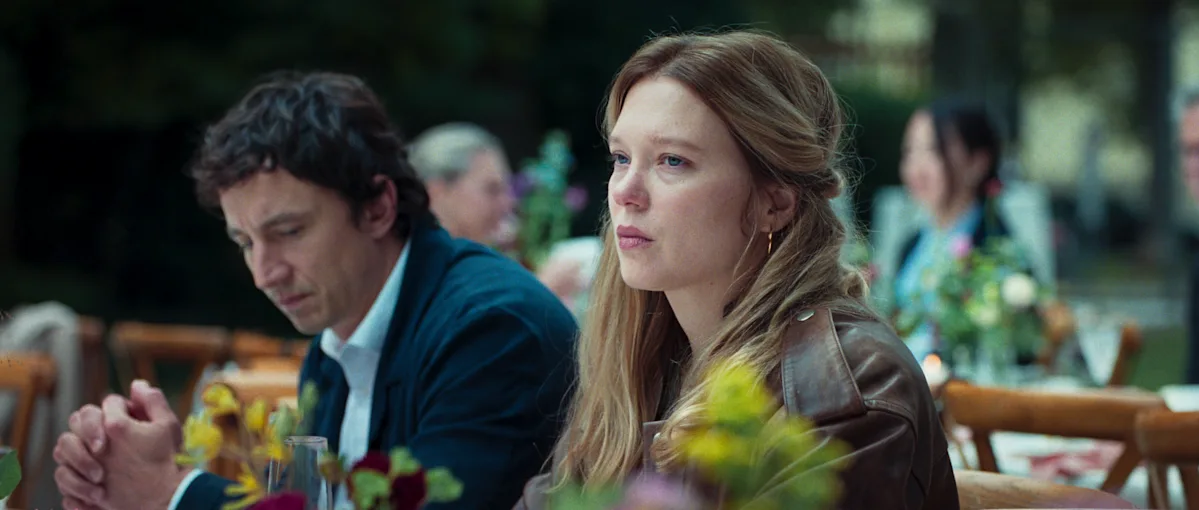
Amid all of this, the edition also made room for films advancing a rather more, let’s say, problematic agenda. Two of them defined that spectrum well. Marie Kreutzer’s Gentle Monster (above) arrived in Cannes carrying an uncomfortable biographical weight. In 2022, Kreutzer released Corsage, in which Florian Teichtmeister played Emperor Franz Joseph. The following year, Teichtmeister was arrested and confessed to possessing thousands of images of child pornography, dragging the film down with him. Gentle Monster clearly grew out of that trauma: Léa Seydoux (again!) plays Lucy, a successful concert pianist whose husband Philip (Laurence Rupp) is one day taken by the police, suspected of involvement in a paedophile network. What follows is a portrait of the aftermath: the collapse of a life built around a man one never truly knew. It is rich territory, the problem is that the film never quite decides what to do with the monster of its title, and that eventually becomes its major sin.
Kreutzer constructs Philip with almost excessive care: handsome and athletic, a devoted father, an attentive husband, a fragile man. Although the point of view always belongs to Lucy — caught between denial and the gnawing suspicion that she may never have truly known the man she lived with — the film repeatedly recentres its gaze on Philip’s own emotional vulnerability. The camera observes him with a generosity that becomes deeply uncomfortable, as though the mere suspension of clear judgment is sufficient to produce moral complexity.
Kreutzer has personal and legitimate reasons to explore this territory, but there is something unresolved in the way Gentle Monster makes that ambiguity its principal dramatic engine. The film seems to want to draw us emotionally closer to Philip without ever genuinely interrogating what it means to occupy that position of proximity before a horror that remains abstract, kept almost entirely off-screen. The result is a film in which ambiguity no longer generates complexity — it simply dissolves the moral centre of the work.
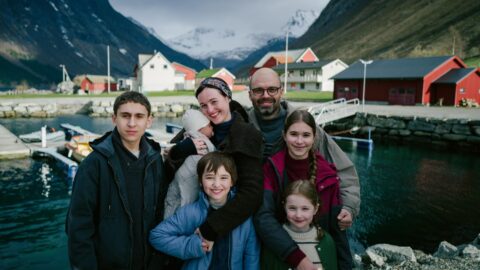
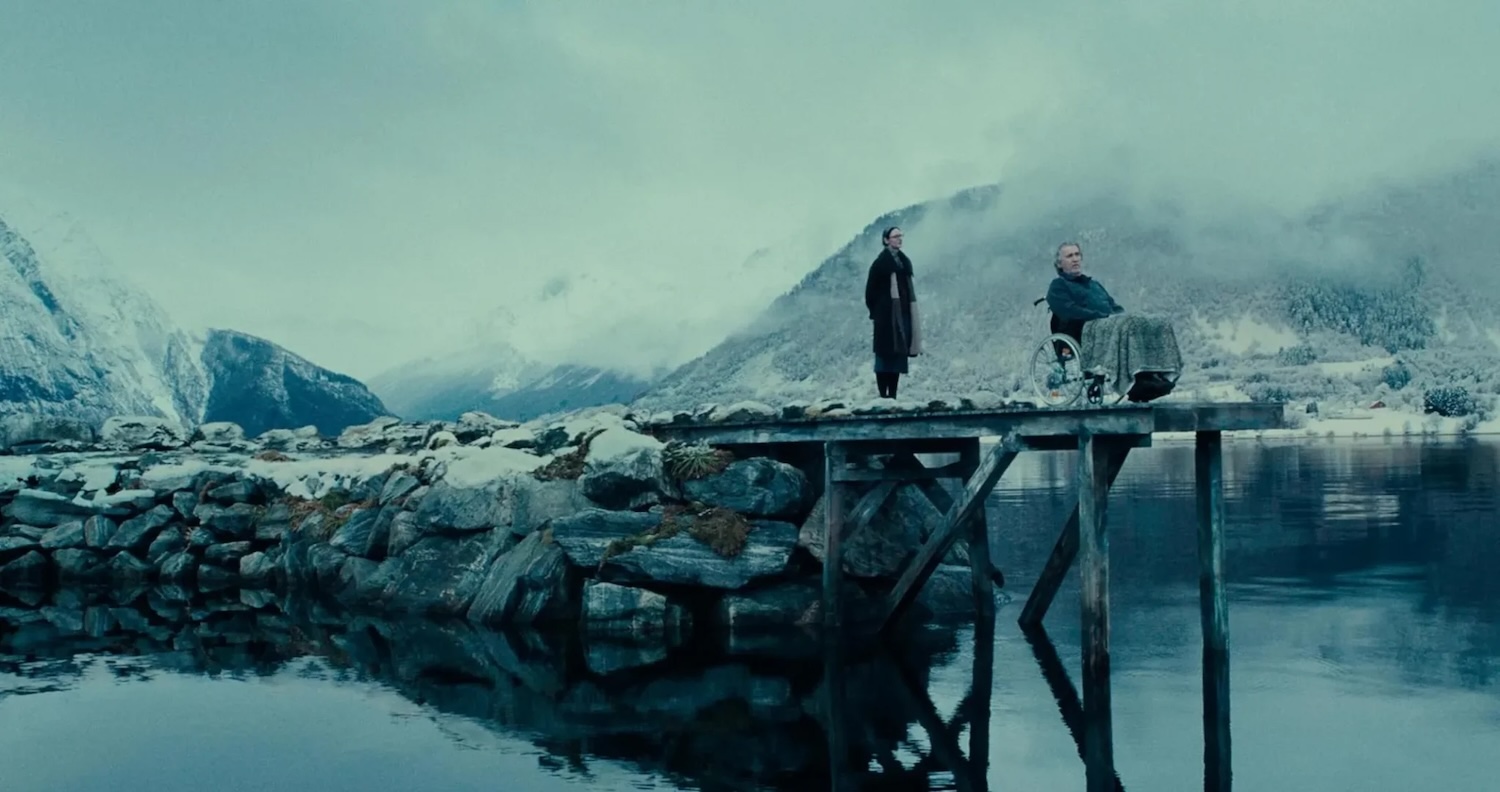
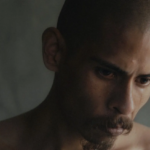
But it was Park Chan-wook’s jury that produced the festival’s most uneasy moment of the fest by awarding the Palme d’Or to Fjord, (feature image and below) by Romanian director Cristian Mungiu. Mungiu, who won the same prize nineteen years ago with 4 Months, 3 Weeks and 2 Days (2007), is now one of the “notable ten,” to have ever won the Palme twice. The film follows the Gheorghiu family, Romanian evangelicals (with a Norwegian mother, Renate Reinsve), who relocate to a small Norwegian town. When social services arrive at their door with concerns about the children’s welfare, the clash of values between the Romanian family and the Norwegian system becomes the film’s engine.
Mungiu, likewise Kreutzer and her Gentle Monster, tries to stage all of this as a sophisticated exercise in moral ambiguity, ostensibly interested in exposing the limits of European liberal progressivism when confronted with conservative religious values. But there is something profoundly artificial in the way Fjord manufactures its dilemmas. The film carefully orchestrates the audience’s sympathies whilst performing a fake neutrality. Its social workers are portrayed as cartoonish villains, cold bureaucrats moved by rigid protocols and a silent sense of moral superiority; the religious family, meanwhile, is consistently framed through vulnerability, isolation and a sense of cultural persecution. When one of the daughters reacts aggressively to discovering that a classmate is a lesbian — behaviour attributed in the film to the religious values instilled at home — the film seems less interested in confronting the concrete violence of that belief than in transforming the episode into another piece of a grand debate about tolerance, integration and “grey areas.”
And this is where Fjord becomes particularly uncomfortable. Mungiu wants to critique a progressive culture incapable of tolerating uncertainty without immediately turning every disagreement into an ideological tribunal — a recognisable impulse in the current cultural climate — but the film ultimately reduces that conflict to a succession of false dilemmas built on rather simplistic social and cultural stereotypes. What remains is an old conservative worldview presented with the gravity and appearance of complexity associated with great European auteur cinema. At the press conference, Mungiu described “left-wing fundamentalism” as one of the film’s central themes, and Cannes responded by awarding it the highest distinction it has to give. It is a decision that says a great deal about the moment we are living through: one in which the retreat from political correctness and “the death of woke” are no longer merely social media phenomena, but are beginning to make their formal entrance onto the biggest stages of culture.
What Remains of Cannes 2026?
What may have become clearest over these twelve days is that all of these fractures began surfacing simultaneously, at every level of the festival: In the films, frequently trapped in fragile moral ambiguities, false ideological equilibriums and filmmakers unable to escape either cynicism or self-parody; in the press, splintered between artificial consensuses, violent rejections and a growing sense that there is no longer a dominant critical perspective capable of organising the conversation around contemporary cinema; and in the very structure of the festival itself, caught between a Hollywood that no longer seems to regard Cannes as a mandatory stop; and a French cinema in open conflict with the political and economic forces that sustain it.
Hence, the sensation of an edition so strangely exhausting. Not merely because of the alarming quantity of mediocre films, but because Cannes appeared to be going through a deeper identity crisis. For decades, the festival built its authority on the idea that it was capable of defining the centre of world cinema: legitimising filmmakers, manufacturing consensus, identifying trends, establishing which films would endure. In 2026, for the first time in a very long while, that authority appeared to waver.
Cannes remains prestigious, influential and impossible to ignore. But this was an edition in which the festival seemed less capable of imposing its own vision on contemporary cinema than of simply reacting to its fractures, anxieties and culture wars. And perhaps that was the most revealing image of these twelve days: a festival still powerful, but no longer entirely convinced of its own capacity to determine where cinema is going.
A slightly different version of this article was originally published in Portuguese by Cinema Sétima Arte.
Wellington Almeida is a programmer, a film writer and a devoted cat lover.
- Wellington Almeida
- Wellington Almeida

- Wellington Almeida

- Wellington Almeida