Despite its bustling bazaar, striking double-decker buses, lively cafes and bars, religious pluralism, and odd ramshackle charm, Macedonia’s capital, Skopje, is best known for its preponderance of statues and busts, a result of a dodgy urban revitalisation project started in 2008 that has unfortunately attracted the mockery of the world. Some say that there might even be more statues than people.
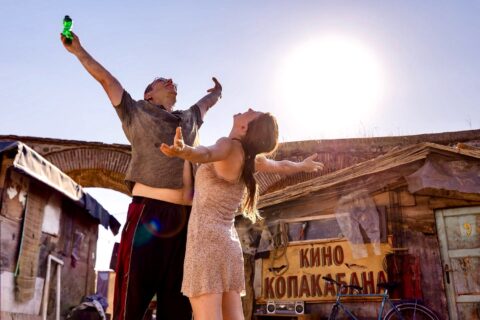
For Malina (Sara Klimoska) and Viktor (Filip Trajkovikj), these statues are more than a reminder of Macedonia’s many heroes, stretching from Alexander the Great to Mother Theresa to the writer Gyorche Petrov.1It is the nature of Macedonia — and the Balkans in general — that all three of these people could also be considered Greek, Albanian and Bulgarian, respectively. Alongside the titular manhole covers, which they also steal, they are also an investment opportunity.
Playing in competition in Tokyo, Sister Brother Manhole Cover (Milcho Manchevski, 2026) is happy to lean into the ridiculousness of Skopje’s love of sculptures, using the disastrous pilfering of Kočo Racin — the father of Macedonian literature — as a plot point. Because when Viktor removes his head from someone’s property, the bust falls on his foot, leading to Malina’s desperate attempts to provide healthcare and medicine for her uninsured brother.
She is the industrious one; he is intellectually disabled. Their relationship has a certain innocent sweetness to it, both siblings caring deeply for each other in the manner of small children. It is a bond that keeps the emotional core of the first half of the film together, even as it leans into extreme crudity, vulgarity and silliness, blending sex and violence to blackly comic results.
Here, Manchevski — the director of independent Macedonia’s first-ever film, Before the Rain (1994) — indulges in all kinds of Balkan stereotypes (booming turbofolk/ridiculous crime types/all manner of easygoing corruption), before settling into far more dramatic, even slightly fairytale, territory, as if saying that the only reason these people’s lives might seem so ridiculous is that they are living in a society that has cast them, unfeelingly, into these inescapable roles.
By shooting everything in the same typically European dramatic realist style — handheld cameras, close-ups, natural light — Manchevski, although not impartial to a (frankly quite unnecessary) dream sequence2Including the lamest trope possible: the fake-out dream within a dream!, keeps things mostly on the same aesthetic level, allowing for both black comedy and deep emotional drama to co-exist. The issue is not so much the blending of tones as the wild genre swing the film takes in the second half, moving from a freewheeling comic thriller to more of a captive, Hansel and Gretel-type situation.
Although in this second half — taking place mostly in one location — Sonja Mihajlova’s performance as the mysterious mother Todora is filled with subtle acting beats, never letting you in on what she’s truly thinking, the overall construction feels far too repetitive and can’t avoid the feeling that we are just watching one thing after another instead of discovering any sense of genuine catharsis. An unfortunate bust!
Redmond is the editor-in-chief of Journey Into Cinema.
- Redmond Bacon
- Redmond Bacon

- Redmond Bacon
- Redmond Bacon