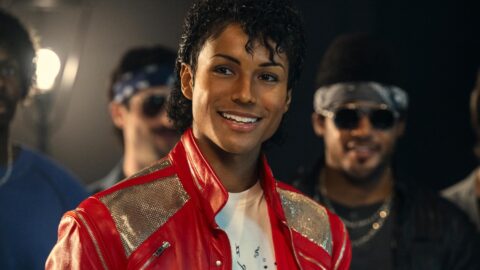
Welcome to the inaugural edition of Double Take, a new discussion format that goes beyond the traditional review and dives into the nitty-gritty. And where better to start than with the shiny new Michael Jackson biopic? Redmond and Jared discuss its aesthetic deadness, its many cursed images and the complicated legacy of the King of Pop.
Redmond:
Michael (Antoine Fuqua, 2026) doesn’t need critics. Due to the subject matter alone, it’s almost guaranteed to be the highest-grossing musical biopic of all time. Made with the approval (and additional funding) from the estate, its baked-in, pre-approved success means that this is a film that doesn’t have to be honest about Jackson’s legacy. So, of course, it isn’t.
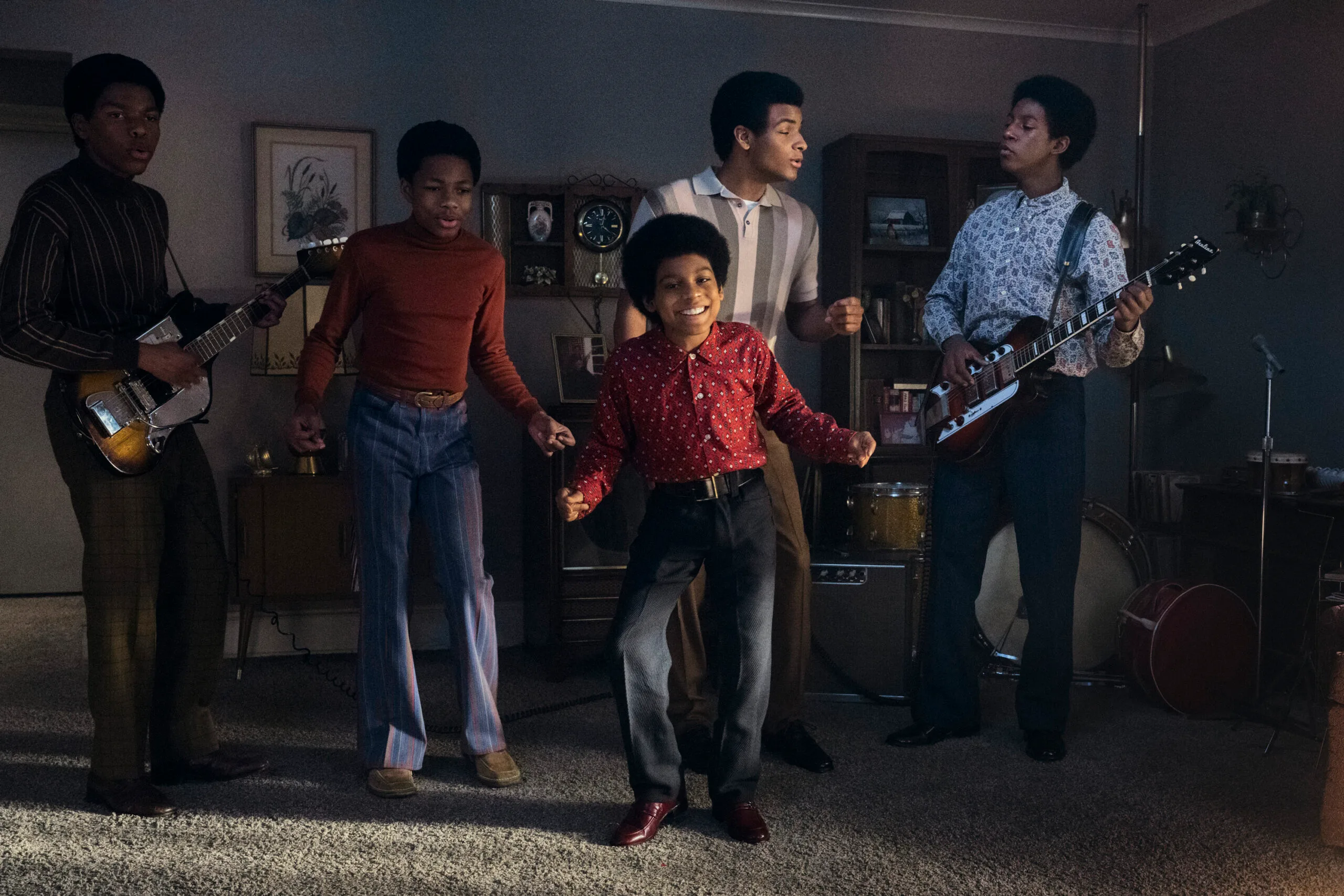
Charting the King of Pop’s rise from humble beginnings in Gary, Indiana, to a sold-out concert at Wembley during the Bad (1987) era, Fuqua’s film, starring Michael’s own nephew Jaafar, takes a by-the-numbers approach to Jackson’s tortured genius, papering over the more controversial parts in favour of generic hagiography. Yet despite this (or perhaps because of it) — treating concepts such as his animal friends, advocacy for children and love of Peter Pan and Neverland, as quirks, instead of dark precursors to several documented cases of horrific child sex abuse — the final product conjures a genuinely unsettling spell. To me, this is dishonest, pure pop propaganda, insidious and deranged. Yet, ominously, it’s only part one…so perhaps we can hope for an honest reckoning in the sequel.
What was your feeling about the film, Jared? Will Neverland be his Xanadu in a tragic part two, or will we be treated to more of the same?
Jared:
First off, I’d like to say SHAMONE. I’m sending this correspondence in Comic Sans because that feels right for this disaster of a “film.”
Based on what we’ve just watched, it feels like the second part will only skim the surface — likely focusing on him coping with fame and unresolved trauma by retreating further into a childlike state. Part one, though, is an extremely uncomfortable watch. Michael’s genius is undeniable, and so is the impact of an abusive, overbearing stage father like Joe (Colman Domingo), but portraying someone facing serious allegations as simply an innocent man who loves children comes off as selective. It plays like an attempt to appease devoted fans while offering a softened version of events to younger viewers. And as you said, it doesn’t need critics. There’s a certain arrogance to it, as if the film knows it will be a massive success and doesn’t need to confront uncomfortable truths. It basically treats Michael the way his father did, as a cash cow.
The whole thing is sloppy, uneven, poorly written, and dramatically inert. I haven’t seen it since it aired, but The Jacksons: An American Dream (Karen Arthur, 1992) probably offers far more nuance and characterisation of the siblings and their childhood. Here, they barely register as real people — reduced mostly to background blur (aside from LaToya’s [Jessica Sula] consistently fierce, on-point costuming — we love a headband/jumpsuit combo!). Janet’s absence is especially noticeable. She became a global superstar with the release of Control in 1985, so to have no mention of that feels… odd.
When the film slows down for character moments, they tend to feel either underdeveloped or overly schmaltzy. It relies heavily on musical numbers and montages — which bring energy — but whenever it tries to explore the human side, it falters with corny dialogue and an instructive score.
There are also at least a hundred cursed images and sequences in this — and we need to unpack a few of them. I don’t think I’ll ever get CGI Bubbles (Michael’s pet monkey) out of my head.
Also, the first thing I did after the screening was watch the video for The Jacksons’ “Torture”, an S&M-themed song from the Victory (1984) album with an amazing horror/fantasy video, which uses a dummy stand-in for Michael. My brain immediately wanted to dig into some of the stranger, deeper events the film doesn’t have the balls or creativity to explore. (That song slays btw).
Redmond:
CGI Bubbles kind of epitomises the movie for me. Rendering the pet as fully digital takes us deep into an unsettling uncanny valley, but it also shows how safe and timid the film is. Finding a real chimpanzee can’t be that hard, and would’ve shown a commitment to really sowing the seeds for Michael’s rich inner life.
A part of me yearned for a truly immersive, nightmarish approach, Pablo Larraín-style, getting us inside Michael’s head as he deals with the twin horrors of trauma and fame. Yet, regardless, the style is extremely anodyne. Fuqua has made a couple of lit action movies (Training Day [2001] is a classic; the Equalizer trilogy [2014-2023] is true airplane trash), but his approach to the material is as flat and pedestrian as it gets. I didn’t get any sense of a time or an era or an attitude (with every auditorium and stadium looking kinda the same), besides the CBS Records executive (Mike Myers!?), who trafficks in all kinds of Jewish Noo Yawk cliches. He was giving Broadway Danny Rose (Woody Allen, 1984).
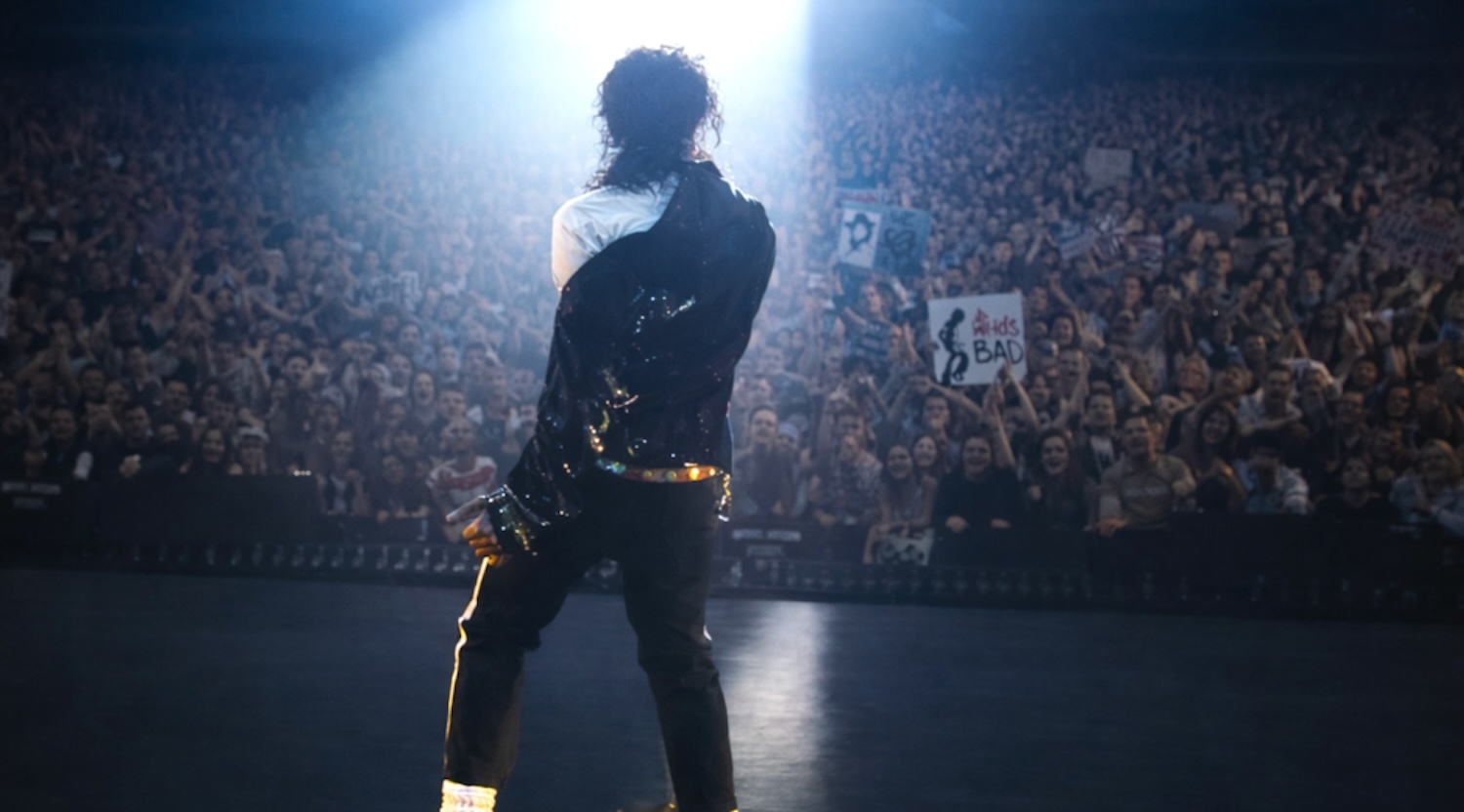
Is this even a good Jackson tribute, regardless of the controversies? Jackson was the most electrifying stage presence since Elvis Presley (and before that, Little Richard), especially the way he moves his hips and feet (which, very noticeably, the film opens on), yet the film, despite its nods to Singing in the Rain (Stanley Donen, 1952) and Charlie Chaplin, finds no aesthetic correlative to his work. It made me miss the freewheeling, insane energy of Baz Luhrmann’s Elvis (2022), which is, to me, still the pinnacle of this recent wave of musical biopics; the only one that truly felt innovative and alive. Still, this is better than Bohemian Rhapsody (Bryan Singer, 2018), which was a car crash on basically every single front.
Let’s cycle back to cursed images. What was the worst for you? The rhinoplasty? The hair on fire? Jackson visiting pediatric units? There were so many, it was hard to keep track of them all.
Jared:
I agree that the shots of the crowd don’t really feel early ’80s. I’m not even sure they’re real. A lot of this movie just has that weird, uncanny AI-slop look to it, Jaafar included.
The first time the film really starts to feel kind of gross is when it brings in this idea of him using fairy tales to cope with his lost childhood. The shots of those illustrated Peter Pan books just feel instantly creepy, mostly because it’s hard not to think of Neverland Ranch. And once that’s in your head, it’s hard not to think of Leaving Neverland (Dan Reed, 2019), which is a pretty heavy, firsthand account from two of Jackson’s alleged victims and their families. It conjures up all these images — not just of abuse, but of an estate seemingly built to protect the fantasy and keep the money rolling in. As an audience member, you’re being pushed toward a particular reading of his world, and at this point in time, people are so sick of being lied to, and they’re especially sick of watching rich, powerful men use vast resources to silence victims and reshape narratives, which is what this film is essentially doing.
I generally love watching misguided movies with rancid vibes, but it’s hard to find any ironic enjoyment in any of the surreal stuff going on. Things like CGI Bubbles playing Twister with himself, or Michael trying to broker peace between the Bloods and the Crips by inviting them into the “Beat It” video (which I think is actually true?) just feel… I don’t even have a word for it other than icky.
I would add that anytime Michael is with a child onscreen is just so…wrong. If you’re someone who believes the allegations (I do), then you just start imagining so many other horrific things that contradict the image they’re showing you. It’s like, “here’s Saint Michael with a burn victim — please ignore everything else you’ve heard.” I actually rewatched Leaving Neverland yesterday, and it’s a harrowing experience. The trauma is real, and so are the receipts.
I also wonder why extremely talented people like Colman Domingo and Nia Long would choose to attach themselves to something that feels so intent on glossing over serious allegations of crimes against children. This press tour is so awkward and cringe, and I hate watching people like Seth Meyers (who just interviewed Domingo) learning to Moonwalk with a shit-eating grin instead of asking any real questions. It just shows there’s always a media apparatus willing to be complicit in laundering bullshit products. There’s not enough money in the world for me to go sit in front of cameras and pretend that a grown-ass man inviting children to sleep in his bed with him is even slightly normal or acceptable. I hated every fucking second of this movie, but obviously could not look away.
Redmond:
This is the complicated legacy of Michael Jackson. The MTV scene was actually kinda funny and well-done — with good pacing — showing how MJ was such a trailblazing Black artist who broke down barriers for everyone who came after. Now Black culture — rap and RnB, in particular — is the dominant culture in the USA, and arguably most of the Western world. I agree about not having the language (or, to be woke, the lived-in experience) to articulate all the ways this film is weird, and that would probably extend to the portrayal of being a poor Black boy from the middle of nowhere who becomes the biggest-selling artist of all time, and what that means for being Black in America?
Does being so important to the culture mean that his legacy is harder to break down? Or did he just die at the right time? My memories of watching Glastonbury, 2009, on the BBC as he died are seared into my brain. No one seemed to be ragging on him that year, with every artist there seemingly doing a heartfelt tribute.
I was at a bookstore the other day, and there was a bookshelf of evil authors; JK Rowling, Enoch Powell, etc. And the owner said something pretty pertinent here: “It’s easier to hate a living artist than a dead one.” Maybe if Woody Allen had died 15 years ago, his legacy (and genuine great art; I love his movies, sorry) would be more celebrated, yet the man is still alive and still making stuff.
I think MJ got out at the exact time, and it’s been semi-protecting him ever since. And now, in a post-woke, post #metoo era, post-Trump, alternative-facts era, he can once again rise to the top, in a movie that will smash all Box Office records, and the vast majority of people will probably love it, the way they loved the weird, shoddily-made, wildly homophobic Bohemian Rhapsody, which was directed by a man also accused of crimes against children. What does this all say about the CULTURE JARED? Is this lowkey a Trumpian movie?
Jared:
Yes, in a way. Michael’s fanbase reminds me of Trump/MAGA in the sense that no amount of hard evidence seems able to change their minds. They go all in and refuse to budge. That kind of reflexive loyalty feels almost cult-like. If you go on Twitter (deadname) right now and mention the film, you’ll be bombarded with aggressive messages from people who seem deeply invested in someone they never actually knew. It really shows how strong parasocial attachment can be.
What makes it worse is when that attachment turns defensive and hostile. That behaviour can be really toxic for alleged victims — when the response is immediate backlash and pile-ons (and in some cases, threats), it sends a clear message that speaking up will come at a cost. That kind of environment can intimidate people into staying silent.
In terms of being Black in America, you can draw some parallels to O. J. Simpson and Diddy. In a country with a long history of systemic racism, it’s not unreasonable for Black communities to be sceptical of how powerful Black figures are treated by the media and the justice system. That suspicion doesn’t come out of nowhere — it’s informed by generations of real, documented injustice. So when a highly successful Black person is accused of something serious, there can be an instinct to question whether there are forces at play trying to bring them down.
At the same time, though, evidence is evidence. So, scepticism is understandable, but it doesn’t automatically invalidate the specifics of a given case. It can be hard to balance recognising historical patterns of racial bias and still being willing to look honestly at the facts in front of you. And sometimes those two things get blurred, where defending the individual starts to feel like defending something bigger, like identity or community. Some of his most rabid fans will just call anyone who doesn’t love him a racist (which happened to me yesterday).
Part of what makes this so intense, though, is that music hits people differently. In this case, it’s tied to many people’s childhoods. Letting go of an artist can feel like letting go of a piece of your own life. Some of my best memories involve music — I’ll never forget my mom taking me to see George Michael on the Faith (1987) tour, or Madonna on the Girlie Show (1992) — experiences that created so much joy and a deep bond. And like any kid who lived through the 80s, Michael’s presence was a major part of my childhood.
Diddy and other Bad Boy Records artists are the sound of my teen years, but now it’s almost impossible to listen to that music without feeling discomfort. I feel bad for all the people my age who had R Kelly’s “I Believe I Can Fly” (1996) played at their high school graduation because now that memory is tainted for life. I have a vivid visual imagination, so when I hear Michael’s songs, my brain starts creating images of children being abused — and obviously, that’s the opposite of what I want from music.
Some people can separate the art from the artist — myself included, sometimes. We can say, “He was a genius. His music meant everything to me and shaped who I am in ways I can’t fully explain, but he also likely caused serious harm.” That kind of nuance is possible. What I’ve noticed, though, is that many who aren’t fully ready to let go have chosen to enjoy the music only in private. There’s a difference between quietly appreciating songs that shaped your life decades ago and allowing yourself to be gaslit by his estate into pretending none of the harm ever happened.
It’s similar to when I rewatch a great Roman Polanski film and choose not to log it on Letterboxd. It’s frustrating when an abusive person’s actions taint a masterpiece that a hundred innocent, talented people worked on and brings up that question: should we throw Chinatown (1974) and Rosemary’s Baby (1968) into the trash for all eternity? I guess the answer is: you can never truly erase a genius’ work, no matter how awful he was in real life, but we have to continue to talk about these allegations and the evidence honestly.
Redmond:
CGI Bubbles innocent?
Jared:
No.








-
Jared Abbott

-
Jared Abbott

-
Jared Abbott

-
Jared Abbott